

How to Build a Peaceful Home: 7 Essential Steps
Table of Contents
- What Makes a Peaceful Home
- Step 1: Declutter and Organize Your Physical Space
- Step 2: Design a Sensory Environment with Best Essential Oils for Home Relaxation
- Step 3: Establish Daily Habits for a Peaceful Household
- Step 4: Create Zones of Calm and Personal Sanctuary
- Step 5: How to Reduce Stress at Home Through Mindful Communication
- Step 6: Build Peace in Small or Shared Spaces
- Conclusion: Your Peaceful Home Starts Now
- Frequently Asked Questions
Last Updated: September 19, 2026
What Makes a Peaceful Home
A peaceful home is more than just a quiet space, it's an environment intentionally designed to support your mental clarity, emotional well-being, and daily sense of calm. When you build a peaceful home, you're creating a sanctuary where stress naturally dissolves and intentional living becomes the default.
The difference between a chaotic home and a truly peaceful one often comes down to small, deliberate choices. These aren't expensive renovations or dramatic overhauls. They're thoughtful decisions about what stays, what goes, what sounds fill your space, and how you move through your rooms each day.
At Castellanos Housing, we understand that building a peaceful home starts with recognizing what actually matters to you. Our curated collection of home goods and lifestyle products is designed to support this intentional approach, from essential oils and diffusers that create a sensory environment to quality bedding that makes rest feel restorative. The goal isn't perfection. It's creating a space where you genuinely want to be.

The seven essential steps that follow will guide you through the most impactful areas: decluttering your physical space, designing a sensory environment, establishing daily habits, creating zones of calm, practicing mindful communication, and adapting these principles to smaller or shared spaces. Each step builds on the last, creating a comprehensive approach to how to build a peaceful home that actually fits your life.
Step 1: Declutter and Organize Your Physical Space
Decluttering is the foundation of a peaceful home. Visual noise creates mental noise. When your eyes scan a room and land on clutter, your brain is constantly processing stimuli it doesn't need to process. The result is low-level stress you might not even recognize as coming from your environment.
Start with one room or even one corner. Don't attempt your entire home at once, that's how decluttering projects stall. Pick a space you use daily: your bedroom, a shelf in your living room, or your bathroom counter. The goal is to remove anything that doesn't serve a purpose or bring you genuine satisfaction.
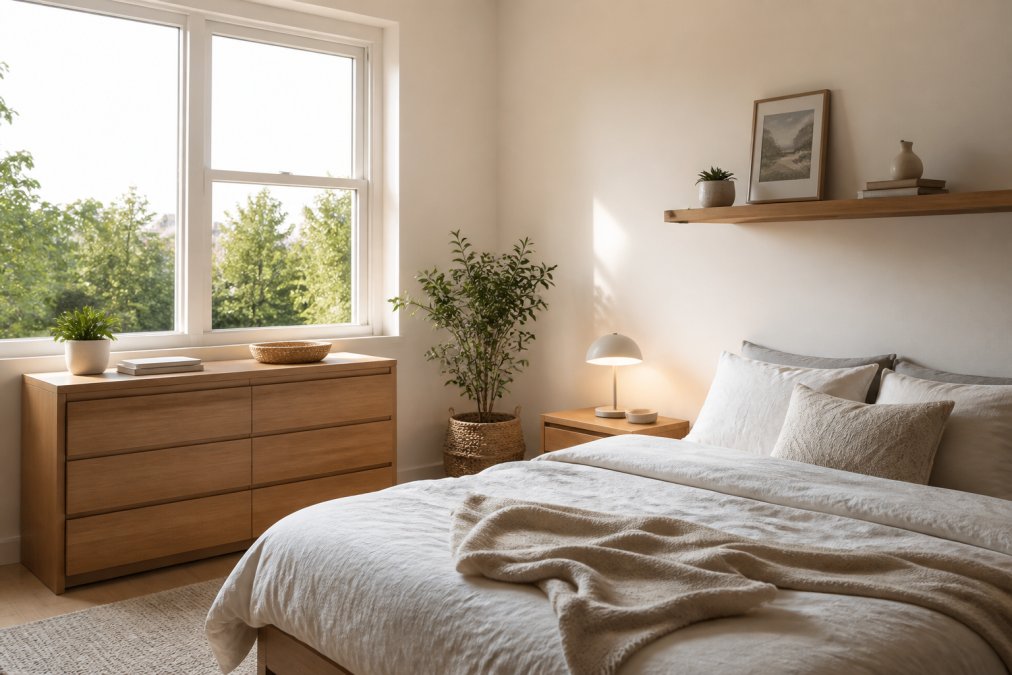
As you sort, ask yourself three questions: Do I use this? Do I love this? Does this support the peaceful environment I'm building? If the answer to all three is no, it goes. This isn't about harsh minimalism, it's about intentional curation. Keep items that genuinely matter to you, and remove the rest.
Organization systems work best when they're simple enough to maintain. Invest in storage that's both functional and aesthetically pleasing. When your organizational tools look good, you're more likely to actually use them. Clear containers, wooden shelves, and labeled bins aren't just practical, they're part of creating a calm visual environment.
A common mistake is organizing without decluttering first. You end up with beautiful storage full of things you don't need. Declutter first, then organize what remains. The result is a space that feels lighter and more intentional.
Step 2: Design a Sensory Environment with Best Essential Oils for Home Relaxation
Your sensory environment, what you see, smell, hear, and feel, shapes your emotional state more than you probably realize. The best essential oils for home relaxation work because scent is processed directly by the limbic system, the part of your brain that handles emotion and memory.
Lavender, chamomile, and sandalwood are among the most effective scents for creating calm. But the best essential oils for home relaxation are the ones that resonate with you personally. Some people find citrus oils energizing rather than calming. Others respond strongly to woodsy scents. The key is experimenting to find what your nervous system actually responds to.
A quality ultrasonic diffuser disperses essential oils evenly throughout a room without heat, which preserves the oils' properties. The Portable Ultrasonic Oil Diffuser and Air Humidifier from Castellanos Housing offers both aromatherapy and humidity control, two elements that work together to create a more comfortable sensory environment. It runs quietly, which matters because sound is part of your sensory design too.

Beyond scent, consider lighting. Harsh overhead lights trigger alertness. Soft, warm lighting signals to your body that it's time to relax. If possible, use lamps with warm-toned bulbs or dimmer switches. Natural light during the day is ideal, it supports your circadian rhythm and improves mood (Effects of light on human circadian rhythms, sleep and mood).
Sound matters equally. Some people find complete silence peaceful; others need gentle background sound. Soft music, nature sounds, or white noise can mask jarring household sounds and create a more cohesive sensory environment. The goal is intentional design, choosing what enters your sensory space rather than accepting whatever happens to be there.
Step 3: Establish Daily Habits for a Peaceful Household
Daily habits for a peaceful household are the scaffolding that keeps your space calm. Without consistent routines, even the most beautifully organized home gradually slides back into chaos.
The most impactful habit is a morning reset: before your day gets busy, spend five minutes tidying surfaces and returning items to their designated places. This takes less time than you'd think and prevents small messes from accumulating. It also signals to your brain that you're intentional about your space.
Luxury Home Staging Consultation Package →
An evening wind-down routine is equally important. Thirty minutes before bed, dim the lights, put your phone away, and do something that signals to your body that rest is coming. This might be light stretching, reading, or simply sitting in a quiet space. This routine trains your nervous system to shift from activity mode to rest mode.
Weekly habits matter too. Set aside time each week, even just 30 minutes, to reset your home. Put things back where they belong, wipe down surfaces, and refresh your space. When this becomes automatic, maintaining a peaceful home requires far less effort than you'd expect.
A common mistake is creating habits that are too ambitious. If your routine requires an hour every morning, you won't stick with it. Start small. One five-minute habit is better than five habits you abandon after a week. Build from there.
Step 4: Create Zones of Calm and Personal Sanctuary
Not every part of your home needs to serve the same purpose. Creating distinct zones, a work area, a rest area, a social area, helps your brain shift modes more easily. When you sit in your designated work zone, your mind knows it's time to focus. When you move to your rest zone, your body recognizes the shift.
A personal sanctuary is crucial. This is your space, even if it's just a corner of a room. It might be a reading nook with a comfortable chair, a meditation corner with cushions, or a small area where you keep items that bring you joy. The physical boundary matters less than the intention: this is where you go when you need peace.
Cozy corners don't require much. A comfortable seat, soft lighting, and minimal distractions are enough.
Step 5: How to Reduce Stress at Home Through Mindful Communication
How to reduce stress at home often comes down to how you communicate with the people you live with. Even in a perfectly organized, beautifully designed space, tension between household members creates stress that no diffuser can fix.
Step 6: Build Peace in Small or Shared Spaces
Building peace in small or shared spaces requires a different approach than creating calm in a large home you control entirely. The constraints are real, but they're not insurmountable.
Conclusion: Your Peaceful Home Starts Now
Building a peaceful home is an ongoing practice, not a one-time project. The space you create today will continue to evolve as your needs change. The framework, decluttering, sensory design, daily habits, intentional zones, mindful communication, and adaptation to your constraints, remains consistent.
Frequently Asked Questions
How does decluttering actually help you build a peaceful home?
Decluttering removes visual noise and mental burden. When surfaces are clear and items have designated places, your brain processes less information, reducing stress and creating mental clarity. A peaceful home starts with intentional organization, keeping only what serves your daily life or brings you joy. This foundation makes every other step easier and more effective.
What are the best essential oils for home relaxation?
Lavender, chamomile, and sandalwood are proven to promote calm and reduce stress. Lavender supports sleep and relaxation, while sandalwood creates a grounding, meditative atmosphere. Peppermint and eucalyptus energize without overstimulating. Use a quality diffuser like the Portable Ultrasonic Oil Diffuser to disperse these oils evenly throughout your space, creating a consistent sensory environment that supports your mood.
Can you actually build peace in a small or shared apartment?
Yes. Focus on vertical organization, use room dividers or curtains to create personal zones, and establish quiet hours with housemates. Shared spaces benefit from designated calm corners, even a single armchair by a window counts. Declutter ruthlessly since small spaces feel chaotic quickly. Clear communication about noise, scents, and routines prevents conflict and makes shared living peaceful for everyone.
What daily habits create a peaceful household?
Start with a morning routine that centers you before the day begins, even 5 minutes of quiet time or mindful breathing. Establish consistent tidying habits (10 minutes before bed), create tech-free zones and times, and practice intentional communication with household members. End your day with a calming ritual like reading or using aromatherapy. These small, repeating actions build a rhythm that naturally supports peace.
How do I reduce stress at home if I live with family or roommates?
Set boundaries around personal space and quiet time. Use sensory tools like essential oils in your bedroom to create a refuge. Practice mindful communication by listening without judgment and addressing conflicts calmly. Establish shared routines that work for everyone. If tension arises, acknowledge it directly rather than letting it build. A peaceful home requires everyone's participation, frame peace as something you're building together.
Is creating a peaceful home expensive?
No. The foundation, decluttering, organizing, and establishing routines, costs nothing. A quality diffuser and essential oils start around $19-$35. Soft lighting, plants, and simple decor items are budget-friendly. A Luxury Home Staging Consultation Package ($149) offers expert guidance if you want professional help. Peace comes from intention and consistency, not price. Start with what you have and add thoughtfully over time.
