

Best Essential Oil Diffusers for Home
Table of Contents
- Quick Comparison Table
- Ultrasonic vs Nebulizing Diffusers: Which Technology Matters
- Portable Mini Diffusers for Any Room
- Premium Decorative Diffusers That Double as Ambient Lighting
- How to Clean Your Essential Oil Diffuser and Prevent Buildup
- Essential Oil Diffuser Safety Tips for Pets and Children
- Choosing the Right Diffuser for Your Space
- Conclusion
- American Lung Association guidance on indoor air quality
- Frequently Asked Questions
Last Updated: September 25, 2026
Quick Comparison Table
| Diffuser Type | Best For | Price Range | Key Feature | Room Size |
|---|---|---|---|---|
| Mini USB Portable | Travel, desks, cars | $19-$36 | Quiet operation, compact | Under 100 sq ft |
| Crystal Salt Stone | Decorative, bedroom | $55 | Dual function (lamp + diffuser) | Medium rooms |
| Flame Diffuser | Ambiance, living spaces | $53 | Realistic flame effect | 100-200 sq ft |
| Budget Ultrasonic | First-time buyers | $19 | Generous capacity, auto-shutoff | Small to medium |
Ultrasonic vs Nebulizing Diffusers: Which Technology Matters
Ultrasonic diffusers use inaudible vibrations to break essential oils into fine mist particles. They're the dominant technology because they're quiet, energy-efficient, and preserve oil integrity through cold-air diffusion.
Nebulizing diffusers use pressurized air to atomize oil without water, producing stronger scent but operating at 60-80 decibels, too loud for bedrooms. They also consume more energy and require frequent cleaning due to oil residue buildup.
Most ultrasonic diffusers operate at 25-36 decibels, quieter than a whisper. For light sleepers, intermittent mode (30 seconds on/off) reduces cumulative noise exposure further.
Decibel reference guide for context:
- 20 dB: Threshold of hearing
- 25-30 dB: Ultrasonic diffuser (most models)
- 35 dB: Quiet library, whisper
- 50 dB: Normal conversation
- 60-80 dB: Nebulizing diffuser, vacuum cleaner, busy traffic
- 85+ dB: Prolonged exposure can cause hearing damage
Portable Mini Diffusers for Any Room
Small USB-powered diffusers are ideal for bedrooms, offices, and travel. Castellanos Housing offers portable options that deliver consistent performance without bulk.
The Mini Air Humidifier Ultrasonic USB Aroma Wood Grain LED Night Light ($35) offers continuous and intermittent modes with 4-hour runtime, cycling LED light, and silent operation under 36 decibels.

The New USB Portable Mini Air Humidifier 200 ML ($36) features 7 color lights, 4-hour continuous or 8-9 hour intermittent modes, and fits car cup holders for commuters.

For budget-conscious shoppers, the Portable Ultrasonic Oil Diffuser and Air Humidifier ($19) delivers surprising value. It offers 400ml or 1000ml capacity options, so you choose based on how often you refill. The compact design works for small offices or bedside tables. At this price, it's an excellent entry point if you're testing whether diffusers fit your routine.

Premium Decorative Diffusers That Double as Ambient Lighting
The Air Humidifier Crystal Salt Stone Desktop Aromatherapy Essential Oil Ultrasonic Diffuser ($55.02) functions as diffuser, humidifier, and lamp. The 260ml tank lasts 4-8 hours depending on mode, with gentle LED lighting.
The Air Aroma Humidifier USB Desktop Flame Humidifier ($52.98) features a realistic flame effect with seven color options, 220ml capacity, and silent operation below 36 decibels.
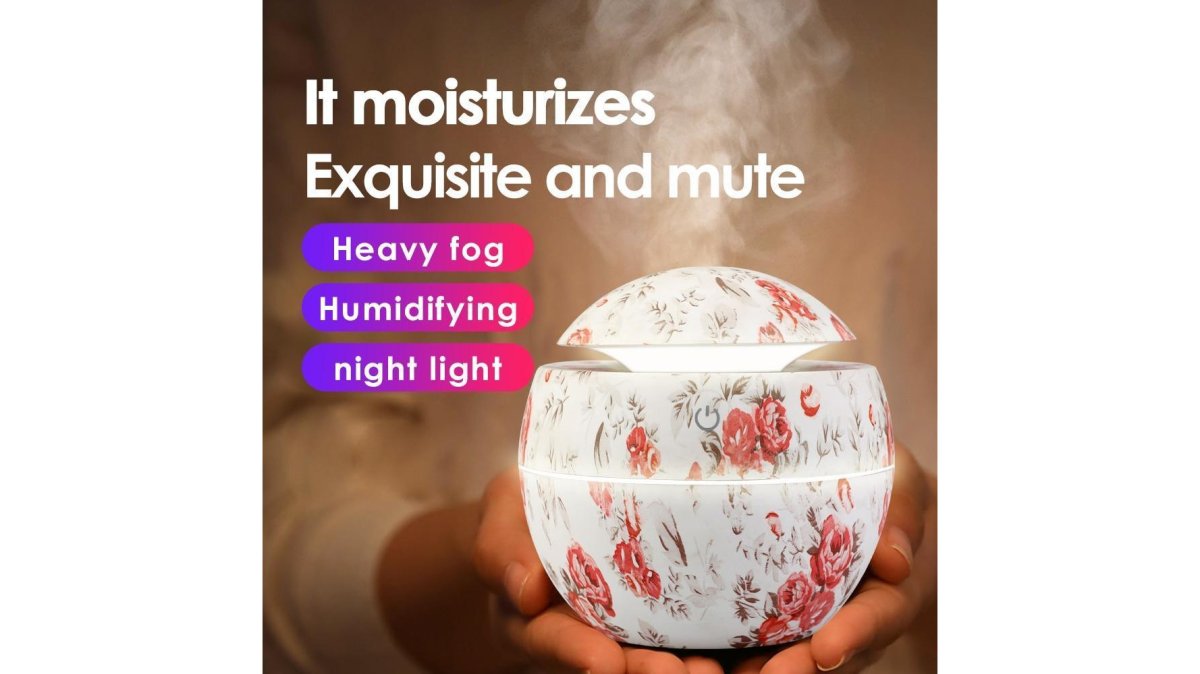
The Modern Handmade Print Colorful Rose Mini USB Aroma Essential Oil Diffuser ($42) offers handmade design with 130ml capacity and includes a spare filter.
How to Clean Your Essential Oil Diffuser and Prevent Buildup
Diffusers need regular cleaning to prevent biofilm, a bacterial layer that clogs mist outlets and reduces performance. Biofilm forms when water sits in the tank, and prevention is far easier than recovery.
Biofilm can form in stagnant water, especially in warm environments or when oils are added. Emptying the tank after each use is an effective prevention method.
Empty and wipe the tank after each use, then air-dry completely. Never cap a wet tank, as trapped moisture accelerates mold growth.
Early warning signs of biofilm or mold:
- Mist output weakens despite adequate water level
- A musty or sour smell emanates from the diffuser
- Visible brown, green, or black spots appear inside the tank or on the ultrasonic plate
- Mist appears discolored or has a faint odor
- The diffuser produces mist inconsistently (strong for 30 seconds, then weak)
If you notice any of these signs, stop using the diffuser and perform a deep clean immediately. Continuing to use a biofilm-contaminated diffuser spreads microorganisms into the air.
For deeper cleaning, some methods suggest filling the tank halfway with distilled water and white vinegar, running it for a short period, and then rinsing thoroughly. For stubborn residue, a solution of distilled water and 3% hydrogen peroxide, followed by rinses, can be used.
Mini Air Humidifier Ultrasonic USB →
Periodically check the mist outlet and ultrasonic plate for residue and clean as needed. If mist remains weak, replacing the filter may be an option. Hard water can clog filters faster.
Water type matters: Use distilled or demineralized water whenever possible. Tap water contains minerals (calcium, magnesium) that accumulate on the ultrasonic plate and inside the tank, accelerating biofilm formation and reducing mist output. If you only have access to tap water, perform monthly vinegar cleanings instead of quarterly ones. Filtered water is better than tap but not as effective as distilled water for preventing mineral buildup.
Storage between uses: If you won't use the diffuser for more than a week, empty the tank completely, dry all interior surfaces, and store it in a cool, dry place. Never store a diffuser with water inside, even if you plan to use it again soon. Stagnant water in storage creates ideal conditions for mold spores to germinate.
Never submerge the base or electrical components in water. Only the tank should be rinsed. If water reaches the electronics, the diffuser may short out or develop mold inside the motor housing, rendering it unsafe to use. If water accidentally enters the base, unplug the unit immediately, allow it to dry completely in a warm, dry location for 48 hours, and test it on a non-flammable surface before regular use.
Essential Oil Diffuser Safety Tips for Pets and Children
Essential oils are concentrated plant extracts. While they can provide pleasant aromas, they can pose risks to animals and young children if misused.
For pets: Many essential oils can be toxic to pets when ingested or absorbed through the skin. It's advisable to place your diffuser in a room where pets can leave if the scent becomes overwhelming. Intermittent mode can limit exposure time.
If your pet shows signs of distress, such as excessive drooling, coughing, difficulty breathing, or unusual behavior, it's advisable to turn off the diffuser immediately and move the animal to fresh air. Contact a veterinarian if symptoms persist.
For children: Keep essential oil bottles out of reach. Concentrated essential oils should be kept out of reach of children. Never apply undiluted oils to a child's skin. If a child ingests essential oil, it is recommended to call Poison Control immediately at 1-800-222-1222.
Diffusers themselves are safe when placed on stable surfaces out of reach. A child shouldn't be able to pull the unit down or access the tank. The mist produced by a properly functioning diffuser is generally considered harmless when inhaled in a well-ventilated room.
Choosing the Right Diffuser for Your Space
Room size matters more than most people realize. A diffuser rated for small rooms (under 100 square feet) will struggle to disperse fragrance evenly in a large open-concept space. Conversely, an industrial-sized diffuser in a tiny bedroom creates overwhelming scent intensity.
Small spaces (under 100 sq ft): Bedrooms, offices, bathrooms, and closets benefit from portable mini diffusers like the $19 or $36 USB models. These produce 30ml of mist per hour, which is sufficient for intimate spaces.
Conclusion
Choosing the right essential oil diffusers depends on three factors: where they sit, how you want them to look, and whether you prioritize quiet operation or maximum fragrance intensity. Ultrasonic technology dominates because it balances all three, it's silent, affordable, and preserves essential oil quality through cold-air diffusion.
American Lung Association guidance on indoor air quality
According to the EPA's indoor air quality standards, proper ventilation is essential when using aromatherapy products in enclosed spaces. Essential oil diffusers work best in rooms with adequate air circulation to prevent scent saturation.
Frequently Asked Questions
What is the difference between ultrasonic and nebulizing essential oil diffusers?
Ultrasonic diffusers use vibration to break essential oils into fine mist and typically add humidity to the air. Nebulizing diffusers work without water, dispersing pure essential oil concentration directly into the air without adding moisture. Ultrasonic models are quieter and better for adding humidity; nebulizing diffusers preserve the full potency of essential oils but operate at higher noise levels and use more oil.
Are essential oil diffusers safe for pets and children?
Essential oil diffusers can be safe with precautions. Keep diffusers out of reach of children and pets, use intermittent mist mode rather than continuous, and ensure good ventilation. Some essential oils like tea tree and eucalyptus are toxic to pets if ingested or heavily inhaled. Always dilute oils properly, never apply them directly to skin, and consult a veterinarian before using oils around pets. Choose diffusers with auto-shutoff protection for added safety.
How often should I clean my essential oil diffuser?
Regular cleaning of your diffuser is recommended to prevent buildup and residue. Empty the water tank after each use and rinse thoroughly. For deeper cleaning, a solution of white vinegar and water can be used. Consistent maintenance can help maintain mist output quality and support the diffuser's longevity.
What size diffuser do I need for my room?
Match tank capacity and coverage area to your space. Portable mini diffusers (under 200ml capacity) work best for small rooms or personal desks. Medium diffusers (260-400ml) suit bedrooms and living areas. Larger capacity options (1000ml) provide longer runtime for open-concept spaces without frequent refills. Check the product's stated application square footage to ensure adequate fragrance dispersion and humidification.
