

Best Essential Oil Brands 2026 Review
Table of Contents
- What Are Essential Oils and Why Quality Matters
- How to Identify Pure Essential Oils
- Essential Oil Safety Guidelines for Home Use
- Benefits of Aromatherapy for Daily Stress
- Comparing Extraction Methods and Sourcing
- Top Essential Oil Brands and Products to Consider
- Avoiding Adulteration and Synthetic Fragrances
- Frequently Asked Questions
Last Updated: September 26, 2026
What Are Essential Oils and Why Quality Matters
Essential oils are concentrated plant extracts obtained through distillation or cold pressing. Understanding what separates genuine oils from synthetic fragrances or adulterated blends is crucial for informed purchasing.
Quality matters because the essential oil market is largely unregulated. A bottle labeled "pure" might contain synthetic fragrances, carrier oils, or fillers that dilute potency. Reputable brands offer purity, proper sourcing, and transparent testing standards.

Real essential oils deliver stronger aromatic presence, longer-lasting effects, and reliable results in diffusers, skincare, or candle-making.
How to Identify Pure Essential Oils
Several markers distinguish authentic oils from counterfeits or inferior products.
Reading Labels and Botanical Names
Every legitimate essential oil bottle should display the botanical name of the plant. Lavender, for example, has multiple species, Lavandula angustifolia, Lavandula stoechas, and Lavandula latifolia, that smell and perform differently. The botanical name signals that the producer knows their source material.
Look for the country or region of origin, as it affects aroma profile and chemical composition. Shelf life should be listed, typically 2-3 years for properly stored oils.
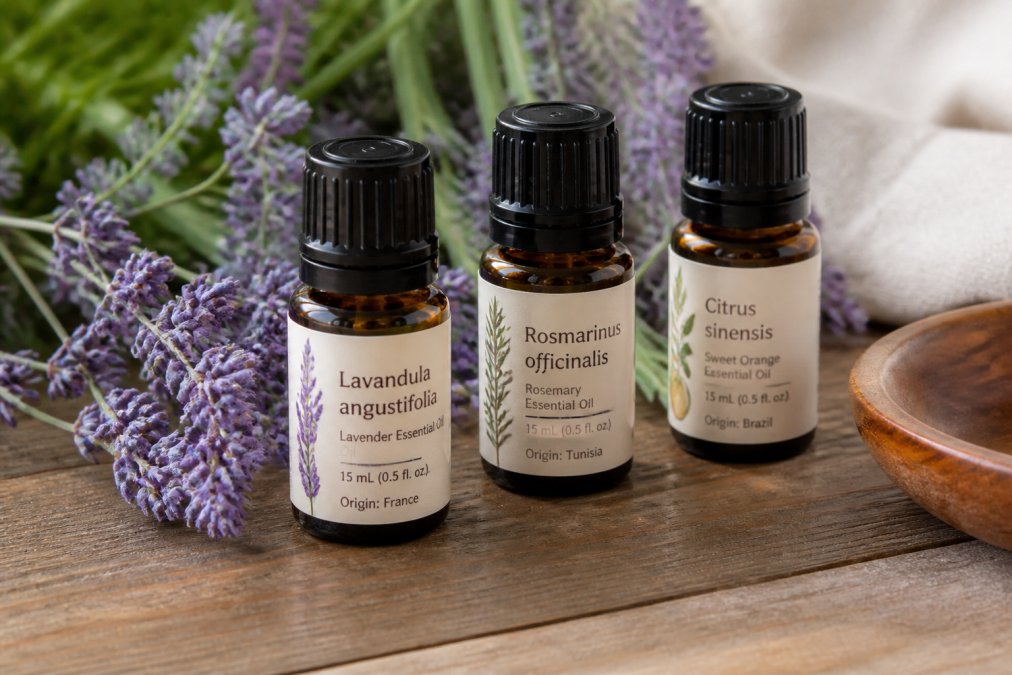
Avoid bottles listing only "fragrance oil" or "aromatherapy blend" without specifying components. Single-note oils should have one plant name; blends should list each ingredient. Genuine rose oil costs more than lavender due to lower extraction yields, if prices are equal, the rose oil is likely not pure.
Understanding GC/MS Testing and Third-Party Verification
GC/MS (gas chromatography-mass spectrometry) testing is the gold standard for verifying purity. This laboratory analysis identifies chemical compounds and confirms they match what should be present for that plant, helping detect adulteration.
Third-party testing means an independent laboratory conducted the analysis, creating accountability. Request GC/MS reports before purchasing premium oils.
Batch-specific testing is more valuable than general certifications, as growing conditions, harvest timing, and extraction variables affect composition year to year.
Essential Oil Safety Guidelines for Home Use
Essential oils are potent and require respectful handling to prevent skin irritation, respiratory issues, or other adverse effects.

Never apply essential oils directly to skin without dilution or ingest them without professional guidance. Keep all oils away from children and pets. Citrus oils cause photosensitivity and can burn skin if exposed to sunlight after application.
Dilution Ratios and Carrier Oils
The standard dilution ratio for topical application is 2-3 drops per teaspoon of carrier oil; reduce to 1-2 drops for facial use. Carrier oils include coconut, jojoba, sweet almond, and fractionated coconut oil, each with different absorption rates.
For diffusers, use 3-5 drops per water tank and diffuse in 30-60 minute intervals with breaks to prevent respiratory irritation.
Storage, Shelf Life, and Oxidation Prevention
Essential oils degrade through oxidation when exposed to light, heat, and air. Store in dark amber or cobalt glass bottles, tightly sealed, in a cool dark place or refrigerator.
Most essential oils maintain potency for 2-3 years; citrus oils last 1-2 years, heavier oils like sandalwood 4-5 years. Note the purchase date and replace oxidized oils, which lose aroma intensity and may cause skin irritation.
10ml Pure Plant Essential Oil For →
Benefits of Aromatherapy for Daily Stress
Inhaling essential oil vapors can influence mood and support relaxation. Lavender, chamomile, and bergamot are used for stress management; peppermint and eucalyptus for mental clarity.
The olfactory system sends signals to the brain's limbic region, which processes emotions and memory, triggering emotional responses through scent.
Comparing Extraction Methods and Sourcing
The way an essential oil is extracted directly affects its chemical composition, aroma profile, and therapeutic properties. Understanding these differences helps you choose oils suited to your intended use.
Steam Distillation vs. Cold-Pressed and CO2 Extraction
Steam distillation is the most common method, using heat and steam to separate aromatic compounds. It works well for most plants but can degrade heat-sensitive compounds.
Sustainable Sourcing and Wildcrafted Oils
Wildcrafted oils come from plants harvested in natural habitats, offering richer, more complex profiles. However, wildcrafting raises sustainability concerns if harvest practices deplete wild populations.
Top Essential Oil Brands and Products to Consider
Castellanos Housing has curated a selection of essential oil brands and diffusers that prioritize purity, transparency, and intentional design. Each product category serves different needs within your wellness and home fragrance routine.
Pure Plant Extracts for Diffusers and Aromatherapy
The 10ml Pure Plant Essential Oil For Humidifier Diffusers from MAYJAM delivers straightforward quality at $16.22. This oil comes in eight single-note varieties: mint, lavender, tea tree, rose, vanilla, sandalwood, jasmine, and more. Each bottle includes a dropper and arrives in an amber glass container designed to protect against light degradation. The 10ml size works well for regular diffuser use or DIY projects like soaps, candle making, air freshener, DIY perfume oil, DIY Natural Solid Balm, DIY lip balm, DIY aromatherapy candle, DIY hair care essential oils, DIY Essential Oil Bath Balls, and DIY Essential Oil Air Freshener.

Gourmet Fragrance Oils with Long-Lasting Potency
The 20 type Gourmet Essential Oils Perfumes Fragrance from EMBRACEX at $14.64 offers a different approach. These are gourmet fragrance oils emphasizing long-lasting aroma intensity. Available in 20 scent options including milk chocolate, coffee, vanilla ice cream, apple cinnamon, and pumpkin pie, these oils cater to people who want distinctive, memorable scents rather than traditional botanical profiles.
Portable Diffusers and Humidifiers for On-the-Go Wellness
The New USB Portable Mini Air Humidifier 200 ML at $36.00 combines portability with functionality. This ultrasonic diffuser operates in two modes: continuous spray for 4 hours or intermittent spray for 8-9 hours, with automatic shutoff when water runs dry. The 200ml capacity suits personal workspaces, bedrooms, or car use. Seven color LED lights create ambient lighting while diffusing, adding a wellness atmosphere to any room.
Premium Fragrance Oils and Car Diffusers
The Car Diffuser Hanging Cord filled with Essential Oils from RENAVE Co. at $10.00 offers handcrafted, organic design for vehicle fragrance. These hanging diffusers provide 4-6 weeks of continuous scent with a minimal, elegant aesthetic. Unlike clip-on diffusers, the cord design works in any vehicle and won't obstruct views or fall during braking.
| Product | Price | Best For | Capacity | Key Feature |
|---|---|---|---|---|
| MAYJAM Pure Plant Oil | $16.22 | Diffusers, DIY projects | 10ml | 8 single-note varieties, 3-year shelf life |
| EMBRACEX Gourmet Oils | $14.64 | Candle-making, perfume blending | 10ml | 20 distinctive scents, long-lasting intensity |
| USB Portable Humidifier 200ml | $36.00 | On-the-go, car use | 200ml | Two spray modes, 7 LED colors |
| RENAVE Car Diffuser Cord | $10.00 | Vehicle fragrance | Continuous | 4-6 weeks duration, handcrafted organic |
| Portable Diffuser & Humidifier | $19.00 | Home, travel | 400ml or 1000ml | Dual functionality, elegant design |
| Crystal Salt Stone Diffuser | $55.02 | Bedroom, living space | 260ml | Multifunctional lamp, ion release |
Avoiding Adulteration and Synthetic Fragrances
Adulteration, mixing lower-quality oils or synthetic fragrances into pure essential oils, is common in the unregulated market. Learning to detect it protects your investment.
Frequently Asked Questions
What does 'therapeutic grade' actually mean for essential oils?
Therapeutic grade is a marketing term, not a regulated standard. What matters is whether an essential oil has been third-party tested via GC/MS analysis to verify purity and potency. Look for brands that provide batch-specific test reports showing the oil's chemical composition and absence of synthetic additives or contaminants. Pure essential oils should contain only volatile organic compounds from the plant source.
How can you verify the purity of an essential oil brand?
Check the product label for the botanical name (not just common name), country of origin, and extraction method. Request or access third-party GC/MS testing reports, which show the exact chemical profile and confirm no adulteration. Reputable brands also list batch numbers and shelf life. Avoid oils labeled 'fragrance oil' or 'parfum' if you want pure essential oils, these often contain synthetic fragrances. Brands should be transparent about sourcing and willing to share testing data upon request.
What should I look for on an essential oil label?
Look for the botanical name (Latin name), not just the common name; the country where the plant was harvested; the extraction method (steam distillation, cold-pressed, CO2 extraction); the volume in milliliters; an expiration or shelf-life date; and batch or lot number for traceability. The label should warn against internal use and recommend dilution with carrier oils. Amber or dark glass bottles indicate proper storage protection. Avoid labels that say 'fragrance oil,' 'parfum,' or 'synthetic' if you need pure essential oils for aromatherapy.
Are there affordable essential oil brands that maintain high quality?
Yes. Quality doesn't always require premium pricing. Look for brands that provide third-party testing, clear sourcing information, and transparent labeling at mid-range prices. Many reputable brands offer 10ml bottles starting around $13-$16. The key is verifying purity through GC/MS reports and batch transparency rather than price alone. Avoid suspiciously cheap oils, as they often contain fillers or synthetic fragrances. Compare cost per milliliter and check whether testing data is available before assuming lower price means lower quality.
Which essential oil brands should I avoid for home use?
Avoid brands that don't provide botanical names, country of origin, or extraction methods on labels. Skip oils labeled only as 'fragrance oil' or 'parfum' if seeking pure essential oils. Steer clear of brands unwilling to share third-party GC/MS test results or batch-specific transparency. Avoid extremely cheap oils from unknown sellers, as they often contain synthetic fragrances or carrier oils passed off as pure. Brands making unsubstantiated medical claims or advising internal use without proper dilution should be avoided for safety reasons.
