

Best Long Lasting Essential Oil Diffusers (2026)
Table of Contents
- How We Evaluated Long Lasting Essential Oil Diffusers
- Ultrasonic vs Nebulizing Diffuser Comparison: Which Lasts Longer?
-
The Best Long Lasting Essential Oil Diffusers, Ranked
- ASAKUKI 500ml Premium Diffuser: Best for Extended Runtime
- Stadler Form Jasmine: Best for Quiet, All-Day Scenting
- Ellia Gather Ultrasonic Diffuser: Best Multi-Sensory Option
- Vitruvi Stone Diffuser: Best for Aesthetic Integration
- AromaTech AroMini BT Plus: Best for Large Spaces
- doTERRA Petal Diffuser 2.0: Best Compact Pick
- URPOWER 300ml Diffuser: Best Budget-Friendly Option
- How Long Should You Run an Essential Oil Diffuser?
- Essential Oil Diffuser Maintenance Tips That Extend Its Life
- Essential Oil Compatibility by Diffuser Type
- Conclusion
Last Updated: August 21, 2026
Finding the best long lasting essential oil diffusers requires looking beyond aesthetics. At Castellanos Housing, we've curated diffusers that perform reliably through extended daily use. The difference between a good diffuser and a forgettable one comes down to three things: water reservoir capacity, ultrasonic plate quality, and thoughtful maintenance design. This guide ranks seven top performers across those criteria.
Quick Picks:
- Best Extended Runtime: ASAKUKI 500ml Premium Diffuser, up to 16 hours continuous
- Best for Quiet All-Day Scenting: Stadler Form Jasmine, under 26 dB with 24-hour interval mode
- Best Multi-Sensory Option: Ellia Gather, 20 hours intermittent with sound and light features
- Best Aesthetic Integration: Vitruvi Stone Diffuser, matte ceramic, 8-hour intermittent runtime
- Best for Large Spaces: AromaTech AroMini BT Plus, cold-air nebulizing, covers 1,500 sq ft
- Best Compact Pick: doTERRA Petal Diffuser 2.0, 12-hour intermittent in a small footprint
- Best Budget Option: URPOWER 300ml, up to 10 hours, whisper-quiet at under 23 dB
How We Evaluated Long Lasting Essential Oil Diffusers
Runtime, Water Reservoir Capacity, and Mist Output
Runtime measures how many hours a diffuser runs before needing a refill. Larger water reservoirs extend this window, but mist output intensity also matters. A diffuser on continuous high-mist drains faster than one using intermittent mode, where the ultrasonic plate cycles on and off at timed intervals. We prioritized diffusers offering at least 8 hours of runtime and assessed coverage area, since a diffuser that scents a 500 sq ft room is more useful than one limited to a bathroom.
Noise Levels, Design, and Ease of Cleaning
A diffuser you can hear across the room defeats the purpose of creating calm. We measured noise against manufacturer ratings, considering anything below 30 dB acceptable for bedroom use. Design matters, a diffuser that clashes with your space gets moved to a closet. Ease of cleaning was weighted heavily, as units difficult to maintain will develop mold and mineral buildup within weeks, degrading mist output.
Ultrasonic vs Nebulizing Diffuser Comparison: Which Lasts Longer?
Ultrasonic diffusers use high-frequency vibration to break water and essential oil into fine mist. Because oil is diluted with water, these units consume oil slowly, making them economical for daily use. They also humidify air. The tradeoff is that water reservoirs require regular cleaning to prevent mold and mineral scale buildup on the ultrasonic plate. According to National Institutes of Health guidance on indoor air quality and humidifiers, standing water in any mist-producing device should be refreshed daily to minimize bacterial risk.
Nebulizing diffusers use cold air diffusion to atomize pure essential oil without water or heat. This preserves oil integrity completely, since therapeutic oils aren't diluted or warmed. Scent throw is noticeably stronger, with coverage up to 1,500 sq ft. The significant downside is oil consumption: nebulizers use roughly 0.35-0.5 ml per hour, meaning a 60ml bottle lasts one to two months rather than many months.
| Feature | Ultrasonic | Nebulizing |
|---|---|---|
| Water required | Yes | No |
| Oil consumption | Low | Higher |
| Coverage area | Up to 500 sq ft (typical) | Up to 1,500 sq ft |
| Essential oil integrity | Moderate (diluted) | High (pure cold air diffusion) |
| Maintenance frequency | Weekly cleaning recommended | Monthly cleaning typical |
| Noise level | Very low | Very low |
| Price range | Budget to mid-range | Mid to premium |
| Best for | Bedrooms, offices, daily use | Large spaces, therapeutic use |
For most households, ultrasonic diffusers offer better balance of runtime, oil economy, and ease of use. Nebulizing technology suits larger spaces or users prioritizing therapeutic properties over convenience.
The Best Long Lasting Essential Oil Diffusers, Ranked
These seven diffusers represent the clearest options across different use cases, budgets, and room sizes, each selected for demonstrable runtime, build quality, and thoughtful design.
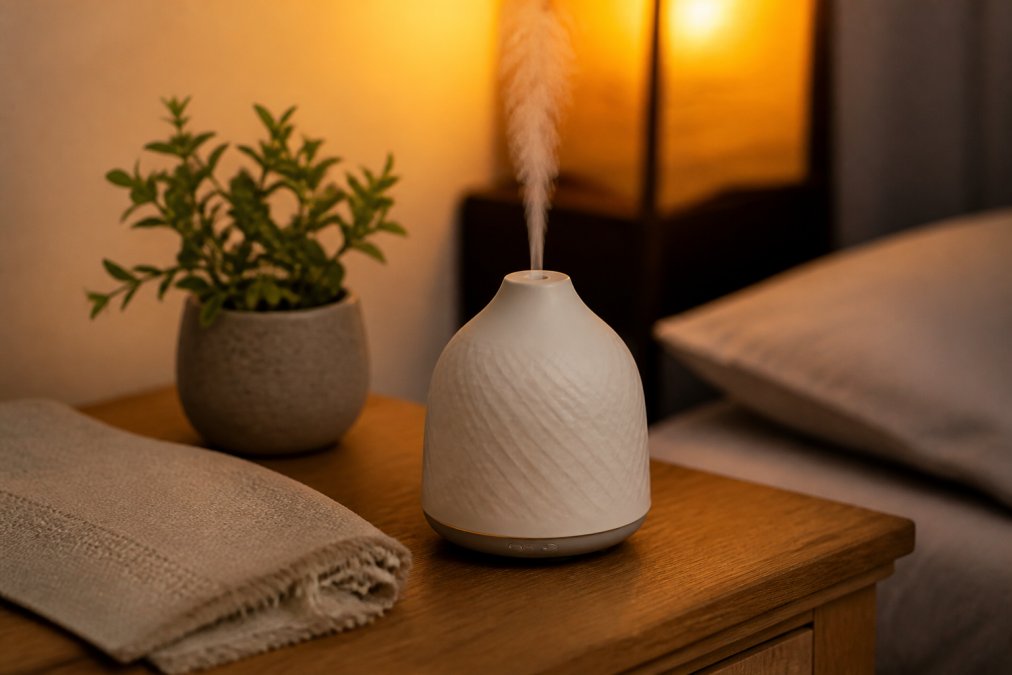
ASAKUKI 500ml Premium Diffuser: Best for Extended Runtime
The ASAKUKI 500ml delivers the longest runtime available. Its 500ml water reservoir supports up to 16 hours of continuous use, covering a full workday or night plus morning use. It functions as a 5-in-1 device: diffuser, humidifier, night light, white noise machine, and ambient lamp with seven LED colors, multiple mist settings, and remote control. The unit uses baby-safe PP materials with automatic shut-off when the reservoir empties.
Scent throw is less intense than nebulizing diffusers, making it better suited for bedrooms, offices, and medium-sized living rooms rather than large, open-plan spaces.
Best for: Large rooms and offices where extended runtime matters more than maximum scent intensity.
Stadler Form Jasmine: Best for Quiet, All-Day Scenting
The Stadler Form Jasmine stands apart for quiet operation at under 26 dB(A), ideal for light sleepers or home workers. The interval mode is its strongest feature: running 10 minutes on and 20 minutes off, it achieves up to 24 hours of runtime from a 100ml tank. For subtle, consistent fragrance rather than heavy saturation, interval mode is ideal.
The design is deliberately understated with no competing light shows or sound libraries.
Best for: Home offices, bedrooms, and anyone who finds most diffusers too loud or visually busy.
Ellia Gather Ultrasonic Diffuser: Best Multi-Sensory Option
The Ellia Gather offers up to 10 hours continuous or 20 hours intermittent runtime. Built from ceramic and wood, it includes seven color-changing lights, six relaxing sounds, and a remote control. The starter kit comes with three 10ml essential oils: lavender, peppermint, and lemongrass. The sound feature is genuinely useful for sleep routines or meditation, and the ceramic and wood construction provides a warmer presence than plastic alternatives.
Best for: Individuals who want a single device to handle scent, ambient sound, and mood lighting as part of a deliberate evening or morning ritual.
Vitruvi Stone Diffuser: Best for Aesthetic Integration
The Vitruvi Stone Diffuser is the choice when aesthetics matter as much as performance. The matte ceramic cover is genuinely beautiful and designed to sit on a shelf without appearing as a gadget. Runtime is 8 hours intermittent or 4 hours continuous, covering up to 500 sq ft. Optional LED ambient lighting includes a dim setting and flickering candlelight mode.
At $129.99, it is the premium ultrasonic option here, reflecting ceramic construction and design quality.
Best for: Design-conscious homeowners who want a diffuser that functions as a considered decorative object.
AromaTech AroMini BT Plus: Best for Large Spaces
The AroMini BT Plus uses cold-air nebulizing technology to atomize pure essential oil without water or heat, delivering consistent scent throw across up to 1,500 sq ft. Bluetooth app control allows scheduling and intensity adjustment without touching the unit. Oil life runs roughly one to two months per 60ml bottle at typical use.
At $295.00, the price is significant, and oil consumption is higher than any ultrasonic diffuser here. For whole-home fragrance with smart control and no water tank to manage, nothing else competes.
Best for: Large rooms, open-plan spaces, or anyone who wants waterless diffusion with app-based scheduling.
doTERRA Petal Diffuser 2.0: Best Compact Pick
The doTERRA Petal Diffuser 2.0 offers 2, 6, and 12-hour intermittent settings, covers up to 330 sq ft, and weighs almost nothing. The three-piece design makes filling, cleaning, and moving between rooms easy. It lacks remote control, sound features, and app integration, but offers reliable, quiet ultrasonic performance in a compact form factor.
The wholesale price of $56.79 requires a doTERRA membership. Retail is $75.73.
Best for: Bedrooms, travel, and anyone who wants a dependable compact diffuser without unnecessary complexity.
URPOWER 300ml Diffuser: Best Budget-Friendly Option
The URPOWER 300ml supports up to 10 hours of continuous use with noise level below 23 dB. Seven LED color options and two mist modes cover the basics, with automatic shut-off when the reservoir empties. The water tank lid can be stiff, but this is not a dealbreaker for everyday home use.
Best for: Budget-conscious buyers, first-time diffuser owners, and secondary-room use.
How Long Should You Run an Essential Oil Diffuser?
The recommended runtime is 30 to 60 minutes per session, with equal or greater breaks between sessions. This interval approach is better for air quality, oil economy, and device longevity. Running a diffuser continuously for eight or more hours can cause headaches or sensory fatigue in some individuals, particularly in smaller, poorly ventilated rooms. According to EPA guidance on indoor air quality and fragrance products, adequate ventilation is the most important factor in maintaining healthy indoor air when using any scented product.
The practical approach for most users:
- Morning routine: 30-60 minutes during breakfast or wind-down
- Work sessions: 30 minutes on, 30 minutes off throughout the day
- Evening: 60 minutes before bed; use the timer to shut off automatically
- Sleep: If running overnight, use intermittent mode and ensure some air circulation
Diffusers with built-in timer settings make this straightforward.
Essential Oil Diffuser Maintenance Tips That Extend Its Life
A diffuser not cleaned regularly will underperform within weeks. The ultrasonic plate accumulates mineral scale from tap water, and the water reservoir becomes a breeding ground for mold if left damp between uses.
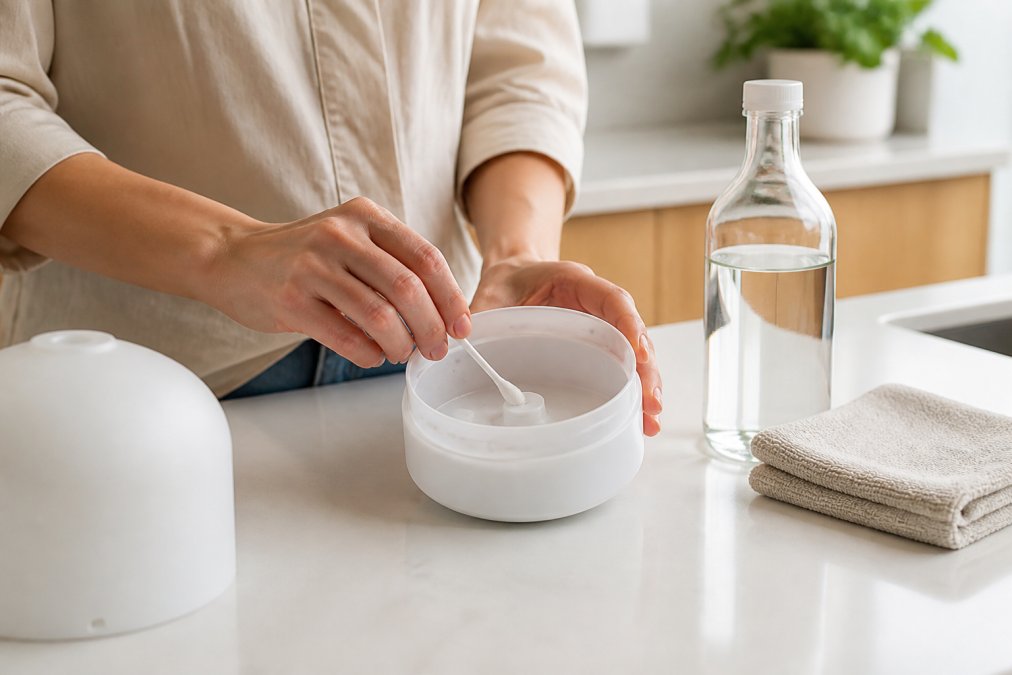
Cleaning the Ultrasonic Plate and Water Reservoir
The ultrasonic plate is the small ceramic or metal disc at the base of the water reservoir that vibrates at high frequency to create mist. Mineral deposits reduce efficiency, and oil residue causes uneven vibration, producing weaker or inconsistent mist output.
Weekly cleaning routine:
- Empty remaining water after each use
- Wipe the interior with a soft, damp cloth
- Apply white vinegar to a cotton swab and gently clean the ultrasonic plate
- Rinse with clean water and allow to air dry completely before the next use
- Use distilled or filtered water to reduce mineral buildup
Mold Prevention and Long-Term Storage
Never leave water sitting in the reservoir between uses. Empty it, wipe it dry, and leave the lid off until the next session. This one habit eliminates the primary condition mold needs.
For long-term storage, run the diffuser for 5 minutes with diluted vinegar solution, empty completely, dry thoroughly, and store with the lid open or loosely placed.
Essential Oil Compatibility by Diffuser Type
Not every essential oil works equally well in every diffuser type. Choosing the wrong oil affects both scent throw and device longevity.
For ultrasonic diffusers: Most essential oils are compatible, but thick, resinous oils like sandalwood, vetiver, and patchouli leave heavier residue and require more frequent cleaning. Citrus oils (lemon, orange, grapefruit) are excellent: they are thin, disperse well in water, and leave minimal residue.
For nebulizing diffusers: Thicker oils can clog the mechanism. Cold-air diffusion works best with lighter oils or pre-diluted blends. If you want to use thicker oil like frankincense in a nebulizer, dilute it with fractionated coconut oil at roughly 1:1 ratio.
Oils to avoid in any diffuser:
- Undiluted absolutes (jasmine absolute, rose absolute), too thick and will gum up any mechanism
- Synthetic fragrance oils, can damage ultrasonic plates and nebulizing components over time
- Fixed oils (almond, jojoba, olive), will clog any diffuser immediately
According to National Association for Holistic Aromatherapy guidance on diffuser use, using pure, unadulterated essential oils is the most important factor in both safety and equipment longevity.
| Oil Type | Ultrasonic | Nebulizing | Notes |
|---|---|---|---|
| Citrus (lemon, orange) | Excellent | Excellent | Light, clean, minimal residue |
| Lavender, eucalyptus | Excellent | Good | Most versatile for daily use |
| Peppermint | Excellent | Good | Clean residue, easy maintenance |
| Sandalwood, vetiver | Acceptable | Dilute first | Heavy residue, clean more often |
| Frankincense | Acceptable | Dilute first | Thick resin, dilute 1:1 |
| Jasmine absolute | Avoid | Avoid | Too thick, will clog mechanism |
| Synthetic fragrance oil | Never | Never | Damages components |
The Castellanos Housing collection is built around the idea that the details of a space matter. Choosing the right diffuser is one of those details: a unit that runs quietly through the night, cleans easily, and holds its scent throw over months of use makes a real difference to how a room feels. Browse the current selection at Castellanos Housing to find diffusers and essential oils curated for everyday intentional living.
Frequently Asked Questions
What is the best diffuser that lasts the longest?
For sheer continuous runtime, the ASAKUKI 500ml leads with up to 16 hours on a single fill. If you prefer waterless operation, nebulizing diffusers like the AromaTech AroMini BT Plus run for months on a single 60ml oil bottle. The right choice depends on whether you prioritize water-based humidifying mist or pure cold-air diffusion without refilling a reservoir daily.
Are ultrasonic or nebulizing diffusers better for long-term use?
Ultrasonic diffusers cost less upfront and use water to disperse oil, making them gentler on essential oil integrity and easier to clean. Nebulizing diffusers use cold-air diffusion with no water or heat, preserving therapeutic properties more fully and covering larger areas. For long-term durability, nebulizing units have fewer parts that wear out, but their higher oil consumption rate means ongoing costs add up faster than with ultrasonic models.
How many hours should a high-quality essential oil diffuser run?
Most aromatherapy guidance suggests running a diffuser for 30 to 60 minutes at a time, then giving the room a break before the next session. Intermittent mist mode, available on most models reviewed here, automates this by cycling on and off. Continuous runtime beyond two hours in a closed room can cause scent fatigue and may irritate airways, especially with therapeutic-grade oils at higher concentrations.
How do I maintain my diffuser to ensure it lasts longer?
Wipe the water reservoir and ultrasonic plate with a damp cloth after every few uses. Run a cleaning cycle monthly using a 50/50 mix of water and white vinegar, letting it run for five minutes before emptying and rinsing. Always empty standing water when the diffuser is not in use to prevent mold growth. For nebulizing diffusers, run a short cycle of plain carrier oil occasionally to flush residue from the nozzle.
What essential oil scents have the longest-lasting throw?
Base-note oils like sandalwood, cedarwood, patchouli, and vetiver have the slowest evaporation rate, meaning their scent throw lingers noticeably longer than citrus or light floral oils. Blending a base note with a middle note such as lavender or clary sage creates a more balanced fragrance that holds in a room well beyond the diffuser's active cycle, making them ideal for extended home fragrance sessions.
Choosing the right diffuser comes down to matching runtime, coverage area, and maintenance requirements to your actual daily routine. For most homes, an ultrasonic diffuser with a large water reservoir and a built-in intermittent mist mode offers the best balance of longevity and ease. For larger spaces or those who prioritize essential oil integrity, a nebulizing model is worth the investment. Continue shopping the Castellanos Housing collection to find the option that fits your space.
This article was written using GrandRanker