

Sustainable Home Decor for 2026: 9 Top Trends
Table of Contents
- Why Sustainable Home Decor Defines 2026 Interiors
- Eco-Friendly Interior Design Trends 2026: The Full Picture
- Quiet Luxury Home Decor: Understated, Lasting, and Intentional
- Artisan Home Goods Sourcing: How to Buy Better
- Lifecycle Assessment: Which Sustainable Home Decor Actually Lasts
- Budget-Friendly Sustainable Decor: DIY and Smart Swaps
- Eco-Friendly Gift Ideas That People Actually Keep
- Conclusion
Last Updated: August 21, 2026
Why Sustainable Home Decor Defines 2026 Interiors
Sustainable home decor is no longer niche, it's how design-conscious homeowners evaluate every purchase. Buyers are moving away from fast furnishings toward pieces that last, carry meaning, and reflect a considered relationship with materials.
At Castellanos Housing, we've watched this reshape what customers want. The questions have changed. People aren't asking "does this look good?" in isolation. They're asking "where did this come from, how long will it last, and what happens to it when I'm done?"
The throughline running through 2026's most compelling interior spaces is intentionality. Rooms feel lived-in rather than staged. Materials are honest, natural stone, hand-woven textiles, terracotta, rattan, rather than simulated. Objects carry a traceable story, from artisan workshop to living room shelf.
This guide covers nine trends shaping sustainable home decor right now, along with practical advice on sourcing, material longevity, and making smarter choices at every budget level.
Eco-Friendly Interior Design Trends 2026: The Full Picture
The strongest eco-friendly interior design trends of 2026 share a common quality: they age well. These aren't aesthetic fads but approaches rooted in renewable resources, ethical sourcing, and organic shapes over mass-produced uniformity.
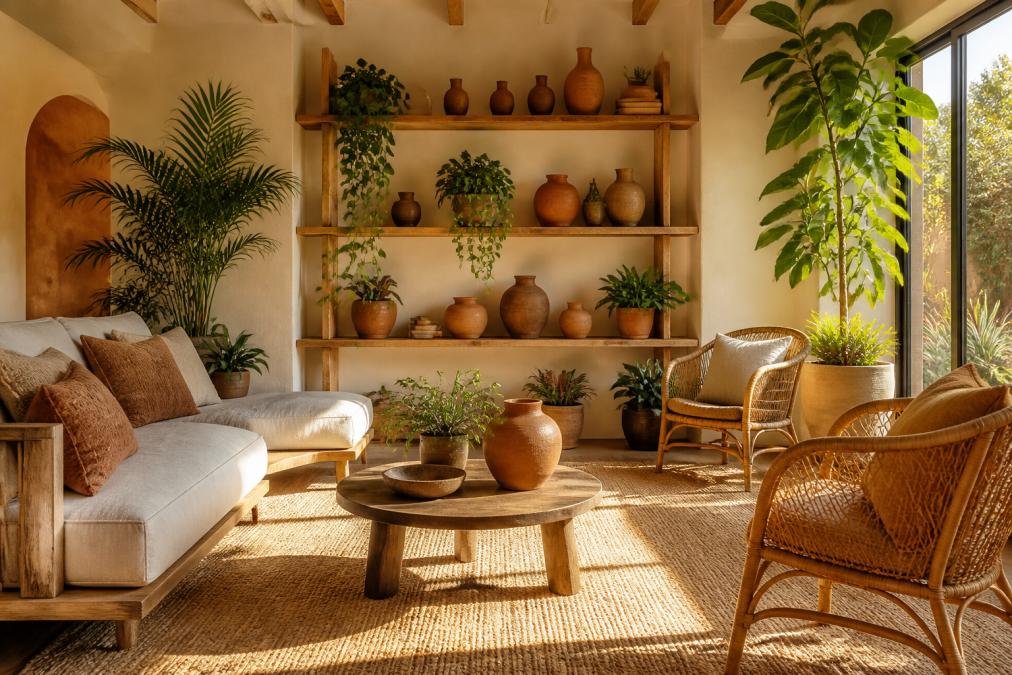
1. Natural and Earthy Material Palettes
Earthy palettes, warm wood tones, raw terracotta, unbleached linen, natural stone, are the backbone of 2026's sustainable interior story. These material choices connect a space to the physical world rather than distancing it.
What makes earthy palettes genuinely sustainable is that the materials tend to be renewable, biodegradable, or produced with lower carbon footprints than synthetic alternatives. A hand-thrown terracotta pot carries a very different lifecycle than an injection-molded plastic version.
Natural materials develop patina rather than looking worn. A hand-carved wooden bowl looks better at five years than at purchase, the opposite of how fast decor ages.
2. Biophilic Design Integration
Biophilic design incorporates natural elements into interior spaces to support human wellbeing. It goes beyond placing a plant on a shelf to consider natural light, airflow, organic shapes, and living materials.
According to the WELL Building Standard guidelines, access to nature within built environments is directly linked to reduced stress and improved cognitive function. For home interiors, this translates to practical choices: maximize natural light, introduce living plants, choose furniture with organic silhouettes, and prioritize materials that feel alive rather than inert.
In 2026, biophilic design has moved beyond the Instagram-ready "urban jungle" phase into something quieter and more considered. Fewer plants, better placed. Materials that breathe, linen, jute, unfinished wood. Spaces that feel calm rather than performatively green.
3. Recycled and Upcycled Glassware and Lighting
Recycled glass can be recycled indefinitely without quality degradation, giving it genuine circular economy credentials. Sonoma Restorations creates pendant lights and table lamps from reclaimed materials sourced from regional wineries and distilleries. Each piece carries a literal history, and that provenance becomes part of the object's character.
The lighting category is where upcycled and recycled materials make the strongest visual impact. A hammered metal pendant or hand-blown recycled glass fixture doesn't just reduce waste, it adds tactile presence that factory-produced lighting cannot replicate.
4. Textile Innovations: Pineapple Leather, Seaweed, and Organic Weaves
The textile side of sustainable home decor is where genuinely new material science is happening. Pineapple leather, derived from pineapple leaf fibers, offers a plant-based alternative to animal leather for upholstery. Seaweed-based textiles are emerging as a renewable resource with remarkably low production carbon footprints.
Rawganique produces home textiles including bedding, curtains, and towels from 100% organic cotton with natural rubber and natural buttons, designed to be fully biodegradable. Hand-woven textiles remain the most accessible entry point, a hand-woven throw or jute rug carries significantly lower environmental load than synthetic alternatives, with unmistakable visual texture.
5. Sculptural and Organic Silhouettes
Sculptural silhouettes, curved sofas, asymmetric ceramic vessels, organic-shaped mirrors, are replacing hard angles throughout 2026 interiors. This matters for sustainability because organic shapes tend to be handcrafted. You cannot injection-mold an asymmetric clay form at scale; it requires a maker's hands, connecting sculptural decor directly to artisan craftsmanship and smaller-batch manufacturing.
One well-chosen sculpted ceramic or architecturally interesting rattan piece does more for a room than a shelf of uniform objects.
6. Tactile Finishes and Layered Textures
Tactile finishes, hammered metal surfaces, rough-hewn stone, hand-thrown ceramics with visible marks, linen with natural slubs, reward touch in ways photographs cannot capture. Layering textures makes a room feel genuinely inhabited rather than styled. A smooth natural stone surface next to a rough jute rug next to a soft linen cushion creates sensory range that keeps a space interesting over time.
Quiet Luxury Home Decor: Understated, Lasting, and Intentional
Quiet luxury home decor is the philosophy of investing in fewer, better things, objects that announce their quality through material and craft rather than branding. It aligns almost perfectly with sustainable purchasing logic.
The most useful reframe is the cost-per-use calculation. A handcrafted ceramic bowl that costs more upfront but lasts twenty years has a very different actual cost than a cheap alternative replaced every two years. Longevity is the quiet luxury credential that matters most from a sustainability perspective.
When someone asks why artisan-made decor costs more than mass-market alternatives, the honest answer is: you're paying for the material, the maker's time, and the object's lifespan. That's not branding, it's the actual structure of what you're buying.
Quiet luxury spaces feature architectural millwork, natural stone surfaces, hand-woven textiles, and objects chosen slowly rather than accumulated quickly. The lived-in quality comes from the objects themselves, not from volume.
Artisan Home Goods Sourcing: How to Buy Better
Most people know they want to buy better but don't know what "better" means at the point of purchase. Here's a clearer framework.
What Fair Trade and Ethical Sourcing Actually Mean
Fair Trade is a specific certification standard, not a general feeling. Fair Trade certified products meet documented requirements around fair wages, safe working conditions, and community investment. Ten Thousand Villages and Fair Trade Winds operate under verified fair trade principles, meaning products carry traceable ethical sourcing credentials rather than marketing language.
Ethical sourcing asks: who made this, under what conditions, and were they fairly compensated? According to the Fair Trade USA certification standards, certified products must meet independently audited labor and environmental standards, a meaningful distinction from self-reported claims.
The practical test: can the retailer tell you where the object was made and by whom? If the answer is vague, that's information.
Circular Economy Shopping: Buying for Longevity
The circular economy keeps materials in use as long as possible rather than sending them to landfill. For home decor, this means prioritizing pieces that can be repaired, repurposed, or recycled at end of life.
Circular economy shopping comes down to practical principles:
- Choose natural materials over synthetic composites (easier to repair, biodegrade, or recycle)
- Buy secondhand or upcycled pieces when possible
- Prioritize makers who use reclaimed or recycled inputs
- Avoid adhesive-heavy construction that prevents disassembly and repair
American Country Home Store's recycled and repurposed collection and Modish Store's reclaimed decor selection are practical examples of circular economy retail, giving existing materials a second life rather than extracting new ones.
Lifecycle Assessment: Which Sustainable Home Decor Actually Lasts
A lifecycle assessment (LCA) evaluates the total environmental impact of a product from raw material extraction through manufacturing, use, and end of life. For home decor buyers, a simplified LCA mindset is one of the most useful tools available.
The question isn't just "is this made from sustainable materials?" It's "what happens to this object at every stage of its life?"
Natural materials generally perform well on LCA metrics because they're renewable, biodegradable, and produced without energy-intensive processes required for synthetics. But "natural" isn't automatically better, rattan furniture shipped halfway around the world has a different carbon footprint than one produced closer to home.
As documented in EPA guidance on sustainable materials management, reducing total material consumption through longevity, repair, and reuse has greater environmental impact than material substitution alone. Buying less, but buying better, remains the highest-impact strategy available to individual consumers.
| Material | Typical Lifespan | Repairability | End-of-Life Option |
|---|---|---|---|
| Solid wood | 20-50+ years | High | Biodegradable, recyclable |
| Terracotta / ceramic | 10-30+ years | Low-moderate | Biodegradable |
| Rattan / jute | 5-15 years | Moderate | Biodegradable |
| Recycled glass | 10-30+ years | Low | Fully recyclable |
| Organic cotton textile | 5-10 years | High | Biodegradable |
| Synthetic composite | 3-7 years | Low | Landfill |
Maintaining Sustainable Materials So They Go the Distance
Most natural materials are straightforward to care for, they just require different care than synthetics.
- Solid wood: Wipe with a damp cloth, apply natural oil or beeswax annually. Avoid prolonged moisture exposure.
- Terracotta and ceramics: Dust regularly, avoid thermal shock. Unglazed terracotta can be sealed with food-safe sealant if used near moisture.
- Rattan and jute: Vacuum regularly. Keep out of direct prolonged sunlight. Wipe rattan with a lightly damp cloth for deeper cleaning.
- Recycled glass: Standard glass care applies; mild soap and water. Avoid abrasive cleaners on textured surfaces.
- Organic cotton textiles: Wash in cold water, air dry when possible. Avoid high heat.
Minor wear on natural materials often improves their appearance. A lightly scuffed wooden surface develops character. A well-used linen throw softens and gains texture. Lean into it rather than treating every mark as damage.
Budget-Friendly Sustainable Decor: DIY and Smart Swaps
Sustainable home decor does not require a high budget. The most impactful sustainable choices are often the cheapest: buying secondhand, repairing rather than replacing, and making small items yourself from quality materials.
Organic Cotton Plus offers GOTS-certified organic fabrics at accessible per-yard prices, making it practical for DIY cushion covers, curtains, or table runners. The DIY route means you control construction, avoiding hidden synthetic linings or adhesive-heavy assembly that shortens lifespan.
Smart swaps that cost little but shift sustainability significantly:
- Replace synthetic candles with beeswax or soy alternatives
- Swap plastic storage with woven baskets or ceramic containers
- Use secondhand frames with new prints (Prodigi offers eco canvas prints on 100% recycled materials)
- Choose a jute rug over synthetic fiber alternatives at similar price points
- Repair rather than replace, a reglued ceramic or re-oiled wood piece extends life by years
A budget-friendly sustainable space is built slowly and intentionally, not purchased all at once.
Eco-Friendly Gift Ideas That People Actually Keep
Most home decor gifts end up unused because they're chosen for the giver's taste rather than the recipient's lifestyle. Eco-friendly gifts that actually get used are functional, beautiful, and sized appropriately for everyday life.
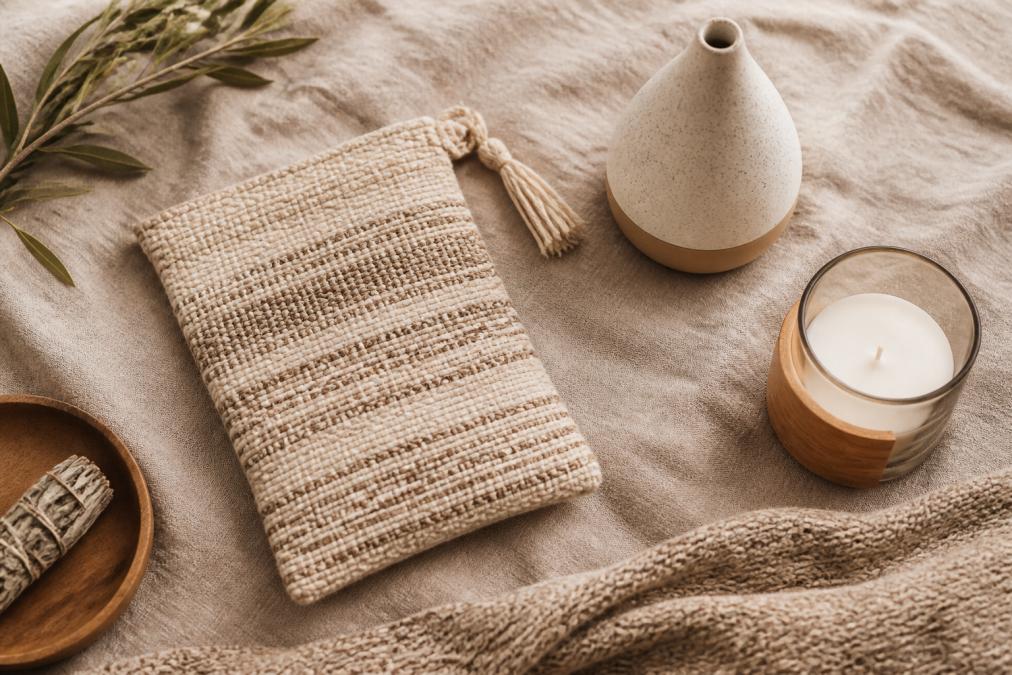
Castellanos Housing's curated selection is built around objects people actually use, placed where they already spend time. A ceramic diffuser, a hand-woven textile, a glass candle holder, these integrate into existing spaces without requiring restructuring.
Gift categories that consistently hold their value:
- Artisan ceramics: Functional and beautiful. A hand-thrown mug or vessel is used daily.
- Hand-woven textiles: A quality throw or cushion cover integrates into any existing space.
- Natural fragrance and diffusers: Objects with genuine daily utility that support a calming environment.
- Recycled glass vessels: Visually distinctive and lasting indefinitely.
- Fair trade baskets and organizers: Functional storage that adds texture and warmth.
For gift shoppers uncertain about taste, choose objects in natural materials, terracotta, glass, linen, wood, in earthy, neutral tones. These integrate into almost any existing decor style.
An artisan-made object wrapped in recycled or compostable materials signals the same care as the object itself, a detail people notice.
| Trend | Core Material | Sustainability Credential | Best For |
|---|---|---|---|
| Earthy palettes | Terracotta, stone, wood | Renewable, biodegradable | Every room |
| Biophilic design | Living plants, natural light | Wellbeing, low-impact | Living spaces |
| Recycled glassware | Recycled / reclaimed glass | Circular, fully recyclable | Lighting, vessels |
| Textile innovations | Organic cotton, pineapple fiber | Biodegradable, ethical | Soft furnishings |
| Sculptural silhouettes | Hand-thrown ceramics, rattan | Artisan-made, small-batch | Accent pieces |
| Tactile finishes | Hammered metal, linen, stone | Low-synthetic, durable | Layered interiors |
| Quiet luxury | Solid wood, natural stone | Longevity-focused | Investment pieces |
Frequently Asked Questions
Q: What is the home decor trend for 2026?
A: The dominant theme for sustainable home decor in 2026 is intentional simplicity: fewer pieces, better materials, and longer lifespans. Earthy palettes built around terracotta, warm wood tones, and natural stone are replacing fast-trend color cycles. Biophilic design, organic shapes, and artisan-crafted goods are central to this shift. Recycled glass, hand-woven textiles, and compostable materials are increasingly common across every price point, reflecting a broader move toward the circular economy in home interiors.
Q: What eco-friendly materials are trending for home interiors in 2026?
A: Rattan, jute, reclaimed wood, recycled glass, and organic cotton are the most widely adopted sustainable materials in 2026 interiors. Textile innovations are expanding the category further, with pineapple leather and seaweed-based fibers appearing in accent pieces and soft furnishings. For hard goods, hammered metal and sculpted ceramics made with low-impact processes are gaining ground. GOTS-certified organic fabrics are a reliable benchmark for textiles, signaling verified ethical sourcing from fiber to finished product.
Q: Why is quiet luxury a major trend for 2026 home decor?
A: Quiet luxury home decor prioritizes restraint over ornamentation: natural materials, neutral palettes, and pieces built to last decades rather than seasons. The appeal is partly aesthetic and partly practical. Consumers are pushing back against disposable decor after experiencing how quickly mass-produced items degrade. Artisan-crafted goods with architectural millwork details, hand-woven textiles, and organic shapes deliver the tactile quality that quiet luxury demands, while also aligning with sustainable values around longevity and reduced carbon footprint.
Q: How can I incorporate sustainable materials into my home decor without spending a lot?
A: Start with swaps that have the highest visual impact for the lowest cost: replace synthetic throw pillows with organic cotton or linen covers, add a jute rug to anchor a seating area, or bring in terracotta pots for plants. DIY upcycling, such as refinishing a thrifted wooden frame or reupholstering a chair with GOTS-certified fabric, extends the life of existing pieces and reduces waste. Buying secondhand through estate sales or resale platforms is one of the most effective circular economy strategies available.
Q: What makes a sustainable home decor gift worth giving?
A: The best eco-friendly gift ideas are ones the recipient will use daily, not display once and forget. Artisan-crafted pieces with a clear material story, such as recycled glass vessels, hand-woven textiles, or ceramic diffusers made from natural clay, tend to hold their place in a home because they improve with use. Gifts that support a lived-in, sensory experience, like essential oil diffusers or aromatherapy accessories, are particularly well-received because they serve a function while contributing to a calmer, more considered home environment.
Sustainable home decor for 2026 is defined by one question: does this object deserve a place in my home for the long term? Answering that question well requires knowing where things come from, how they're made, and how long they'll last. Browse the Castellanos Housing collection to find curated home goods and thoughtful gift ideas chosen with exactly that standard in mind. Continue shopping and bring a more considered point of view to your living space.
This article was written using GrandRanker