

Style Mindful Living Spaces in Small Apartments
Table of Contents
- What Mindful Living Means in Compact Spaces
- Assess Your Floor Plan and Maximize Spatial Efficiency
- Minimalist Apartment Decor Ideas That Actually Work
- How to Declutter a Small Apartment for Mental Clarity
- Creating a Meditation Corner in a Studio Apartment
- Best Essential Oil Diffusers for Small Spaces
- Layer Sensory Design for a Calm, Intentional Home
- Frequently Asked Questions
Last Updated: September 27, 2026
What Mindful Living Means in Compact Spaces
Creating mindful living spaces small apartments means making intentional design choices that support calm and clarity. It's not minimalism for its own sake, it's creating an environment where every object serves a purpose and supports your mental peace. You're designing for how the space supports your life, not just what fills it.
At Castellanos Housing, we understand that small apartments need thoughtful curation. The right pieces, from a carefully chosen diffuser to a simple vase, transform a cramped studio into a sanctuary. When space is limited, every detail counts.
Assess Your Floor Plan and Maximize Spatial Efficiency
Spatial efficiency in small apartments isn't just about fitting more in, it's about understanding how your brain perceives the space. Research in environmental psychology shows that cluttered or poorly organized layouts increase cognitive load and stress. A well-planned small apartment feels larger because your nervous system isn't working overtime to process visual chaos.
Start with a detailed floor-plan audit:
Measure and map. Use a tape measure to record exact dimensions of each room, doorways, and windows. Knowing you have 350 square feet versus 400 changes what furniture fits and how you should arrange it. Sketch a simple floor plan on paper or use a free tool like Floorplanner or RoomSketcher to visualize placement before buying anything.
Identify natural light sources. Mark where sunlight enters. North-facing windows provide consistent, cool light; south-facing windows bring warmth and brightness. Small spaces feel larger when well-lit. Position your main seating and work areas where natural light reaches them.
Map traffic patterns. Walk your typical daily routes: bedroom to kitchen, entry to bathroom, workspace to living area. Furniture blocking natural traffic flow creates friction. Aim for at least 18 inches of clear walkway width between furniture pieces.
Define functional zones without walls. In a studio or one-bedroom, you need sleeping, working, eating, and relaxing zones, but they often overlap. Use these tools to create psychological separation:
- Rugs: A 5-by-8-foot rug anchors a living area and signals "this is the relaxation zone" to your brain, even if it's 10 feet from your bed.
- Furniture arrangement: Position your sofa to face away from the bedroom area. A desk angled toward a window creates a distinct work zone.
- Vertical elements: A tall bookshelf or room divider (even a lightweight fabric screen) breaks sightlines and makes zones feel separate without closing them off.
- Lighting: Different light sources for different zones, bright task lighting for work, warm ambient light for relaxation, reinforce the psychological shift between activities.
Choose low-profile furniture strategically. Furniture with exposed legs creates visual lightness because you can see floor space beneath it. A sofa on legs feels less heavy than one sitting directly on the ground. Avoid tall, bulky pieces that dominate the room's visual weight.
Use vertical space as your secret weapon. Wall-mounted shelving, tall bookcases, and floating storage draw the eye upward, making ceilings feel higher. Aim to use at least 70% of your wall height for storage or visual interest.
Create a "breathing zone. One completely clear corner or wall gives your eye a place to rest. This is essential for mental calm. Small apartments need at least one uncluttered sightline.
Minimalist Apartment Decor Ideas That Actually Work
Minimalism in small apartments isn't about deprivation, it's about strategic reduction. Every object in your visual field demands cognitive processing. Fewer, more intentional pieces mean your brain can relax instead of constantly cataloging what's around you.
Build a calming color foundation. Your walls and large furniture set the baseline for how your nervous system responds to the space.
- Walls: Soft whites, warm grays (LRV 50-70), or muted beiges create a neutral backdrop. Avoid pure white, which can feel sterile. A warm white (with slight yellow or beige undertones) feels more inviting. Paint one accent wall only if it's a focal point, a wall behind your bed or desk.
- Large furniture: Sofas, beds, and dressers in neutral tones should disappear into the background so smaller, intentional pieces stand out.
- Flooring: Light wood or neutral tile reflects light and visually expands the space. Use a light-colored area rug to define zones.
The monochromatic palette reduces visual noise but requires texture to avoid feeling cold. In small apartments, you're closer to every surface, so tactile richness becomes critical.
Layer textures intentionally. Without color variation, texture becomes your design language.
Luxury Home Staging Consultation Package →
- Natural fibers: Linen, wool, jute, and cotton feel good to touch and signal calm. A linen throw pillow, a wool area rug, a jute basket add warmth without visual clutter.
- Wood and ceramic: Natural materials ground a space and create visual interest through material, not color.
- Soft furnishings: A chunky knit blanket, a sheepskin rug, a linen curtain invite touch and create coziness.
The rule: if you're using a neutral color palette, you need at least three different textures in the room or it will feel flat and uninviting.
Choose multi-functional furniture as your foundation. In small spaces, every piece must earn its place through function, beauty, or both.
- Storage ottomans: Provides seating, a footrest, and hidden storage for blankets or seasonal items. Look for ones with a removable top and internal dividers.
- Nesting tables: Two or three tables in graduated sizes stack when not in use, then separate for flexibility. Takes up minimal floor space but expands functionality.
- Murphy desk or wall-mounted drop-leaf table: Folds away when not in use, freeing floor space for movement and relaxation.
- Bed with under-bed storage: Drawers or rolling bins beneath the bed capture dead space and keep seasonal clothing, extra bedding, or items you use infrequently out of sight.
- Shelving with baskets: Open shelves look minimal only if contents are organized. Use matching baskets or bins to hide clutter while keeping items accessible.
Invest in quality over quantity. One well-made piece costs more upfront but lasts longer and feels better. A solid wood shelf outlasts particleboard by decades. A $300 solid wood dresser from a secondhand source beats a $200 particle-board one from a big-box store. Buy things you genuinely love, not things that are "good enough."
The 80/20 rule for small-space minimalism. Aim for 80% of your apartment to be functional, neutral, and invisible (walls, flooring, basic furniture) and 20% to be intentional focal points, a single piece of art, one plant, a carefully chosen vase. This ratio prevents the "cold, empty" feeling while maintaining the calm of minimalism.
How to Declutter a Small Apartment for Mental Clarity
Clutter creates mental weight and background stress. Decluttering isn't organizing better, it's removing. Start with one category at a time: clothes you don't wear, kitchen items you never use, books you won't reread, decorative pieces that don't spark joy. Ask each item: Does this support my life right now? For small apartments, every object takes up real estate. If something doesn't earn its place through function or genuine beauty, it's stealing space from something that does.
Storage should be hidden. Closed shelving, drawers, and cabinets contain visual noise. Create a "one in, one out" system to prevent slow creep back to clutter.
Creating a Meditation Corner in a Studio Apartment
A meditation corner doesn't need much space. Choose a quiet corner, ideally near a window. You'll need a cushion or small chair, soft lighting (a dimmable lamp), and optional sensory elements like a diffuser, plant, or small bell. A dedicated meditation cushion signals to your brain that this is a different kind of space. The corner works because it's separate from where you sleep, work, and eat. Even five minutes feels restorative because it's designated for calm.
Best Essential Oil Diffusers for Small Spaces
The right diffuser matters in a studio or small apartment. It needs to be compact, quiet, and actually effective.
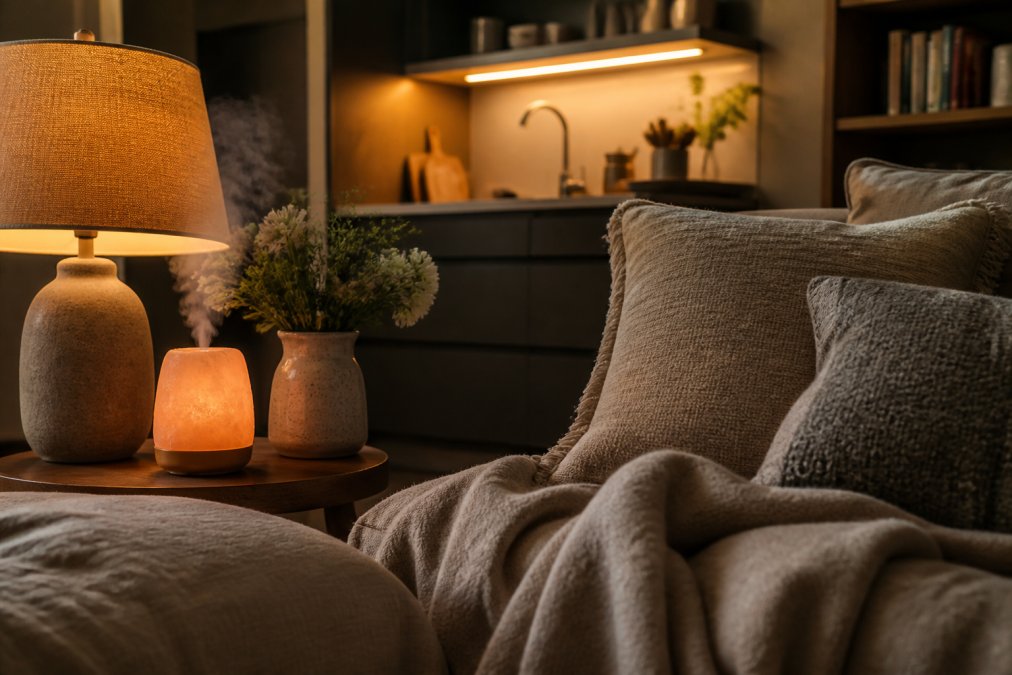
The Air Humidifier Crystal Salt Stone Desktop Aromatherapy Essential Oil Ultrasonic Diffuser from Castellanos Housing combines three functions in one small footprint.

What makes this diffuser work for small spaces:
- Compact size (about 5 inches tall)
- Low noise, silent operation won't disturb sleep or focus
- USB charging, no outlet clutter
- Water tank holds 260ml, enough for several hours
- Colorful lights, gentle night lights, not dazzling, accompany you to sleep at ease.
Why Scent Matters in Mindful Design
Scent is the most direct path to your nervous system. A smell can shift your mood in seconds. Lavender calms. Citrus energizes. Eucalyptus clears mental fog.
Layer Sensory Design for a Calm, Intentional Home
Mindful living engages all your senses. Sight, sound, touch, smell, and even taste (through tea or water) create a complete experience.
Frequently Asked Questions
How do I style mindful living spaces in small apartments without making them feel cluttered?
Start by keeping only items that serve a purpose or bring intentional meaning to your space. Use vertical storage to maximize floor space and reduce visual clutter. Choose a monochromatic or neutral color palette to create a sense of calm and openness. Multi-functional furniture helps you maintain spatial efficiency while keeping your apartment organized and peaceful. The key is being selective about what you bring in and arranging it thoughtfully.
What's the best way to use sensory elements like scent in a small apartment?
Scent is one of the most powerful sensory tools for creating mindfulness in compact spaces. An essential oil diffuser like the Air Humidifier Crystal Salt Stone Diffuser ($55.02) is a multifunctional device, serving as an aroma diffuser, humidifier, and crystal lamp. Its porous crystal salt mine structure quickly absorbs aromatherapy essence and naturally distributes it, which can keep you in a happy mood at all times. Place it in your meditation corner or bedroom for a calming atmosphere.
Can I create a meditation corner in a studio apartment with limited square footage?
Absolutely. Even a small corner can become a dedicated meditation space. Use a low-profile accent chair or cushion, add soft ambient lighting, and incorporate a simple element like the Bloom Vase ($60.00) with fresh flowers or greenery. Layer in sensory elements such as a diffuser and a Crystal Manifestation Scented Candle ($12.00) to anchor the space. Define the zone with a small rug or by positioning furniture to create visual separation, making it feel intentional and separate from the rest of your apartment.
How do I know if a product like a diffuser will actually help me feel calmer?
Quality matters. Products designed with intentional materials, like the crystal salt diffuser with natural stones and low-noise operation, create a sensory experience. The combination of gentle mist, soft lighting, and natural fragrance engages multiple senses. Look for products built to last and designed with care; they are curated to bring an intentional and considered point of view to your living space.
