

Aromatherapy for Daily Stress: Benefits & How to Use
Table of Contents
- What Aromatherapy Does for Daily Stress
- Best Essential Oils for Anxiety and Stress
- How to Use a Diffuser for Relaxation
- Building a Daily Aromatherapy Routine
- Aromatherapy Safety Guidelines
- Cost-Benefit Analysis: Delivery Methods That Work
- Frequently Asked Questions
Last Updated: September 21, 2026
What Aromatherapy Does for Daily Stress
Aromatherapy for stress works by engaging your sense of smell to trigger physiological and psychological responses. When you inhale aromatic molecules from essential oils, they travel through your olfactory system directly to your brain's limbic system, the region responsible for emotions, memory, and stress response, shifting your nervous system state faster than many other relaxation techniques.
Your sense of smell bypasses cognitive filters that other sensory inputs must pass through. A calming scent doesn't require conscious thought, your body recognizes it and relaxes. This is why aromatherapy for stress relief works even when you're skeptical or distracted. At Castellanos Housing, we've curated essential oils and diffusers specifically chosen to support this natural relaxation response.
Unlike meditation or exercise, aromatherapy integrates seamlessly into your existing environment. You set up a diffuser on your desk, nightstand, or living room table, and it works passively throughout your day. You don't need special training, equipment, or a dedicated time block, the aromatic environment does the work while you live your life.
Regular exposure to calming essential oils retrains your nervous system's baseline stress response, making you less reactive to daily stressors over time, the difference between a quick fix and genuine stress management.
Best Essential Oils for Anxiety and Stress
Lavender is the most researched essential oil for stress relief and the ideal starting point. It works gently and suits most people, making it the foundation of any aromatherapy collection.

Bergamot offers uplifting rather than sedative properties, with a bright citrus scent that boosts mood and mental clarity. It's excellent for daytime use when you need stress relief without drowsiness.
Sandalwood provides grounding, stabilizing properties. The woody, warm scent creates emotional stability, making it ideal for evening use or when you need to feel anchored.
Lemongrass supports mental clarity while reducing anxiety. Geranium balances emotional extremes when stress manifests as mood volatility. The Castellanos Housing collection includes a 10ml Pure Plant Essential Oil featuring multiple options in pure plant extract form, designed for diffusers and humidifiers without additives or fillers.
Start with one oil that matches your primary need, calming, uplifting, or grounding, rather than trying to build a complete collection at once. This approach lets you understand how each oil affects you personally before expanding your selection.
How to Use a Diffuser for Relaxation
An ultrasonic diffuser is the most practical delivery method. These devices use vibrations to convert water and essential oil into a fine mist that disperses throughout your space, creating passive exposure without effort.
Setup takes minutes: fill the water reservoir, add 3-5 drops of essential oil, and turn on. Most diffusers have adjustable mist settings and optional LED lighting. The Castellanos Housing Portable Ultrasonic Oil Diffuser and Air Humidifier comes in 400ml or 1000ml capacities.

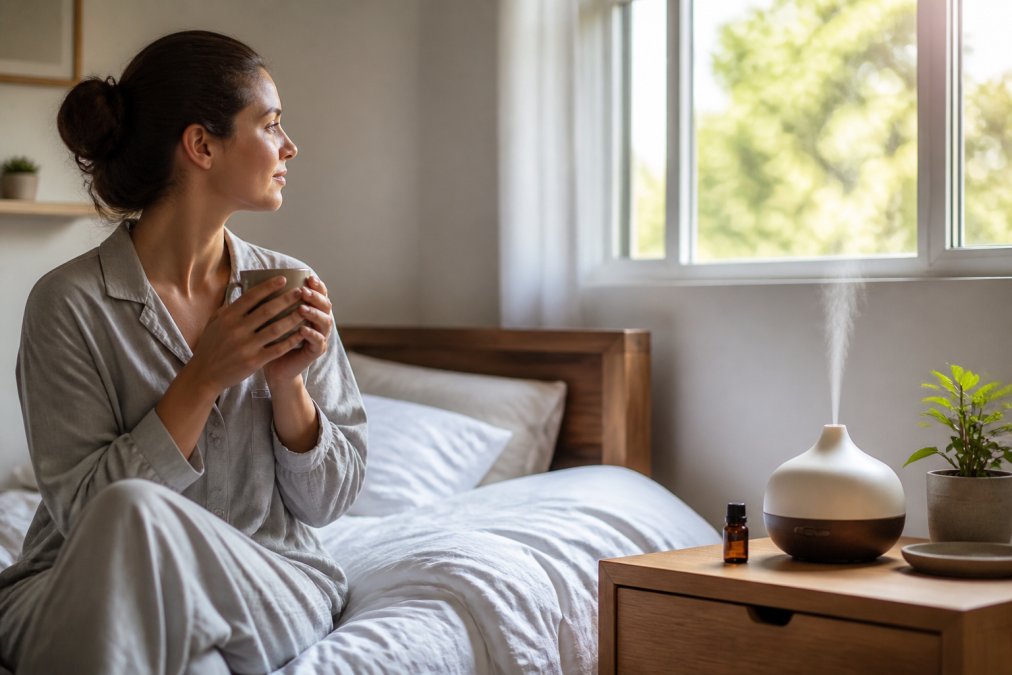
Placement matters. Position your diffuser in the room where you spend the most time during stress, your bedroom for sleep support, your home office for workday calm, or your living room for evening relaxation. Avoid placing it directly next to you; instead, position it where the mist can disperse naturally through the space. A nightstand, desk corner, or side table works well.
Run your diffuser for 30-60 minutes at a time. Continuous diffusion can lead to scent fatigue, where your nose stops registering the aroma. Intermittent use keeps aromatherapy for stress relief potent and noticeable.
Building a Daily Aromatherapy Routine
A sustainable aromatherapy practice integrates into your existing schedule by anchoring diffuser use to stress triggers and daily transitions.
Identify your stress pattern first. Track when your stress peaks: morning rush, mid-morning meetings, afternoon crash, evening rumination, or bedtime racing thoughts. Aromatherapy delivers the highest return during these predictable windows.
Morning routine (6-9 AM): Uplifting oil for nervous system priming. Use bergamot or lemongrass while you shower and dress. Run your diffuser for 20-30 minutes before leaving for work to shift your nervous system from reactive to resourceful. This morning anchor is especially effective in high-stimulation environments.
Midday reset (12-1 PM): Grounding oil during lunch or transition. Use sandalwood or geranium during your lunch break or between meetings. A portable USB diffuser or personal inhaler prevents stress accumulation and eliminates the 3 PM energy crash.
Afternoon practice (3-5 PM): Sustained grounding for focus recovery. Run your diffuser during cognitively demanding hours, or use a personal inhaler or diluted roller. This counteracts decision fatigue and stress accumulation.
Evening wind-down (30-60 minutes before bed): Lavender for nervous system transition. Run your diffuser in your bedroom to signal your body it's time to transition to rest. If you struggle with racing thoughts, start diffusion earlier and pair it with a 5-minute breathing practice.
Weekend ritual: Intentional practice for nervous system reset. Dedicate 15-20 minutes on a weekend morning to sit with your diffuser without multitasking. This deepens your olfactory-emotional association and provides a reset that carries into the week.
Troubleshooting common obstacles:
Scent fatigue (the oil stops working after a few weeks). Rotate between three oils on a weekly or bi-weekly schedule: lavender, bergamot, and sandalwood. Alternatively, take a 3-5 day break from diffusion, then restart, your nose will re-sensitize.
Open office or shared space. Use a personal inhaler or diluted roller on your wrists.
Inconsistent schedule (shift work, variable commute). Anchor aromatherapy to a habit rather than a time, use your diffuser every time you sit at your desk, or a personal inhaler during your commute. Consistency matters more than timing.
10ml Pure Plant Essential Oil For →
Skepticism or resistance. Start with a single 15-minute session and track your stress level before and after for one week. Most people notice a shift within 3-5 days of consistent use.
Consistency matters more than intensity. Daily use of aromatherapy for stress, even in small doses (10-20 minutes), creates more sustainable nervous system changes than occasional heavy exposure. The goal is to make aromatherapy so frictionless that you forget you're doing it, it simply becomes part of your environment.
Aromatherapy Safety Guidelines
Essential oils are concentrated plant extracts requiring respectful handling. Safety depends on delivery method, individual health status, and the specific oil.
General handling and storage.
Never apply essential oils directly to your skin without diluting in a carrier oil first. Always dilute at 2-3% essential oil to carrier oil (roughly 12-18 drops per 1 ounce). Store bottles in a cool, dark place, tightly sealed and away from direct sunlight.
Do not ingest essential oils. This is a common misconception about their safety. Ingestion can cause serious internal damage, toxicity, and organ damage (Essential oils: Poisonous when misused). Aromatherapy for stress works through inhalation only; the olfactory system is the intended delivery route. Even small amounts ingested can cause problems.
Inhalation safety and duration.
Avoid prolonged exposure without ventilation. Limit diffusion to 30-60 minutes at a time with adequate air circulation. If you experience headaches, dizziness, or throat irritation, reduce duration to 20-30 minutes or increase distance from the diffuser.
For asthma or chronic respiratory conditions, start with minimal diffusion (15 minutes, once daily) and monitor closely. Eucalyptus and peppermint can trigger bronchial constriction in sensitive individuals. Consult a pulmonologist or allergist before beginning aromatherapy if you have a diagnosed respiratory condition.
Safety for children.
Keep essential oils away from children. Children under 5 should not be exposed to diffused essential oils without pediatric guidance. For children 5-12, use diffusion in well-ventilated spaces for 15-20 minutes and avoid eucalyptus, peppermint, and tea tree.
Never apply undiluted oils to a child's skin. If topical application is desired, dilute to 1% concentration and apply only to the back or chest. Store all oils in child-resistant containers on high shelves or locked cabinets.
Safety for pets.
Many essential oils are toxic to pets, particularly cats and dogs. Oils to avoid include eucalyptus, peppermint, tea tree, citrus oils, and lavender. If you use a diffuser with pets, ensure the room is well-ventilated and your pet can leave. Never apply oils to a pet's skin or allow ingestion.
Safety during pregnancy and breastfeeding.
Photosensitivity and topical application.
Drug interactions and medical conditions.
Allergic reactions and sensitivities.
Cost-Benefit Analysis: Delivery Methods That Work
Diffusers represent the most practical investment for daily aromatherapy for stress. The Castellanos Housing collection offers multiple options: the Mini Air Humidifier Ultrasonic USB at $35 for travel or small spaces, and the Portable Ultrasonic Oil Diffuser and Air Humidifier at $19 for larger rooms.

| Method | Initial Cost | Ongoing Cost | Best For | Limitations |
|---|---|---|---|---|
| Ultrasonic Diffuser | $19-$35 | $0.10-0.20/day | Daily home use, passive relief | Requires electricity, water |
| Portable USB Diffuser | $35-$36 | $0.10-0.20/day | Travel, office, multiple rooms | Smaller capacity, frequent refills |
| Essential Oil Inhalers | $5-$8 | Minimal | On-the-go stress relief | Limited scent duration |
| Aromatherapy Candles | $12-$25 | $0.30-0.50/day | Aesthetic + function | Less precise dosing, fire hazard |
Frequently Asked Questions
How does aromatherapy reduce stress and anxiety?
Aromatherapy works through the olfactory system, which connects directly to the limbic system in your brain that controls mood and emotion. When you inhale essential oils, aromatic compounds trigger the nervous system to activate a relaxation response, helping lower cortisol levels and reduce anxiety symptoms. This non-invasive complementary therapy affects both psychological and physiological stress responses.
Which essential oils are most effective for daily stress relief?
Lavender, bergamot, sandalwood, lemongrass, and geranium are among the most studied for stress reduction. Lavender is particularly well-known for promoting relaxation and improving sleep quality. Our Pure Plant Essential Oil collection includes lavender, sandalwood, and other therapeutic-grade options at $16.22, each offering distinct calming properties you can use in diffusers or as part of your daily routine.
Is it safe to use aromatherapy every day?
Daily aromatherapy use is generally safe when you follow proper guidelines: always dilute essential oils with a carrier oil before skin application, never ingest them, ensure good ventilation to avoid prolonged exposure, and keep oils away from children and pets. Avoid citrus oils before sun exposure. Store oils properly to prevent degradation. If you have specific health conditions or take medications, consult a healthcare provider before starting regular aromatherapy.
How long should I run a diffuser for stress relief?
Most ultrasonic diffusers work best with 15-30 minute sessions, 2-3 times daily. Our Portable Ultrasonic Oil Diffuser ($19.00) and USB mini diffusers ($35-36) include auto shut-off features to prevent overuse. Starting with shorter sessions helps you gauge how your body responds. Many people find morning and evening diffusion most effective for managing daily stress without overwhelming their space.
