

Benefits of Ceramic Essential Oil Diffusers
Table of Contents
- Why Ceramic Diffusers Are a Smart Choice for Your Home
- Ceramic vs Plastic Essential Oil Diffusers: What Is the Real Difference?
- The Wellness Benefits of Ceramic Essential Oil Diffusers
- Passive Ceramic Scent Diffusers: A Waterless Alternative
- How to Clean Ceramic Essential Oil Diffusers So They Last
- Where to Place Your Diffuser for the Best Results
- Conclusion: Making an Intentional Choice for Your Space
- Frequently Asked Questions
Last Updated: September 6, 2026
Why Ceramic Diffusers Are a Smart Choice for Your Home
The benefits of using ceramic essential diffusers go far beyond making a room smell pleasant. A ceramic essential oil diffuser is a vessel that releases aromatic scents into the air through its porous material, either passively or with gentle heat, without the need for plastic components or constant electricity. We have curated home fragrance options that prioritize both design and function, because the way a space supports your daily life matters as much as how it looks.
Most people default to plastic, ultrasonic models that plug into the wall. Those devices work, but they bring trade-offs that rarely get discussed: plastic can degrade with repeated oil exposure, and the mist they produce can leave surfaces feeling damp. Ceramic offers a different path. It is naturally non-toxic, holds scent well, and doubles as a piece of decor that does not look out of place on a nightstand or shelf. Below, we will show you exactly how to choose, place, and maintain one so it lasts for years, not months.

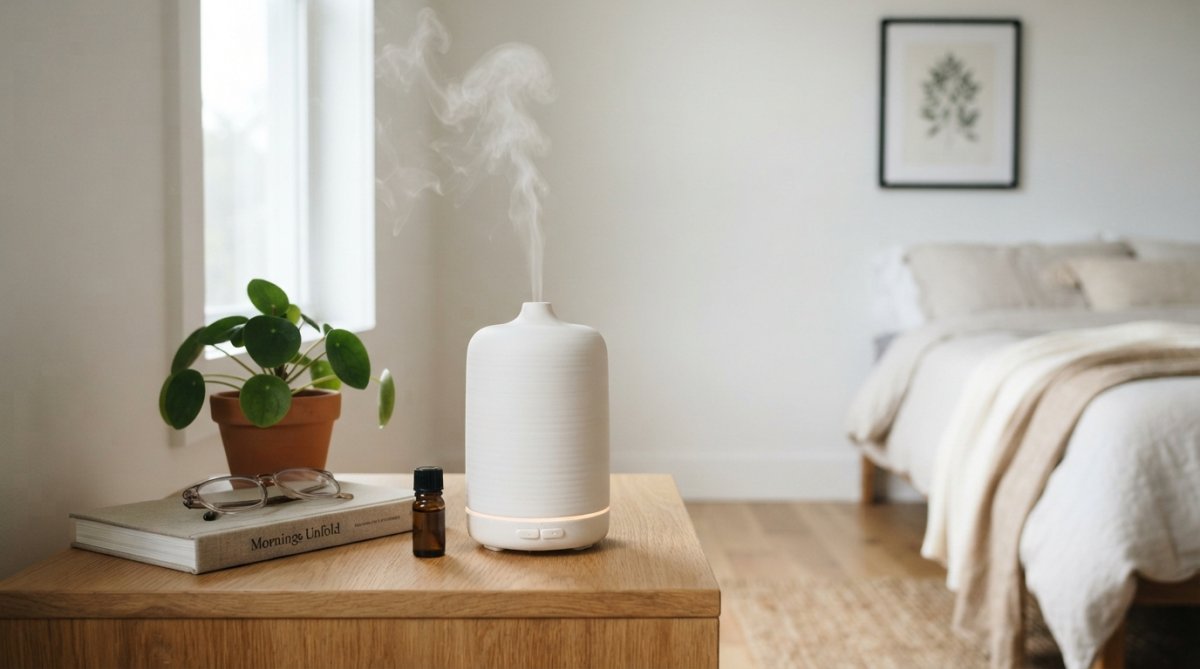
Ceramic vs Plastic Essential Oil Diffusers: What Is the Real Difference?
The real difference is not just durability or looks, it is what each material does to your oil and, in turn, what your oil does to the material. Plastic is a polymer; essential oils, especially citrus oils like lemon and bergamot, contain terpenes that can slowly break down certain plastics over time. This degradation can lead to micro-cracking, cloudy surfaces, and a lingering scent that no amount of cleaning removes (PubMed). Ceramic, by contrast, is a fired clay body that is chemically inert. It does not react with the oil, and it does not off-gas volatile organic compounds (VOCs) when exposed to concentrated aromatics.
The more important issue, however, is what is on the ceramic. Many inexpensive ceramic diffusers are finished with a glossy glaze that may contain lead or cadmium to achieve a bright color or smooth shine. These heavy metals are not bound into the clay; they sit in the glaze layer, and if the glaze is not food-safe or properly fired, they can leach into the oil you are inhaling. This is a genuine concern for health-conscious users, and it is almost never discussed in mainstream guides.
Before you buy, look for one of these signals that the glaze is safe:
- Lead-free and cadmium-free labeling, Some manufacturers state this directly on the packaging or product page.
- Food-safe certification, A ceramic piece marked as food-safe has been tested to FDA standards under 21 CFR 175.300, which limits extractable lead and cadmium in glazes that contact food (ecfr.gov). The same standard reasonably applies to essential oil contact.
- Unglazed interior, Many high-quality ceramic diffusers leave the interior or the oil reservoir unglazed, so the oil only touches raw fired clay, which eliminates glaze exposure entirely.
There is also the question of thermal shock. A plastic diffuser can warp if placed near a heat vent or in direct sunlight. Ceramic handles temperature swings far better, but it is not indestructible, a drop onto tile will chip it. The trade-off is weight and fragility versus chemical stability and longevity.
When you compare the two side by side, the decision framework is straightforward:
| Factor | Plastic Diffuser | Ceramic Diffuser |
|---|---|---|
| Chemical reactivity with oils | Can degrade with terpenes | Inert, no reaction |
| Glaze toxicity risk | Not applicable | Depends on glaze quality, verify lead-free |
| Scent retention | Absorbs and holds old scents | Porous but cleansable |
| Durability | Prone to cracking at joints | Heavy, stable, but chip-prone on impact |
| Upfront cost | Lower | Higher, but longer lifespan |
The bottom line is that ceramic often wins on metrics that matter for long-term use, chemical stability, scent purity, and safety, provided you verify the glaze. Plastic often wins on price and drop-resistance, which can be short-term considerations for a product you will use daily for years.
The Wellness Benefits of Ceramic Essential Oil Diffusers
Ceramic essential oil diffusers support a calmer home environment by pairing aromatherapy with a heat-free or waterless diffusion method that preserves the oil's therapeutic properties. Because ceramic does not heat oils aggressively, the scent profile stays closer to what the plant originally produced, which matters if you are using oils for stress relief or sleep hygiene. The result can be a subtle, continuous ambient scenting rather than an intense burst that fades quickly.
For people who are sensitive to noise or light, a passive ceramic diffuser is especially appealing. There is no motor humming, no LED glow, and no mist to interrupt a dark room. Many wellness-focused adults find this quiet approach supports mental clarity and a more restful atmosphere, particularly in bedrooms where sleep quality is the priority. It turns diffusion into a background presence rather than an active appliance.
How Ceramic Diffusers Support Respiratory Health and Stress Relief
Aromatherapy is a practice that uses essential oils to influence mood and physical state, and respiratory health is one area where it shows promise. Oils like eucalyptus and peppermint, when dispersed gently into the air, can help with congestion relief and easier breathing without the drying effect of forced-air heating (peer-reviewed research). The slow evaporation rate of a ceramic diffuser keeps oil concentration steady, which is gentler on sensitive airways than a sudden strong mist.
Stress relief follows a similar pattern. The ritual of adding a few drops of oil to a ceramic base and letting the scent fill a room can itself be a grounding moment. Combined with oils known for calming properties, such as lavender or bergamot, this creates a small daily pause. For anyone skeptical about the wellness side of things, the practical benefit is simple: a space that smells intentional can feel more restful, and that shift in atmosphere can be noticeable in how you unwind at the end of the day.
Passive Ceramic Scent Diffusers: A Waterless Alternative
Passive ceramic scent diffusers are the simplest form of this technology, and they are a waterless diffusion method that requires no electricity at all. You add a few drops of oil to the unglazed ceramic surface, and the porous material absorbs the liquid and releases the fragrance slowly over several days. This is the same principle used in ceramic jewelry and aroma stones, and it is ideal for small spaces like bathrooms, closets, or a desk corner.
The trade-off is reach. A passive diffuser will not scent an entire open-plan living area, but it excels at ambient scenting in a defined zone. It is also the safest option for a child's room or a shelf where a plugged-in device would be a hazard. For those who want a middle ground, a portable ultrasonic diffuser that doubles as a humidifier offers the mist experience with a ceramic or wood-grain finish, like the options in the Castellanos Housing collection that combine a calming aroma with added air moisture.
| Diffusion Method | How It Works | Best For | Maintenance |
|---|---|---|---|
| Passive ceramic | Oil absorbed into porous clay, released slowly | Small rooms, desks, shelves | Wipe surface, occasional deep clean |
| Ultrasonic mist | Water and oil vibrated into a cool mist | Bedrooms, medium rooms, dry air | Weekly vinegar rinse |
| Heat diffuser | Gentle warmth speeds evaporation | Quick scent boost | Clean after each use |
How to Clean Ceramic Essential Oil Diffusers So They Last
Cleaning a ceramic essential oil diffuser is not complicated, but it requires understanding one thing most guides skip: ceramic is porous, and essential oils are viscous, resinous liquids. Over time, oils, especially heavier ones like vetiver, patchouli, or sandalwood, can polymerize inside the microscopic pores of unglazed ceramic. This creates a sticky residue that traps old scent and gradually dulls the fragrance of any new oil you add. The fix is not more soap; it is a cleaning method that breaks down the resin without damaging the clay.
For passive ceramic diffusers (unglazed stones, discs, or vessels):
- After each oil change, wipe the surface with a dry microfiber cloth to remove surface oil before it sinks deeper.
- Once a month, rinse the piece under warm running water (not hot, thermal shock can crack ceramic) and gently scrub with a soft-bristle brush. Do not use dish soap; it leaves a residue that clogs pores and interferes with absorption.
- Every two to three months, perform a deep clean: soak the ceramic in a solution of 1 part white vinegar to 3 parts warm water for 30 minutes. The mild acetic acid breaks down resinous oil buildup. Rinse thoroughly and let it air dry for a full 24 hours before using again. Moisture trapped in the pores will dilute your next oil application.
- If the scent is still stale after a vinegar soak, place the dry ceramic in a 200°F oven for 20 minutes. This burns off residual oil without damaging the clay. Let it cool completely inside the oven before handling.
For ultrasonic diffusers with a ceramic exterior:
The ceramic shell is the easy part, wipe it with a damp cloth and dry it immediately. The real maintenance challenge is the water tank and the transducer disc, which sits at the bottom of the tank and vibrates to create mist. Mineral deposits from tap water will coat this disc and reduce mist output within weeks. The cleaning protocol is:
- After every use, empty the remaining water. Do not let it sit overnight.
- Once a week, fill the tank with a solution of 1 tablespoon white vinegar per 1 cup of water. Run the unit for 5 minutes, then empty and rinse with clean water. This descales the transducer without harsh chemicals.
- Never use soap or a scrub brush on the transducer disc. Scratching it will permanently reduce its vibration efficiency.
- Once a month, wipe the inside of the tank with a cotton swab dipped in vinegar to reach the corners where biofilm can form.
What not to do:
- Do not put ceramic diffusers in the dishwasher. The detergent and heat can strip glaze and weaken unglazed clay.
- Do not use rubbing alcohol or acetone on glazed surfaces, they can dull the finish.
- Do not microwave a ceramic diffuser to dry it. Uneven heating can cause cracking.
With this routine, a quality ceramic diffuser will maintain its scent throw for years. The porous surface that makes ceramic ideal for slow diffusion is also its only maintenance liability, and it is entirely manageable with a vinegar soak and a little patience.
Where to Place Your Diffuser for the Best Results
Placement determines whether your ceramic diffuser delivers a consistent scent or just a faint whisper. The general rule is to position the diffuser at nose level or slightly above, on a stable surface away from direct sunlight and drafts. Sunlight degrades essential oils, while a draft from a window or air vent will push the fragrance away before it can disperse. A shelf or a dresser top in the center of the room usually outperforms a corner spot.
For bedroom use, keep the diffuser at least three feet from your head to avoid overwhelming your senses while you sleep. In a living room, place it near where you sit, not across the room. And if you are using an ultrasonic model for added humidity, remember that the mist settles within a few feet, so position it where the moisture will actually reach you. A well-placed diffuser makes the difference between a room that smells good and a room that feels calm the moment you walk in.
Conclusion: Making an Intentional Choice for Your Space
The benefits of using ceramic essential diffusers become clear once you stop treating them as disposable gadgets and start seeing them as part of your home's atmosphere. They last longer than plastic alternatives, they look better on a shelf, and they deliver aromatherapy in a way that feels quiet and deliberate rather than clinical. Choosing ceramic is a small decision that supports a more considered approach to daily living.
We believe the details of your environment shape how you feel in it. Our curated collection includes portable ultrasonic diffusers that pair ceramic and wood finishes with practical features like auto shut-off and soft night lights, so you can find the right fit for your bedroom, office, or a thoughtful gift for someone else. The goal is not perfection, it is a space that feels supported and genuinely yours.
Frequently Asked Questions
Do ceramic essential oil diffusers work as well as plastic ones?
Yes. Ceramic diffusers can work effectively for dispersing scent. The main difference is the material. Ceramic is denser and more porous, which can help it hold heat differently than plastic. This can lead to a more consistent evaporation rate in passive models. For ultrasonic diffusers, the ceramic housing does not affect the mist output, but it can add a weight and stability that plastic often lacks. You can experience similar aromatic benefits with a product that offers durability and aesthetic appeal.
Is a ceramic diffuser better for you than a plastic one?
For many people, yes. Ceramic is a non-toxic, inert material that does not leach chemicals into your essential oils the way some plastics can. This can be particularly important if you are using therapeutic grade oils for stress relief or respiratory health. Ceramic is also heat-resistant, making it a potentially safer choice for passive diffusers that use a tea light or warm water. It is a natural material that can align with a holistic wellness approach for your home.
How often should I clean my ceramic essential oil diffuser?
You should clean your ultrasonic ceramic diffuser after every three to four uses to help prevent oil buildup and maintain performance. For passive ceramic scent diffusers, wiping them down weekly and deep cleaning monthly is recommended. To clean, empty any remaining water, add a few drops of white vinegar to the base, and wipe with a soft cloth. Rinse thoroughly. Do not submerge the entire unit in water. Proper maintenance can help prevent mold and can help ensure your ceramic diffuser lasts for years.
Are ceramic diffusers safe to use around pets and children?
Generally, yes, but you should always exercise caution. Ceramic can be a safer option than plastic because it does not leach chemicals when heated. However, the essential oils themselves can be potent. Keep diffusers out of reach of small children and pets. For passive ceramic scent diffusers that use heat, ensure they are on a stable, heat-resistant surface. Always use pure, high-quality oils and monitor your pets for any signs of sensitivity, especially if you are using oils for congestion relief or other therapeutic purposes.
Choosing a diffuser should not mean choosing between durability and design. Castellanos Housing offers a curated selection of home fragrance pieces built to last, with the kind of aesthetic detail that makes a room feel intentional. Explore the collection and find a diffuser that earns its place in your home. Continue shopping.
