

Best Aromatherapy for Stress Relief 2026: Top Picks
Table of Contents
- How Aromatherapy Calms the Nervous System
- Quick Comparison: Best Aromatherapy Picks for 2026
- Best Essential Oils for Stress Relief
- How to Use Essential Oils for Anxiety
- How Long to Diffuse Essential Oils
- Best Essential Oil Diffuser for Home
- Safety, Pet Toxicity, and What to Avoid
- Frequently Asked Questions
Last Updated: September 16, 2026
How Aromatherapy Calms the Nervous System
Aromatherapy for stress works because scent molecules travel a short, direct path from your nose to the parts of the brain that regulate emotion. When you inhale a botanical extract, volatile compounds bind to receptors in the olfactory bulb, which sits just beneath the frontal lobe. From there, signals move into the limbic system, the network that governs memory, mood, and the stress response.
That anatomy matters.
What Is Actually Happening at the Chemical Level
The calming effect is not just psychological. Specific volatile compounds interact with the body in measurable ways:
- Linalool and linalyl acetate (the dominant compounds in lavender) appear to modulate the autonomic nervous system, nudging the body away from sympathetic "fight-or-flight" activity and toward parasympathetic "rest-and-digest" activity.
- Limonene (found in citrus peels) and menthol (in peppermint) act on cold-sensitive TRPM8 receptors, producing the cooling, clearing sensation many people associate with mental reset.
- Beta-caryophyllene, present in black pepper and copaiba, binds directly to CB2 receptors in the endocannabinoid system, a pathway involved in modulating inflammatory and stress responses.
Why Delivery Method Changes the Effect
Inhaled compounds reach the bloodstream within minutes and peak quickly, which is why inhalation is the fastest route for acute stress. Topical application absorbs more slowly through the skin and lasts longer, making it better for ongoing background support. Passive diffusion sits between the two: lower intensity, but continuous across a whole room.
Quick Comparison: Best Aromatherapy Picks for 2026
If you want the short version, here it is. The table below maps each pick to its best use case so you can scan rather than read.
| Pick | Type | Price | Best For |
|---|---|---|---|
| Lavender and chamomile oils | Single oils | From $16.22 | Evening wind-down, sleep hygiene |
| Citrus and mint oils | Single oils | From $16.22 | Morning mental fatigue |
| Crystal Salt Stone Diffuser | Diffuser | $55.02 | Bedside ambiance and low light |
| Portable Ultrasonic Diffuser | Diffuser | $19.00 | Rooms up to 400ml or 1000ml capacity |
| Car Diffuser Hanging Cord | Passive diffuser | $10.00 | Commute and travel |
Best Essential Oils for Stress Relief
The best essential oils for stress relief fall into two functional groups: sedative-leaning botanicals for winding down, and uplifting ones for pushing through mental fatigue. Choose by the outcome you want, not by the prettiest bottle.

Lavender and Chamomile: The Classic Calming Pair
Lavender and chamomile are the most studied calming botanicals, and they remain the safest starting point for anyone new to aromatherapy for stress. Both lean sedative, which makes them a poor fit for a 9 a.m. work session and an excellent one for the hour before bed.
Citrus and Mint: Uplifting Oils for Mental Fatigue
Citrus and mint oils do the opposite job. They read as bright and cooling, which makes them useful when nervous agitation or mid-afternoon mental fatigue has you reaching for a third coffee.
How to Use Essential Oils for Anxiety
How to use essential oils for anxiety comes down to three routes: inhalation, topical application, and passive diffusion. Inhalation acts fastest, topical application lasts longest, and passive diffusion covers a whole room without any effort from you.
Dilution Ratios and Carrier Oils
Dilution ratios are the single most important safety number in aromatherapy, and they are simple once you see them laid out. A carrier oil is a plain, cold-pressed plant oil, such as jojoba, sweet almond, or fractionated coconut, that carries the essential oil across the skin at a safe concentration.
| Use Case | Dilution | Drops per 1 oz Carrier Oil |
|---|---|---|
| Adults, daily body use | 2% | 12 drops |
| Short-term targeted use | 3% | 18 drops |
| Facial or sensitive skin | 1% | 6 drops |
| Children over 6 | 0.5-1% | 3-6 drops |
How Long to Diffuse Essential Oils
How long to diffuse essential oils depends on the oil and the room, but 30 to 60 minutes per session is the standard for most home use. Run it longer and you risk olfactory fatigue, where your nose simply stops registering the scent, plus unnecessary exposure for pets and anyone with asthma.
Best Essential Oil Diffuser for Home
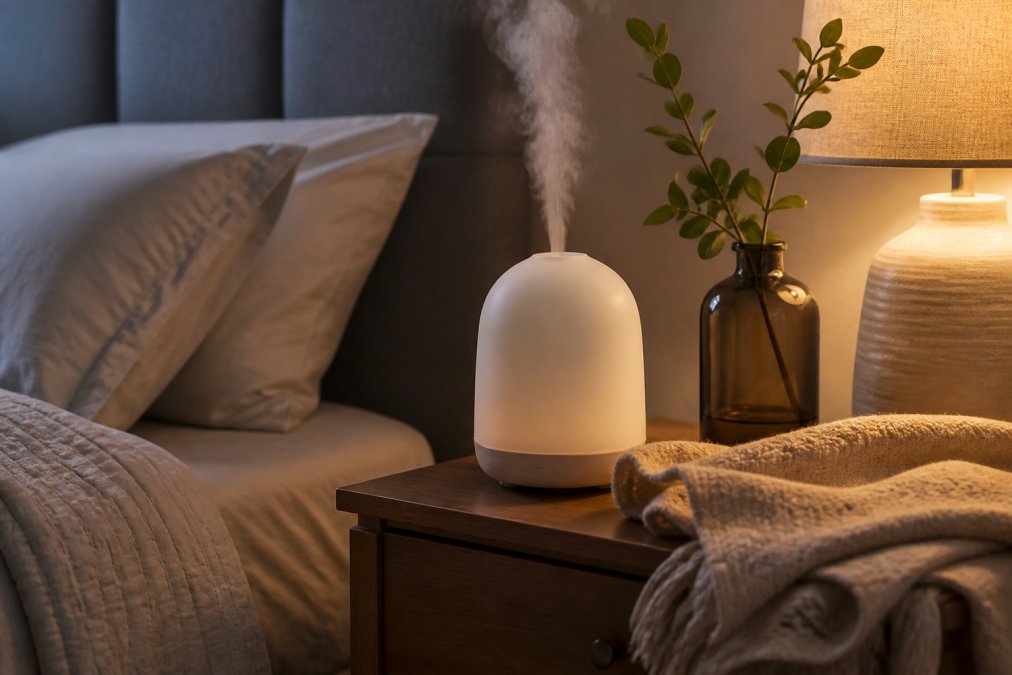
The best essential oil diffuser for home is a quiet ultrasonic unit sized to the room you actually use. Ultrasonic diffusers use a vibrating plate to break water and oil into a fine mist, which is why they run near-silently and never heat the oil.
Safety, Pet Toxicity, and What to Avoid
Pet safety is the gap most aromatherapy guides skip entirely, and it is the one that matters most in a shared home. Cats in particular lack a key liver enzyme (glucuronyl transferase) needed to metabolize many volatile compounds, so oils that are gentle on humans can accumulate to toxic levels in them. Dogs are more resilient but still vulnerable to concentrated exposure.
Which Oils Are Highest Risk for Pets
The following oils are consistently flagged by veterinary toxicologists as high-risk for cats and dogs:
- Tea tree (Melaleuca alternifolia), one of the most common causes of pet essential oil poisoning; even small topical exposure can cause weakness, tremors, and collapse in cats.
- Eucalyptus, contains 1,8-cineole, which cats cannot clear efficiently; inhalation in a closed room can cause drooling, vomiting, and lethargy.
- Peppermint and other mints, menthol irritates mucous membranes and can cause gastrointestinal upset.
- Citrus oils (orange, lemon, bergamot, lime), d-limonene is toxic to cats and can cause skin irritation and neurological signs in dogs at high exposure.
- Pine, spruce, and other conifer oils, contain phenols that are poorly metabolized by cats.
- Wintergreen and birch, contain methyl salicylate, which is essentially aspirin and can cause bleeding and organ damage in pets.
Household Toxicity Beyond Pets
A few more rules worth committing to memory:
- Never use essential oils internally unless a qualified practitioner directs it.
- Keep bottles out of reach of children and pets; a single teaspoon of some oils can be dangerous for a small child.
- Do not diffuse around infants or anyone with asthma without medical advice.
- Store oils in amber glass, away from heat and light, to prevent degradation.
- If pregnant or nursing, consult a physician before use.
- Never pour undiluted oil down a drain or into a trash can where pets can reach it.
ASPCA Animal Poison Control guidance on essential oil exposure
Budget vs. Premium: What You Are Actually Paying For
For anyone weighing budget against quality, the honest answer is that pure single-botanical oils cost more because they contain more plant material. A cheap "lavender" blend is usually synthetic fragrance cut with carrier oil. It will smell fine and do nothing. A 10ml bottle of true lavender takes roughly 3 to 5 pounds of fresh flowers to produce, which is why genuine oils rarely sell for a few dollars.
U.S. Environmental Protection Agency indoor air quality guidance
Frequently Asked Questions
What is the best essential oil to relieve stress?
Lavender is the most studied option for calming properties, followed by chamomile, bergamot, and sandalwood. Most people find lavender easiest to use daily because it blends well with citrus and floral oils. If you want a single bottle to start with, a 10ml pure plant essential oil in lavender or sandalwood covers both diffusion and DIY blends. Rotate between two or three scents so your sense of smell does not adapt and stop registering the aroma.
How often should I use a diffuser for stress management?
Run your diffuser in 30 to 60 minute sessions, two to three times a day, rather than leaving it on for hours. This gives your olfactory system a break and keeps the scent noticeable. A 260ml tank like the one on the crystal salt stone diffuser runs about 4 hours on continuous spray, so you can split that into shorter sessions. Always ventilate the room between sessions, especially in small bedrooms or offices.
How do I use essential oils for anxiety safely at home?
Diffusion and diluted topical application are the two safest routes. For topical use, mix 2 to 3 drops of essential oil into 1 teaspoon of carrier oil, which lands near a 1 to 2 percent dilution ratio. Never apply undiluted oil to skin, and avoid citrus oils before UV exposure. If you are pregnant, nursing, or managing a health condition, check with a physician first. Keep bottles out of reach of children and pets.
Are there real benefits to using aromatherapy for anxiety?
Research on inhalation aromatherapy points to measurable shifts in self-reported calm and, in some studies, lower cortisol levels after lavender exposure. The effects are modest and work best as part of a broader routine that includes sleep hygiene, movement, and stress management practices. Aromatherapy is not a treatment for anxiety disorders. Think of it as one sensory cue that helps your body settle into a calmer state.
Which scent is most recommended for stress relief?
Lavender sits at the top of most recommendations for its sedative effects and grounding effect. Bergamot and sweet orange follow closely for mood-stabilizing support during mental fatigue. For a deeper, warmer profile, sandalwood and vanilla work well in evening routines. If you are unsure, start with lavender for sleep and a citrus oil for daytime tension relief, then adjust based on how your body responds.
Stress does not disappear because a room smells nice. But the space around you shapes how well you recover from it, and that is a detail worth getting right. Castellanos Housing curates the diffusers and pure oils that make that recovery easier: a portable ultrasonic unit that moves with you, a crystal salt stone diffuser that doubles as a soft night light, and additive-free botanicals to fill them. Continue shopping and build a space that supports the way you actually live.
