

Salking Alternatives for Home Diffusers
Table of Contents
- Types of Home Fragrance Delivery Systems
- Luxury Reed Diffusers and High-End Alternatives
- Best Essential Oil Diffuser Brands for Quality and Safety
- Nontoxic Home Fragrance Options Without Synthetic Chemicals
- Cost-Per-Use Analysis and Long-Term Value
- Avoiding Olfactory Fatigue and Maintaining Scent Throw
- Safety Considerations for Pets, Children, and Air Quality
- Troubleshooting Common Diffuser Problems
Last Updated: August 27, 2026
Types of Home Fragrance Delivery Systems
The fragrance delivery landscape has shifted dramatically. You're no longer limited to electric devices or passive options. Understanding different systems helps you choose one that fits your space, budget, and lifestyle.
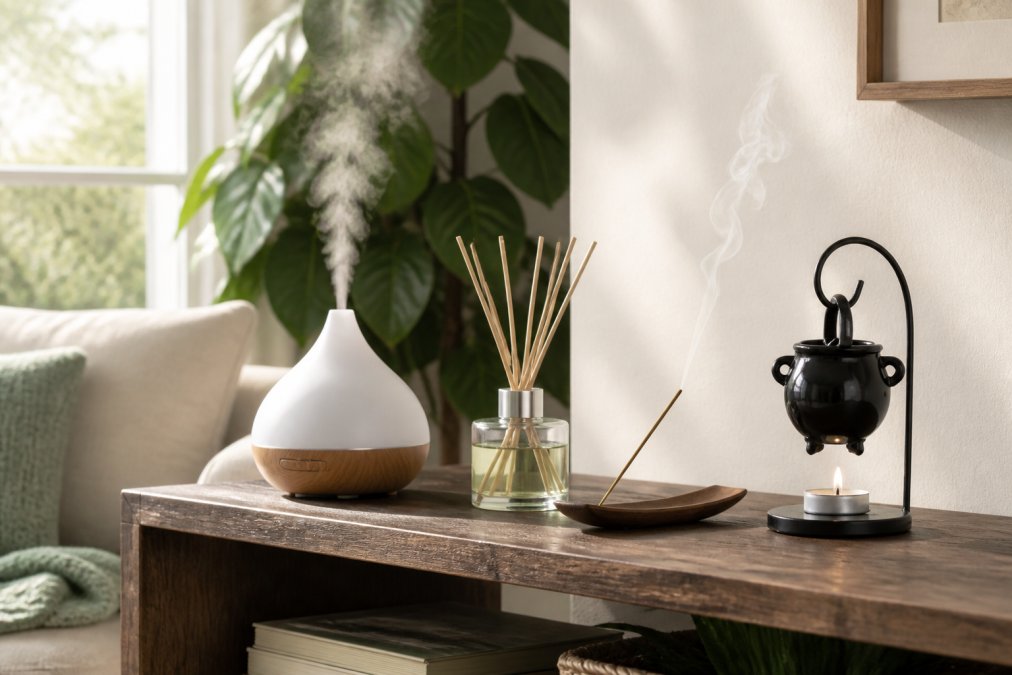
At Castellanos Housing, we recognize that choosing a fragrance alternative means evaluating not just scent quality, but how the fragrance travels through your space. Different delivery mechanisms create fundamentally different experiences.
Ultrasonic Diffusers and Waterless Technology
Ultrasonic diffusion uses vibrations at ultrasonic frequencies to break essential oils into fine mist without heat, preserving aromatic properties while humidifying your space. Water fills a reservoir, essential oil gets added, and ultrasonic vibrations atomize the liquid into particles that disperse evenly. Room coverage typically extends 300-500 square feet depending on device size, making ultrasonic technology ideal for bedrooms, home offices, or living areas (peer-reviewed research).

Many ultrasonic diffusers include timer settings that let you control misting cycles, preventing olfactory fatigue, that nose-blindness effect where you stop noticing a scent after continuous exposure. By spacing out cycles, you maintain scent throw throughout the day without overwhelming your senses.
Castellanos Housing carries the 160ML Ultrasonic Air Humidifier Clear Cactus Color Light USB Essential Oil Diffuser at $40.00. USB-powered with whisper-quiet operation and a cute design, the 160ml capacity runs for approximately 4 hours on a single fill, making it practical for consistent daily use.
Incense and Backflow Burners
Backflow incense holders use specially formulated cones that create a reverse-flow smoke effect, cascading downward like a waterfall. Unlike traditional incense, this downward pattern keeps fragrance concentrated in your immediate space rather than dispersing toward the ceiling.
The Castellanos Housing Pouring Cauldrons Backflow Incense Holder at $35.00 exemplifies this category. Battery-operated with an easy on/off switch, it features resin construction with a vintage silver finish and integrated soft lighting that highlights the smoke display. The theatrical element transforms fragrance delivery into an ambient experience.

One consideration: incense burns rather than diffuses, so it produces actual smoke and uses up the cone over time. This means ongoing consumable costs and a maintenance cycle where you replace cones regularly.
Passive Evaporation and Reed Systems
Reed diffusers operate on pure passive evaporation with no electricity, batteries, or moving parts. Fragrance oil fills a glass bottle, wooden or rattan reeds absorb the oil through capillary action, and fragrance naturally evaporates into the air. This is the quietest, most low-maintenance alternative available.
The appeal is obvious: zero energy consumption, no noise, and continuous fragrance release without intervention. Reed diffusers self-regulate through ambient temperature and air circulation. On warm days, evaporation accelerates; in cooler seasons, it slows naturally.
Maintenance is minimal, flip the reeds occasionally to refresh the evaporation surface, and refill the bottle when fragrance depletes, typically every 3-4 months. The trade-off is scent throw. Passive evaporation covers 150-250 square feet, so large open-concept spaces require multiple diffusers (peer-reviewed research). For localized fragrance in specific rooms, reed diffusers excel.
Luxury Reed Diffusers and High-End Alternatives
The luxury reed diffuser market has exploded because these products satisfy multiple needs: functional fragrance delivery, home decor, and gift-worthy objects. High-end reed diffusers use premium glass bottles, quality wooden reeds, and carefully formulated fragrance oils that deliver sophisticated scent profiles.
What separates luxury options from mass-market alternatives is fragrance oil concentration and formulation. Premium options use therapeutic-grade or high-concentration essential oils blended with carrier oils, creating complex, layered scents that evolve as they diffuse. Budget alternatives often use synthetic fragrance with minimal oil concentration, producing one-note scents that fade quickly.
Cost-per-use analysis reveals why luxury reed diffusers make sense. A high-end reed diffuser at $60-80 might last 4-5 months with consistent use, breaking down to roughly $12-16 per month for continuous fragrance coverage in a single room.
Best Essential Oil Diffuser Brands for Quality and Safety
Quality differences emerge in build construction, ultrasonic technology efficiency, and most importantly, safety features.
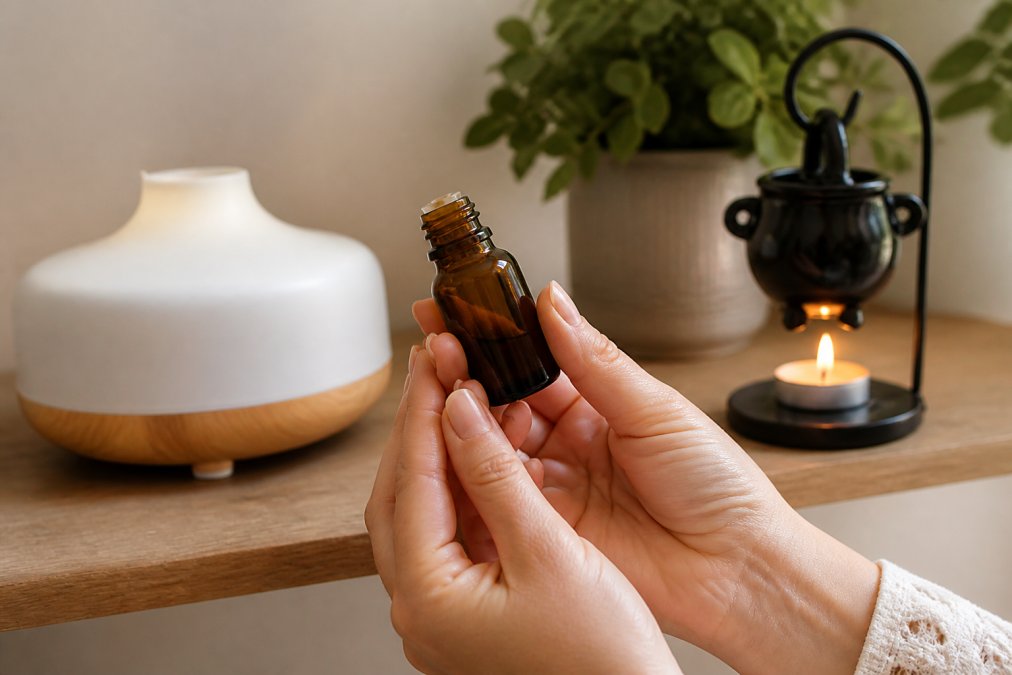
When evaluating diffuser brands, look for auto-shutdown technology (protects the motor if water runs low), higher-frequency ultrasonic vibrations (typically 2.4MHz create finer mist particles), and nontoxic materials free from volatile organic compounds.
Castellanos Housing offers two ultrasonic options. The Portable Ultrasonic Oil Diffuser and Air Humidifier at $19.00 provides entry-level technology with dual functionality. The Air Humidifier Crystal Salt Stone Desktop Aromatherapy Essential Oil Ultrasonic Diffuser With LED Lamp at $46.02 combines ultrasonic diffusion with natural crystal salt stone construction, 260ml capacity, LED lighting, and low-noise operation (under 36 decibels).

Nontoxic Home Fragrance Options Without Synthetic Chemicals
Many mass-market diffusers use synthetic fragrance blends containing phthalates and volatile organic compounds that degrade indoor air quality. Choosing nontoxic alternatives means understanding what you're actually diffusing.
Phthalate-free fragrance oils form the baseline for nontoxic diffusion. These use alternative plasticizers and don't contain concerning chemical compounds found in conventional fragrance.
Essential oils represent the most straightforward nontoxic option. True essential oils are volatile aromatic compounds extracted from plants through distillation or cold-pressing, containing no synthetic additives. However, pure essential oils can irritate airways in high concentrations, so proper dilution with carrier oils is crucial. Never use undiluted essential oils in ultrasonic diffusers (the CDC).
Fragrance oil blends that explicitly state "nontoxic," "phthalate-free," and "synthetic-free" occupy the middle ground. These combine essential oils with plant-based carrier oils and natural fragrance compounds. Look for brands that provide ingredient transparency.
Cost-Per-Use Analysis and Long-Term Value
Understanding true cost requires calculating cost-per-use over product lifetime, not just initial purchase price.
| Fragrance Method | Initial Cost | Monthly Consumable Cost | Lifespan | Monthly Cost-Per-Use |
|---|---|---|---|---|
| Ultrasonic Diffuser | $19-46 | $2-5 | 2-3 years | $0.80-2.20 |
| Reed Diffuser | $30-80 | $0-3 | 4-5 months per bottle | $6-16 per bottle |
| Incense Backflow Holder | $35 | $5-10 | 5+ years | $5-10 |
| Hanging Oil Burner | $16 | $3-8 | Indefinite | $3-8 |
The Hanging Cauldron Oil Burner at $16 exemplifies low-cost entry with minimal consumable expenses. You dilute fragrance oil with water, light a tea light underneath, and gentle heat releases fragrance. The device itself never wears out.
Long-term value emerges when you factor in aesthetic satisfaction. A beautiful reed diffuser or decorative incense holder serves dual purposes: fragrance delivery plus home decor. This psychological benefit of creating a considered, intentional space carries real value beyond fragrance itself.
Avoiding Olfactory Fatigue and Maintaining Scent Throw
Olfactory fatigue occurs when your olfactory system adapts to constant stimulation, filtering out familiar fragrance. You're still diffusing; you've just stopped perceiving it.
Intermittent misting works better than continuous diffusion. Ultrasonic diffusers with timer settings let you run cycles, perhaps 30 minutes on, 30 minutes off, maintaining scent throw without overwhelming your senses.
Room ventilation affects perceived scent throw. Mild air circulation from ceiling fans or open windows disperses fragrance evenly throughout the space, creating balanced ambient scenting.
Scent layering provides another strategy. Combine approaches: a reed diffuser in your bedroom provides subtle background fragrance, while an ultrasonic diffuser in your living room creates stronger ambient scenting during evening hours. Your olfactory system experiences variation, preventing adaptation fatigue.
Complex scent profiles with multiple aromatic notes maintain interest longer than single-note fragrances. Therapeutic-grade essential oils and high-concentration fragrance blends deliver layered scents that evolve as they diffuse.
Safety Considerations for Pets, Children, and Air Quality
Some essential oils are toxic to cats and dogs, particularly oils high in limonene or phenols. Ultrasonic diffusers that create fine mist particles can irritate sensitive airways in pets and children if oil concentration is too high.
For pet-safe diffusion, avoid essential oils entirely or use only dilute, pet-safe options like chamomile or cedarwood in very low concentrations. Common essential oils like peppermint, eucalyptus, tea tree, and citrus oils are problematic for cats.
Children require similar precautions. Young children have more sensitive respiratory systems and may react to high fragrance concentrations. Never run a diffuser in a small, sealed bedroom with a sleeping child. Place diffusers out of reach to prevent spills or accidental ingestion.
Ultrasonic diffusers actually improve humidity levels, which can benefit respiratory health in dry climates. However, incense and oil burners produce combustion byproducts, so adequate ventilation is important. The Pouring Cauldrons Backflow Incense Holder uses battery power rather than open flame, reducing combustion byproducts compared to traditional incense burners.
Troubleshooting Common Diffuser Problems
Diffusers fail for predictable reasons, and most problems have straightforward fixes.
Mist not producing: Check water level first. If adequate, the ultrasonic membrane likely has mineral buildup from hard water. Clean with a cotton swab dampened in distilled water, gently scrubbing the small metal disc at the tank bottom. Use distilled water for future fills to prevent mineral accumulation.
Weak fragrance throw: Add more fragrance oil to your water reservoir, typically 3-5 drops per 100ml of water. If throw remains weak, you may be experiencing nose-blindness. Try intermittent misting with timer settings, or switch to a different fragrance temporarily to reset your olfactory system.
Device leaking: Ensure the tank is properly seated and the seal isn't cracked. If leaking persists, the seal has deteriorated and needs replacement. Avoid overfilling, fill to the marked line, not to the brim.
Noise during operation: Excessive noise indicates a failing motor or loose internal components. Discontinue use to prevent motor damage and consider replacement.
Auto-shutdown not functioning: If the device doesn't shut off when water runs low, the water-level sensor has failed. Stop using the device and either repair the sensor or replace the diffuser.
Using distilled water rather than tap water extends diffuser lifespan significantly by preventing mineral accumulation on the ultrasonic membrane.
Finding the right fragrance alternative means matching your lifestyle to the delivery method that serves it best. Whether you choose ultrasonic technology for consistent ambient scenting, passive reed diffusers for aesthetic integration, or theatrical backflow incense for visual drama, Castellanos Housing's curated selection ensures you're investing in products designed to last and genuinely enhance your space. Continue shopping to discover which fragrance delivery method transforms your home into a space that feels truly considered.
Frequently Asked Questions
What are the healthiest home diffuser alternatives to salking?
The healthiest home diffuser alternatives depend on your priorities. Ultrasonic diffusers using therapeutic-grade essential oils offer cold-air nebulizing without heat, preserving aromatic properties. Passive reed diffusers avoid electricity and synthetic chemicals entirely. Incense and backflow burners provide aesthetic appeal with natural fragrance. Choose based on your sensitivity to synthetic fragrances, maintenance preferences, and desired scent throw in your space.
How do ultrasonic diffusers compare to luxury reed diffusers for home fragrance?
Ultrasonic diffusers use waterless diffusion technology to create visible mist and distribute essential oils quickly throughout a room, offering stronger scent throw and faster coverage. Luxury reed diffusers rely on passive evaporation, providing subtle, continuous fragrance without electricity or maintenance. Ultrasonic models are ideal for immediate ambient scenting and therapeutic benefits, while reed diffusers suit those preferring low-profile, long-lasting home decor integration. Ultrasonic options typically cost $19-$46, while quality reed systems range higher depending on materials and fragrance concentration.
What makes a home fragrance nontoxic and safe for daily use?
Nontoxic home fragrance products are phthalate-free, avoid synthetic fragrance chemicals, and use essential oil concentration or natural plant-based extracts. Look for products without volatile organic compounds. Natural alternatives like incense made from plant resins, crystal salt stone diffusers with essential oils, and reed diffusers using pure oils provide safer ambient scenting. Always verify ingredient lists and choose brands transparent about their fragrance sourcing and safety testing.
How can I avoid olfactory fatigue with home diffusers?
Olfactory fatigue (nose blindness) occurs when your sense of smell adapts to constant scent exposure. Prevent it by using intermittent misting settings or timer functions on ultrasonic diffusers, most quality models offer 1-4 hour cycles. Rotate fragrance profiles weekly to keep your olfactory system engaged. Use scent layering by combining subtle reed diffusers with occasional bursts from electric diffusers. Taking breaks from diffusion for 24-48 hours resets your sensitivity. Maintaining proper room coverage without overwhelming concentration helps sustain the aroma intensity you desire.
Are there environmental benefits to choosing certain diffuser types over others?
Passive diffusion methods like reed diffusers and natural incense have minimal environmental impact since they require no electricity or batteries. Ultrasonic diffusers use low power (typically 2W) and are energy-efficient compared to plug-in air fresheners. Avoid single-use aerosol products that contribute to air pollution. Choose brands using sustainable essential oil sourcing and recyclable packaging. Crystal salt stone diffusers and backflow incense holders are durable, reusable alternatives that reduce waste. Selecting nontoxic fragrance options prevents harmful volatile organic compounds from entering your home's air quality and local environment.
This article was written using GrandRanker