

How to Use Essential Oils for Beginners
Table of Contents
- What Essential Oils Are and How They're Made
- How to Use Essential Oils in a Diffuser
- How to Dilute Essential Oils for Topical Use
- Other Common Ways to Use Essential Oils
- Essential Oil Safety for Beginners
- Essential Oil Blends for Beginners
- Your First-Use Plan for Essential Oils
- What to Avoid: Common Beginner Mistakes
- Frequently Asked Questions
Last Updated: October 12, 2026
What Essential Oils Are and How They're Made
Essential oils are concentrated plant extracts that capture the natural fragrance and properties of their source. They come from flowers, leaves, seeds, bark, and roots through methods like steam distillation or cold pressing.
Understanding what essential oils are is the first step in learning how to use essential oils for beginners safely. These oils are not the same as fragrance oils or perfumes.
The production process matters. Steam distillation is the most common method. Heat and steam break down plant cells and release the aromatic compounds. The vapor cools and condenses into liquid oil.
Quality oils come in dark amber bottles. Light degrades them quickly. Keep them away from heat, direct sunlight, and moisture.
How to Use Essential Oils in a Diffuser
Using essential oils in a diffuser is the safest and easiest way to start. A diffuser disperses oil into the air as a fine mist.

Ultrasonic diffusers are the most popular choice for beginners. Our Portable Ultrasonic Oil Diffuser and Air Humidifier combines both functions in one elegant device.

Here's how to use a diffuser:
- Fill the water tank with distilled or filtered water
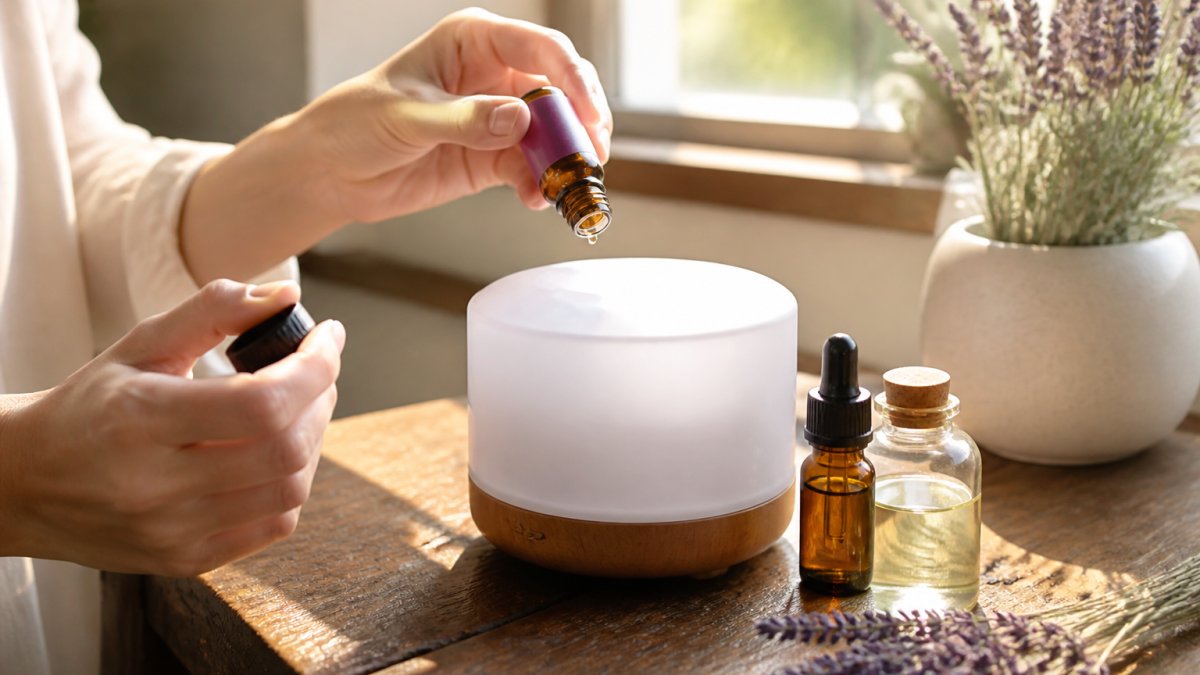
- Add 3-5 drops of essential oil to the water
- Turn on the diffuser and let it run
Never fill the tank with oil alone. Oil and water don't mix well. The oil floats on top and doesn't diffuse evenly. Always use water as your base.
Different room sizes need different amounts of oil. A small bedroom might need 3 drops. A large living room might need 5-7 drops. Start with fewer drops and add more if needed.
How to Dilute Essential Oils for Topical Use
Applying essential oils directly to skin causes irritation and burning. You must dilute them with a carrier oil first. Carrier oils are mild plant oils that reduce the strength of essential oils and make them safe for skin contact.
Never skip this step. Pure essential oils are too strong for bare skin. Even small amounts can cause redness, itching, or allergic reactions. Dilution protects your skin and makes the oils more effective.
Dilution Ratios and Carrier Oils
The standard beginner dilution is 2-3% concentration. This means 2-3 drops of essential oil per teaspoon of carrier oil.
Here's a simple dilution guide:
| Amount of Carrier Oil | Essential Oil Drops | Best For |
|---|---|---|
| 1 teaspoon | 1-2 drops | Small area, patch test |
| 1 tablespoon | 3-4 drops | Face or sensitive skin |
| 1/4 cup | 12-15 drops | Body or massage |
| 1/2 cup | 25-30 drops | Bath or larger area |
Common carrier oils work well:
Mix your diluted oil in a clean bottle. Shake well before each use. Label it clearly with the oil name and date. Store in a cool, dark place.
Other Common Ways to Use Essential Oils
Beyond diffusers and topical application, several other methods let you experience essential oils safely.
Inhalation and Aromatherapy
Direct inhalation means breathing in oil vapors from the bottle or a cloth. Open the bottle and breathe slowly for 30 seconds. This method works fast and needs no equipment.
You can also add a drop or two to a tissue and keep it nearby. The scent releases gradually as the oil evaporates. This works well in a car, at your desk, or while traveling.
Compress and Bath Methods
A warm compress brings relief and aroma together. Add 2-3 drops of diluted oil to warm water. Soak a cloth and apply it to your skin for 10-15 minutes. This method combines warmth with gentle oil exposure.
Bath use requires care. Essential oils don't dissolve in water alone. Mix your oil with a carrier oil first, then add to bathwater. Use only 5-10 drops of diluted oil per bath. Stir the water well before entering. This prevents concentrated oil from touching skin directly.
Never use undiluted oil in a bath. The hot water makes your skin more sensitive to irritation.
Essential Oil Safety for Beginners
Safety comes first when using essential oils. These are potent plant extracts. Respect their strength and follow basic guidelines.
Patch Testing and Skin Sensitivity
A patch test checks whether your skin reacts to an oil. Apply one small drop of diluted oil to your inner arm or behind your ear. Wait 24 hours and watch for redness, itching, or swelling. If no reaction occurs, the oil is likely safe for you.
Some people have sensitive skin naturally. Others develop sensitivity over time. Patch testing protects you from discovering a reaction the hard way.
Citrus oils cause extra caution. They can make skin sensitive to sunlight. Avoid sun exposure for 12 hours after applying lemon, lime, or grapefruit oil to skin.
Safety Precautions for Children, Pets, and Pregnancy
Children: Essential oils are not safe for young children. Kids under 5 should not inhale concentrated oil vapors. Avoid diffusing strong oils like peppermint or eucalyptus around babies. For older children (5+), use very dilute oils at low concentrations. Always keep bottles out of reach.
Pets: Many essential oils are toxic to dogs and cats. Their livers cannot process certain compounds. Avoid oils like tea tree, eucalyptus, and citrus around pets. If you use a diffuser, ensure good ventilation so pets can leave the room. Never apply oil directly to a pet's skin or fur.
Pregnancy: Pregnant people should consult a healthcare provider before using essential oils. Some oils may affect pregnancy. Never ingest essential oils during pregnancy.
Essential Oil Blends for Beginners
Blending oils creates new scents and combines benefits. Start simple. Two or three oils mixed together work better than complex blends.
10ml Pure Plant Essential Oil For Humidifier Diffusers Mint Lavender Tea Tree →
Popular Single Oils to Start With
Lavender, The most versatile oil. Calming aroma, widely used in aromatherapy. Works in diffusers and diluted for skin. A safe choice for most people.
Lemon, Bright and uplifting. Popular for diffusion and cleaning. Avoid skin exposure before sunlight. Great for beginners who like citrus scents.
Peppermint, Strong and refreshing. Use sparingly. Excellent in diffusers but too intense for many people when first starting. Avoid around young children.
Eucalyptus, Cooling and clearing. Often used in respiratory blends. Very potent, use fewer drops than other oils. Not suitable around pets.
Tea Tree, Known for its distinctive smell. Commonly used in DIY cleaning products. Strong and not ideal for beginners to wear on skin without proper dilution.
Simple Oil Blends to Try
Calm Blend: 2 drops lavender + 1 drop chamomile in a diffuser. Relaxing and gentle.
Uplift Blend: 3 drops lemon + 2 drops peppermint in a diffuser. Energizing without being overwhelming.
Rest Blend: 3 drops lavender + 1 drop sandalwood in a diffuser. Grounding and soothing for bedtime.
Mix blends in small bottles with a carrier oil if applying to skin. Label each blend with its name and creation date.
Your First-Use Plan for Essential Oils
Learning how to use essential oils for beginners doesn't require complicated steps. A simple plan helps you avoid mistakes and discover what works for you.
Step 1: Choose Your First Oil and Diffuser
Pick one oil that appeals to you. Lavender is ideal for beginners, it's versatile and forgiving. Our Pure Plant Essential Oil collection includes lavender and five other beginner-friendly options.
Choose a diffuser next. An ultrasonic model is best for beginners. It's affordable, quiet, and doubles as a humidifier. Our Portable Ultrasonic Oil Diffuser fits any room and comes with clear instructions.
Step 2: Perform a Patch Test
Before diffusing, test your skin's response. Apply one drop of your chosen oil diluted in carrier oil to your inner arm. Wait 24 hours. If no redness or itching appears, proceed confidently.
Step 3: Start with Diffusion
Diffusion is the safest first step. Fill your diffuser with distilled water. Add 3 drops of essential oil. Run it for 30 minutes in a well-ventilated room. Notice how you feel. Does the scent please you? Does it feel too strong or too subtle?
Adjust the drops up or down based on your preference. Some people love strong aroma. Others prefer gentle scent. There's no right answer, only what works for you.
Step 4: Explore Topical Application Safely
After a week of successful diffusion, try diluted topical use. Mix 2-3 drops of your oil with one teaspoon of carrier oil. Apply to your wrists or behind your ears. Enjoy the personal aroma throughout your day.
Start small. One application per day is enough. Your skin will tell you if it likes the oil or wants a break.
What to Avoid: Common Beginner Mistakes
New users make predictable errors. Knowing them helps you skip the problems.
Mistake 1: Using undiluted oil on skin. This causes irritation. Always dilute with carrier oil first. No exceptions.
Mistake 2: Ignoring patch tests. Testing takes one day and prevents painful reactions.
Mistake 3: Running diffusers for hours nonstop. Your body adapts to constant aroma and stops noticing it.
Mistake 4: Buying cheap oils. Low-quality oils contain fillers and synthetic fragrances.
Mistake 5: Ingesting essential oils. These are not meant for internal use. They're toxic when swallowed.
Mistake 6: Using oils around pets without research. Many oils harm dogs and cats.
Mistake 7: Applying citrus oils before sun exposure. These oils make skin sensitive to UV rays.
Frequently Asked Questions
Do essential oils need to be diluted before applying them to skin?
Yes, essential oils must always be diluted with a carrier oil before topical application. Pure essential oils are highly concentrated and can irritate or damage skin. A safe starting dilution for beginners is 1-2 drops of essential oil per teaspoon of carrier oil. Never apply undiluted essential oils directly to skin, and always perform a patch test on a small area first to check for sensitivity.
How do you use essential oils in a diffuser?
Fill your diffuser's water tank to the fill line, add 3-5 drops of essential oil, and turn it on. Most ultrasonic diffusers create a cool mist that disperses the oil's aroma throughout the room. Run the diffuser for 15-30 minutes at a time, and allow breaks between sessions to avoid overwhelming the space. Portable diffusers like the ultrasonic models work well in bedrooms, offices, or travel situations and typically offer adjustable mist settings and automatic shut-off after 4-8 hours.
What three essential oils go well together for beginners?
Lavender and lemon form a balanced beginner blend. Lavender provides calming and grounding properties, and lemon adds brightness and uplifting energy. Mix 2 drops lavender and 1 drop lemon in your diffuser with water, or combine them in a carrier oil for topical use. This duo works for relaxation, mental clarity, and creating an inviting home atmosphere.
Can you use essential oils every day?
Yes, you can use essential oils daily, but with moderation. Limit diffuser use to 15-30 minutes per session with breaks in between to prevent sensitization or overwhelm. For topical application, using diluted oils once or twice daily on clean skin is generally safe for most people. However, avoid continuous use of the same oil for more than a few weeks without a break, and always watch for signs of irritation, allergic reactions, or skin sensitivity. If you experience any adverse effects, stop use and consult a healthcare provider.
Starting with how to use essential oils for beginners opens a door to simple, natural aromatherapy. The key is respecting the oils' strength and following safe practices. At Castellanos Housing, we believe thoughtful details make everyday life feel supported. Our curated essential oils and diffusers are designed to help you create a calm, intentional space. Begin with one oil, one diffuser, and one week of gentle exploration. You'll quickly discover which scents bring you peace.
