

Is Diffusing Essential Oils Safe for Babies
Table of Contents
- Is Diffusing Essential Oils Safe for Babies: What the Evidence Shows
- Essential Oils to Avoid Around Babies
- How Long to Diffuse Essential Oils in a Baby's Room
- Can Essential Oils Cause Breathing Problems in Babies
- Safe Essential Oils for Babies and Proper Dilution
- Baby-Safe Alternatives to Essential Oil Diffusers
- Your First-Use Plan: Safe Steps for Using Essential Oils Around Babies
- Frequently Asked Questions
Last Updated: October 13, 2026
Is Diffusing Essential Oils Safe for Babies: What the Evidence Shows
Is diffusing essential oils safe for babies depends on your baby's age, which oils you choose, and how you use them.
The short answer: diffusing around babies requires caution. Infants under three months should not be around diffused oils at all.
At Castellanos Housing, we understand parents want a calm, intentional home without compromising safety. This guide covers the evidence, which oils carry real risks, and how to diffuse responsibly.
Age Matters: When Babies Can Be Around Diffusers
Age is the first critical factor. Newborns and infants under three months should not be exposed to diffused oils. Their lungs are still maturing, and their bodies lack the metabolic pathways to process concentrated aromatic compounds safely.
Babies three to six months can be around diffused oils only in a well-ventilated room, in short sessions, with the gentlest oils. Watch closely for irritation or breathing changes.
Babies six months and older have more developed respiratory systems.
How Diffusion Works and Why Concentration Matters
Diffusion disperses oil particles into the air as a fine mist.
Ultrasonic diffusers create a cool mist by breaking oils into tiny particles. Nebulizing diffusers spray undiluted oils into the air. Heat diffusers warm oils, changing their chemical structure and potentially creating new compounds.
Room size matters too: a diffuser in a small nursery creates far higher concentrations than in a large living room, and a closed bedroom with a running diffuser can accumulate oils to levels that irritate a baby's respiratory tract.
Essential Oils to Avoid Around Babies
Not all essential oils carry equal risk, but several should never be diffused around infants.
High-Risk Oils and Why They're Dangerous
Eucalyptus, peppermint, and tea tree oils are among the most problematic, containing compounds that can irritate or constrict infant airways.
Citrus oils like lemon and grapefruit aren't inherently dangerous in diffusion but are highly concentrated and can irritate sensitive airways.
The safest approach: if you're uncertain about an oil, don't diffuse it around your baby.
What to Do If Your Baby Has a Reaction
If your baby shows respiratory distress, skin irritation, or unusual behavior after exposure to diffused oils, act immediately: stop the diffuser, open windows, and move your baby to fresh air.
Watch for these warning signs:
- Rapid or labored breathing
- Wheezing or coughing
- Skin rash or irritation
- Excessive fussiness or crying
- Difficulty feeding or lethargy
If symptoms persist beyond a few minutes or worsen, contact your pediatrician with the oil name ready. Respiratory irritation usually resolves once exposure stops, but medical evaluation rules out anything more serious.
How Long to Diffuse Essential Oils in a Baby's Room
Duration and frequency matter as much as which oils you choose. Even "safe" oils become problematic if the diffuser runs continuously.
Safe Diffusion Duration and Frequency
For babies over six months, limit sessions to 15-30 minutes.
Space out sessions: no more than once daily, and only in rooms where your baby spends limited time, not the nursery or bedroom.
The room must be well-ventilated. A diffuser in a sealed bedroom concentrates oils to unsafe levels within minutes.
For babies under six months, the safest approach is no diffusion in spaces where they sleep or spend extended time.
Can Essential Oils Cause Breathing Problems in Babies
The honest answer: yes, essential oils can contribute to breathing problems in babies, particularly those with existing respiratory sensitivity.
Respiratory Sensitivity in Infants
Babies' lungs are still developing. The airways are narrower and more reactive than adult airways. The mucous membranes lining the respiratory tract are more permeable, meaning irritating compounds penetrate more easily.
Some babies are more sensitive than others.
Essential oil compounds can trigger bronchoconstriction, a tightening of the airways, in sensitive infants, an irritant response to concentrated compounds a baby's developing system can't handle.
Signs of Respiratory Distress
Know what to watch for. Rapid breathing (over 40-60 breaths per minute for infants) is a warning sign. Retractions, when skin pulls in around the ribs or neck with each breath, mean the baby is working hard to breathe.
Some babies show subtle signs first: increased fussiness, difficulty feeding, or pulling away from the diffuser area.
If your baby shows any of these signs, stop diffusing immediately and move to fresh air. Call your pediatrician if symptoms don't resolve within minutes.
Safe Essential Oils for Babies and Proper Dilution
If you've decided to use essential oils around your baby despite the risks, certain oils carry lower risk than others. Even then, dilution and application method matter enormously.
160ML Ultrasonic Air Humidifier Clear Cactus Color Light USB Essential Oil →
Oils Generally Considered Safer for Infants
Frankincense is sometimes recommended for babies, but research is limited and respiratory effects are documented. Avoid it unless your pediatrician specifically approves.
Mandarin and sweet orange are citrus oils with lower irritant potential than lemon or grapefruit, but they're still concentrated and can cause reactions in sensitive babies.
The reality: even "safe" oils should never be applied directly to a baby's skin or clothing.
Age-Specific Dilution Guidelines
If you're diffusing oils around a baby over six months, dilution is critical. However, standard adult dilution ratios don't apply to infants.
| Age Range | Recommended Approach | Maximum Frequency |
|---|---|---|
| Under 3 months | No diffusion | N/A |
| 3-6 months | No diffusion in sleep areas | N/A |
| 6-12 months | 1 drop per 100ml water; 15-min sessions | Once daily maximum |
| 12+ months | 1-2 drops per 100ml water; 20-30 min sessions | Once daily maximum |
These are conservative guidelines. Many pediatricians recommend skipping diffusion entirely until age two or three.
Never apply diluted oils to your baby's skin, clothes, or bedding. Never add oils to a humidifier, humidifiers and diffusers serve different purposes, and mixing them creates unsafe concentrations.
Baby-Safe Alternatives to Essential Oil Diffusers
If you want a calm, intentional atmosphere for your baby without the respiratory risks of essential oils, alternatives exist.
Humidifiers as a Safer Option
A cool-mist humidifier adds moisture to the air without any aromatic compounds. This supports respiratory health, especially during dry months or if your baby has congestion.
Our 160ML Ultrasonic Air Humidifier uses ultrasonic technology to create a cool mist without heat or chemicals. The automatic shut-off after four hours means you won't accidentally run it all night.

If you prefer something larger, our Portable Ultrasonic Oil Diffuser and Air Humidifier offers 400ml or 1000ml capacity options.

Other Gentle Aromatherapy Methods
If you want subtle scent in your baby's room, consider alternatives that don't involve diffusion:
- Cotton balls with scent: Place a cotton ball with a drop of diluted oil (or dried flowers like chamomile) in a sealed container on a high shelf, away from the crib. The scent disperses gradually at low concentration, far safer than active diffusion.
- Scented sachets: Dried lavender or chamomile in a breathable sachet, placed outside the crib, provides gentle aroma without the risks of diffusion.
- Natural room freshening: Open windows for fresh air circulation, the safest way to keep a room smelling clean.
- Unscented candles: If your baby is over one year, an unscented candle in a room you're actively supervising adds ambiance without respiratory risk. Never leave it unattended.
Your baby's safety comes before any aesthetic or wellness goal. A safe, boring room is infinitely better than a beautifully scented one that irritates your baby's lungs.
Your First-Use Plan: Safe Steps for Using Essential Oils Around Babies
If you've consulted your pediatrician and decided to proceed with diffusion around your baby, follow this step-by-step plan to minimize risk.
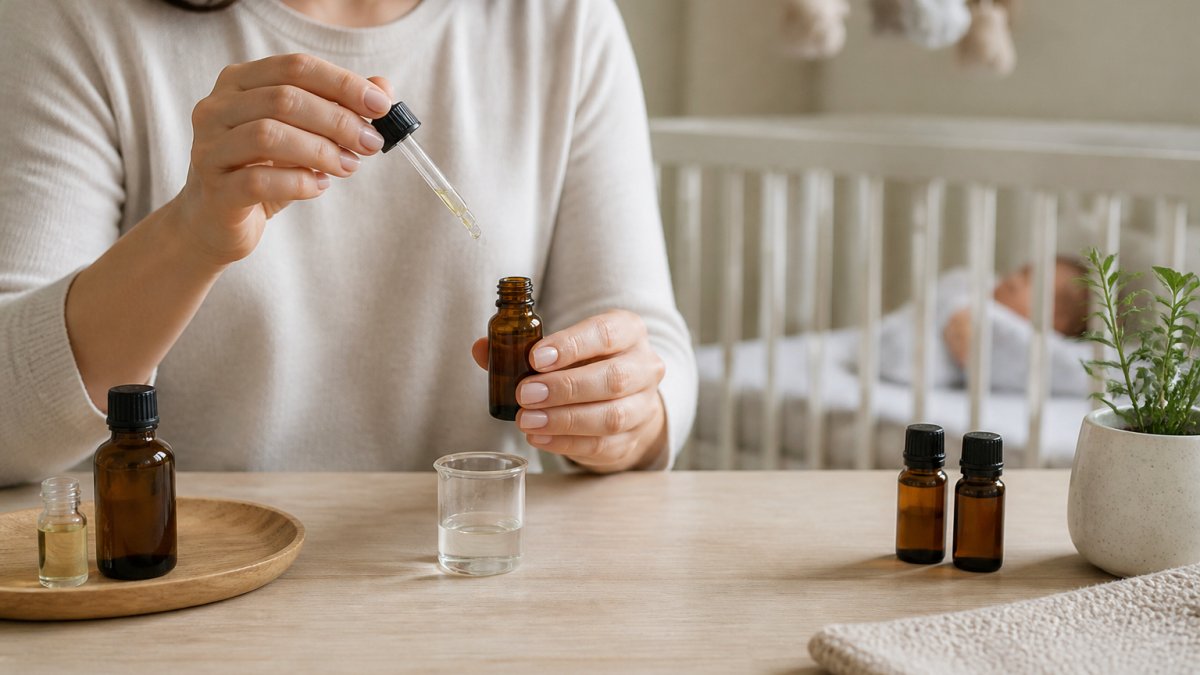
Step 1: Patch Test Before Any Diffusion
Before you diffuse any oil, test your baby's individual sensitivity. This isn't a traditional patch test, you're not applying oil to skin.
Watch closely for any reaction:
- Increased fussiness or crying
- Coughing or sneezing
- Skin flushing or rash
- Changes in breathing pattern
- Pulling away from the diffuser area
If you see any of these signs, stop immediately and don't use that oil around your baby again. If there's no reaction after five minutes, you can cautiously proceed, but this single test doesn't guarantee safety with longer exposure.
Step 2: Choose Your Diffuser Wisely
Not all diffusers are equally safe. Ultrasonic diffusers that create a cool mist are your best option. They don't concentrate oils through heat, and they allow you to control dilution by adjusting water-to-oil ratio.
Avoid heat diffusers entirely. Heat changes the chemical structure of oils and can create compounds more irritating than the original oil.
Our New USB Portable Mini Air Humidifier features ultrasonic technology with two spray modes, continuous and intermittent. The four-hour auto shut-off prevents accidental overnight diffusion.

Step 3: Start with Short Sessions and Monitor
Your first diffusion session should be brief: 10-15 minutes maximum, when your baby is awake and you're actively supervising, not during nap or bedtime.
Open a window or door for air circulation. Position the diffuser at least six feet from where your baby is playing, and never near the crib or in enclosed spaces.
During and after the session, watch for any changes:
- Breathing pattern changes
- Increased fussiness
- Skin reactions
- Behavioral changes
If everything seems fine after 15 minutes, you can cautiously extend future sessions to 20-30 minutes, but never during sleep hours and never more than once daily.
Creating an intentional home environment for your baby doesn't require essential oil diffusion. Our humidifiers support natural respiratory health without the risks of diffused oils. Continue shopping for thoughtfully designed home products that put safety and intention first.
Frequently Asked Questions
Is it safe to diffuse essential oils around a baby?
Diffusing essential oils around babies requires caution. Babies under 3 months should not be exposed to any essential oil diffusion. For babies 3-6 months, use only highly diluted oils in well-ventilated spaces for no more than 15-30 minutes at a time. Babies have developing respiratory systems and sensitive skin, making them vulnerable to irritation and adverse reactions. Always consult your pediatrician before introducing any essential oils near your baby.
What essential oils should not be diffused around babies?
Avoid diffusing eucalyptus, peppermint, tea tree, thyme, oregano, and cinnamon around babies. These oils contain compounds that can irritate developing lungs and mucous membranes. Camphor and wintergreen are also unsafe for infants. Even oils considered gentler, like lavender, should only be used in heavily diluted forms and for short periods. Always verify safety with your pediatrician before introducing any oil to your baby's environment.
Can essential oil diffusers cause breathing problems in babies?
Yes, essential oil diffusers can trigger breathing problems in babies if the oils are too concentrated or if your baby has underlying respiratory sensitivity. Infants' airways are narrower and more reactive than adults', making them susceptible to airway irritation, congestion, and wheezing from strong scents. Stop diffusing immediately if you notice coughing, rapid breathing, difficulty breathing, or wheezing. Proper ventilation and short diffusion sessions reduce this risk significantly.
How long should you diffuse essential oils around a baby?
For babies 6 months and older, limit diffusion to 15-30 minutes per session, once daily maximum. Ensure the room is well-ventilated and your baby can leave the space if needed. Never diffuse continuously or overnight. Babies under 6 months should not be exposed to diffused essential oils at all. Watch for signs of irritation or discomfort, and stop immediately if your baby shows any adverse reaction.
