

Is a Minimalist Home Worth It for Families?
Table of Contents
- What Minimalism Means in a Family Home
- Benefits of Minimalism for Families
- Downsides of Minimalism With Kids
- How to Declutter With Kids Without Losing What Matters
- Minimalist Family Home Ideas That Actually Work
- Minimalist vs. Non-Minimalist Family Homes: A Practical Comparison
- Is a Minimalist Home Right for Your Family?
- Frequently Asked Questions
Last Updated: October 10, 2026
What Minimalism Means in a Family Home
Minimalism in a family home is the practice of keeping only the possessions and furnishings your household actually uses and loves, while removing everything else. It's not about living with nothing, it's about being intentional with what stays.
For families, this looks different than minimalism for individuals. A minimalist family home still has toys for kids. It still has the sports equipment, school supplies, and seasonal decorations your family needs. The difference is that these items are chosen carefully and organized thoughtfully.
Many families confuse minimalism with deprivation. They worry their children will feel deprived without overflowing toy bins or closets packed with clothes. In practice, minimalism means your kids have fewer toys, but better ones. Fewer clothes, but pieces they actually wear. The goal is reducing decision fatigue and clutter, not limiting what your family enjoys.
A minimalist family home typically features open spaces, organized storage, and a clear purpose for each room. Parents report that shared spaces feel calmer. Children often play more creatively with fewer distractions. The home requires less time to maintain, which means more time for what matters.
Benefits of Minimalism for Families
Fewer possessions mean less time spent cleaning, organizing, and managing stuff. Many parents find that their kids tidy up faster when there's genuinely less to put away. Bedrooms take minutes to organize instead of hours. This frees up family time for activities that matter.
When children have fewer toys, they often play more imaginatively. A single toy invites creative use. An overflowing bin encourages kids to grab whatever catches their eye and abandon it quickly. Fewer choices actually support deeper, more focused play.
Minimalist homes cost less to maintain. You buy fewer replacements. You spend less on storage solutions for things you don't need. Over time, the financial benefits add up, especially when you stop impulse purchases and focus on items that genuinely fit your family's lifestyle.
A calm home environment supports mental health. Clutter creates visual noise. It triggers stress responses, even subconsciously. Parents and children alike report feeling more relaxed in organized spaces. When your home feels peaceful, family interactions often improve.
Minimalism teaches children valuable lessons about values and choices. Kids learn that possessions don't define happiness. They understand that experiences and relationships matter more than stuff. These lessons shape how they approach consumption as adults.
Downsides of Minimalism With Kids
Minimalism requires ongoing effort, especially with children. Kids accumulate gifts from relatives, school projects, sports gear, and seasonal items. Maintaining a minimalist home means regularly reassessing what stays and what goes. This decision-making never truly ends.
Some families find that minimalism feels restrictive for children. A child who loves collecting rocks, shells, or toys might feel frustrated by limits on what they can keep. Respecting a child's interests sometimes means accepting more possessions than pure minimalism allows.
Minimalist homes can feel less welcoming to visitors, especially other children. Kids visiting from non-minimalist homes might feel there's "nothing to do." Parents hosting playdates sometimes find the limited toy selection creates friction rather than creative play.
Different family members often have different comfort levels with minimalism. One parent might embrace it while the other prefers more abundance. A teenager might resist the minimalist approach their parents adopted. These differences can create tension if not handled carefully.
Minimalism requires upfront time investment. Decluttering a family home takes weeks or months. You must sort through years of accumulated items, make decisions about each one, and organize what remains. For busy families, this initial effort can feel overwhelming.
How to Declutter With Kids Without Losing What Matters
Start by involving children in the decluttering process. Ask them which toys they actually play with. Which clothes do they reach for? What items bring them joy? Children often surprise you with their honesty. They're usually willing to let go of things they've outgrown.
Create categories together: keep, donate, and sell. Let kids place items in each category. This gives them agency and helps them understand the reasoning. Explain that donating items means other children get to enjoy them. Many kids feel good about this choice.
Work on one room or category at a time. Tackling the entire house at once overwhelms families. Start with a closet or toy bin. Complete it fully. Then move to the next area. This creates momentum and shows progress.
Set boundaries around sentimental items. Children naturally want to keep things that hold memories. Create a small memory box where they can store special items without keeping everything. This honors their feelings while maintaining limits.
Ask your child to photograph items before donating them. This captures the memory without keeping the physical object. Many children find this satisfying, they can revisit the photo without the clutter.
Don't declutter your child's belongings without their input. This teaches them that their preferences don't matter. Instead, guide them toward decisions. Ask questions: "Do you still use this?" "Does this bring you joy?" Let them decide.
Minimalist Family Home Ideas That Actually Work
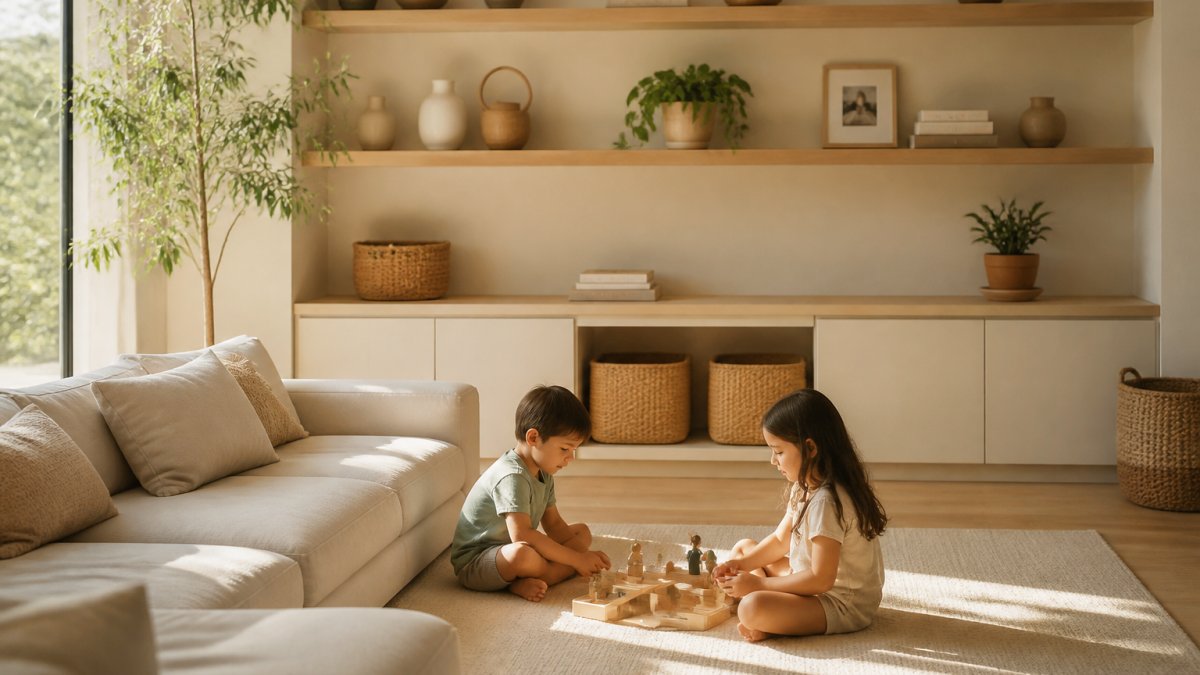
Open shelving in children's rooms lets kids see what they have and choose independently. Unlike closed toy bins, open shelves encourage kids to return items to their designated spots.
Designate specific zones for different activities. A reading corner with a few books and a comfortable seat. A building area with construction toys. A craft station with supplies.
Use vertical storage to maximize space without adding clutter. Wall-mounted shelves, pegboards, and hanging organizers keep items visible and accessible without taking up floor space. Children can reach their belongings independently, which builds confidence.
Rotate toys seasonally. Store some items away and bring them out every few months. This creates novelty without buying new toys. Children rediscover old favorites and play with them with fresh interest.
Choose furniture that serves multiple purposes. An ottoman that stores items inside. A bed with drawers underneath. A bench that holds blankets and toys. Multi-functional pieces reduce the need for additional storage furniture.
Establish a one-in-one-out rule for toys and clothes. When something new arrives, something similar leaves. This prevents accumulation while still allowing for growth and change. Kids understand the logic and often help enforce it.
Create a donation station where outgrown items collect temporarily. When it's full, you donate together. This makes the process routine rather than occasional, which keeps clutter from building up.
Minimalist vs. Non-Minimalist Family Homes: A Practical Comparison
| Aspect | Minimalist Family Home | Non-Minimalist Family Home |
|---|---|---|
| Daily Maintenance | 30-45 minutes | 90-120 minutes |
| Toy Selection | Fewer, higher quality | Many options |
| Decision-Making | Intentional, planned | Impulse-based |
| Storage Needs | Minimal | Extensive |
| Mental Load | Lower | Higher |
| Child Creativity | Often deeper | Broader exploration |
| Cost Over Time | Lower | Higher |
| Flexibility | Requires discipline | More adaptable |
Minimalist homes demand discipline. You must regularly evaluate what stays and what goes. You resist impulse purchases. You think carefully before bringing items into your home. Non-minimalist homes are more forgiving. Extra items don't disrupt the overall aesthetic or function.
Non-minimalist homes offer more flexibility for different family members' preferences. If one child loves building sets and another loves art supplies, you can accommodate both without compromise. Minimalist homes require negotiation and prioritization.
The time burden differs significantly. Minimalist families spend less time cleaning and organizing but more time making decisions about possessions. Non-minimalist families spend more time on maintenance but less time deliberating.
Cost varies based on choices, not the minimalist philosophy itself. A minimalist family buying high-quality items might spend more upfront than a non-minimalist family buying quantity. Over time, though, minimalist families typically spend less because they buy fewer replacements and resist impulse purchases.
Minimalist homes work well for families who value calm and order. Non-minimalist homes suit families who prioritize flexibility and abundance. Neither approach is objectively better, it depends on your family's personality and values.
Is a Minimalist Home Right for Your Family?
Ask yourself these questions honestly. Does your current home feel chaotic? Do you spend hours searching for items you know you have? Does clutter create stress in your household?
Do your children play more creatively with fewer toys, or do they need variety to stay engaged? Some kids thrive with limited options; others get bored quickly.
Can your family commit to ongoing decision-making? Minimalism isn't a one-time project. It requires regular reassessment and discipline. If your family struggles with consistency, you might find minimalism frustrating rather than freeing.
Do your family members share the same vision? If one parent wants minimalism and the other doesn't, you'll face resistance. If teenagers prefer abundance, forcing minimalism creates conflict. Shared commitment makes the transition smoother.
Consider your family's values. Does your family prioritize experiences and relationships over possessions? Do you value calm and order? Are you willing to say no to gifts and impulse purchases?
Start small if you're unsure. Declutter one room or category. Live with the results for a month. Notice how it feels. Does your family seem calmer? Do kids play differently? Does maintenance feel easier?
At Castellanos Housing, we believe that your home should support how your family actually lives.
Minimalism isn't about deprivation or rigid rules. It's about making conscious choices about what enters your home and what stays. For many families, this approach brings genuine relief. For others, a modified version feels more realistic.
A minimalist home can reduce stress, save time, and teach children valuable lessons about values and choices. But it requires ongoing effort and commitment from everyone in your household.
If your family is drawn to intentional living, Castellanos Housing offers thoughtfully curated home goods designed to support a considered approach to daily life. From essential oil diffusers that create calm spaces to gift items that encourage meaningful moments, our collection helps you build a home that feels both beautiful and genuinely supportive.
Frequently Asked Questions
What are the main benefits of minimalism for families?
Minimalism for families reduces decision fatigue, lowers stress about maintaining possessions, and creates more physical and mental space. Families often find that fewer belongings mean less time cleaning and organizing, allowing more time for activities together. Children may develop healthier relationships with consumption and learn to value experiences over stuff. Many parents report that a minimalist approach reduces conflict about toys and belongings, since everyone knows what they have and why they keep it.
Is a minimalist home practical for families with kids?
Yes, but it requires a different approach than solo minimalism. Rather than extreme reduction, family minimalism means being intentional about what stays in your home and giving everything a designated place. Children's toys, school supplies, and seasonal items need storage systems that work with family routines. The key is involving kids in decisions about their belongings so they understand why you keep certain things and feel ownership over their space.
What are the downsides of minimalism with children?
Minimalism with kids can feel restrictive if taken too far. Children may resist getting rid of beloved toys or clothes. Shared spaces become harder to maintain when multiple family members have different comfort levels with clutter. Some kids need more sensory input or prefer having options. Managing school papers, artwork, and sports equipment requires constant decisions. Minimalism also demands ongoing effort, it's not a one-time project but a continuous lifestyle choice that can feel exhausting for busy families.
How can you keep a minimalist family home when kids have toys?
The approach is rotation and intentional curation rather than elimination. Keep toys that encourage creativity, learning, or active play; rotate others seasonally. Use clear storage containers so children can see and access what they have. Give each toy category a specific place, building blocks in one bin, art supplies in another. Involve kids in deciding which toys to keep by asking what they actually play with. Set boundaries on new purchases by establishing a one-in-one-out rule. This teaches children about choices while maintaining a functional, less-cluttered home.
