

Is Aromatherapy Actually Effective for Stress
Table of Contents
- How Aromatherapy Works for Stress: The Science Behind the Scent
- Best Essential Oils for Stress Relief and When to Use Them
- How to Use a Diffuser for Relaxation: Practical Guidelines
- Aromatherapy Safety Guidelines: What You Need to Know
- What Clinical Research Actually Shows About Aromatherapy
- The Expectancy Effect: Why Your Mind Matters as Much as the Oil
- Aromatherapy vs. Traditional Stress Management: How They Compare
- Frequently Asked Questions
Last Updated: September 3, 2026
How Aromatherapy Works for Stress: The Science Behind the Scent
Aromatherapy is the practice of using essential oils and aromatic compounds to support emotional well-being and stress relief. When you inhale essential oil scent, aromatic molecules travel through your olfactory bulb and directly reach your limbic system, the part of your brain responsible for emotion, memory, and stress response.

This pathway makes aromatherapy unique. Unlike stress management techniques requiring active participation, inhalation works through your autonomic nervous system, which controls involuntary functions like heart rate and breathing. Certain oils, particularly lavender and bergamot, influence this system in ways that may support relaxation.
When olfactory receptors detect aromatic molecules, they send signals to the amygdala and hippocampus, regions that process emotions and emotional memories (peer-reviewed research). This direct neurological connection explains why a specific scent can trigger calm almost immediately. Many people find that using aromatherapy creates a ritual around relaxation, diffusing an oil, breathing intentionally, and creating a calm environment work together as a multifaceted approach to stress management.
Best Essential Oils for Stress Relief and When to Use Them
Lavender oil is the most commonly recommended for stress, with many people reporting a calming effect during inhalation. Bergamot, derived from citrus, is often suggested for mood support. Sandalwood, jasmine, rose, and vanilla appear in traditional wellness practices and are frequently used in relaxation blends, though clinical evidence for these specific oils remains limited.
The key distinction is between therapeutic-grade oils and consumer-grade fragrances. Therapeutic-grade oils are typically pure essential oils with minimal additives. If you're purchasing oils for aromatherapy, checking product labels for purity and sourcing information matters, especially if you plan topical application.
Using aromatherapy during a dedicated relaxation window, perhaps 15-30 minutes with a diffuser while you read or meditate, creates a stronger association with calm than sporadic use. Consistent use of the same oil strengthens the psychological connection over time.
How to Use a Diffuser for Relaxation: Practical Guidelines
An ultrasonic diffuser disperses essential oils as a fine mist through vibration technology. Fill the water reservoir with distilled or filtered water, add 3-5 drops of essential oil per 100ml of water, and turn on the device. Most diffusers operate quietly and can run continuously or in intermittent cycles.
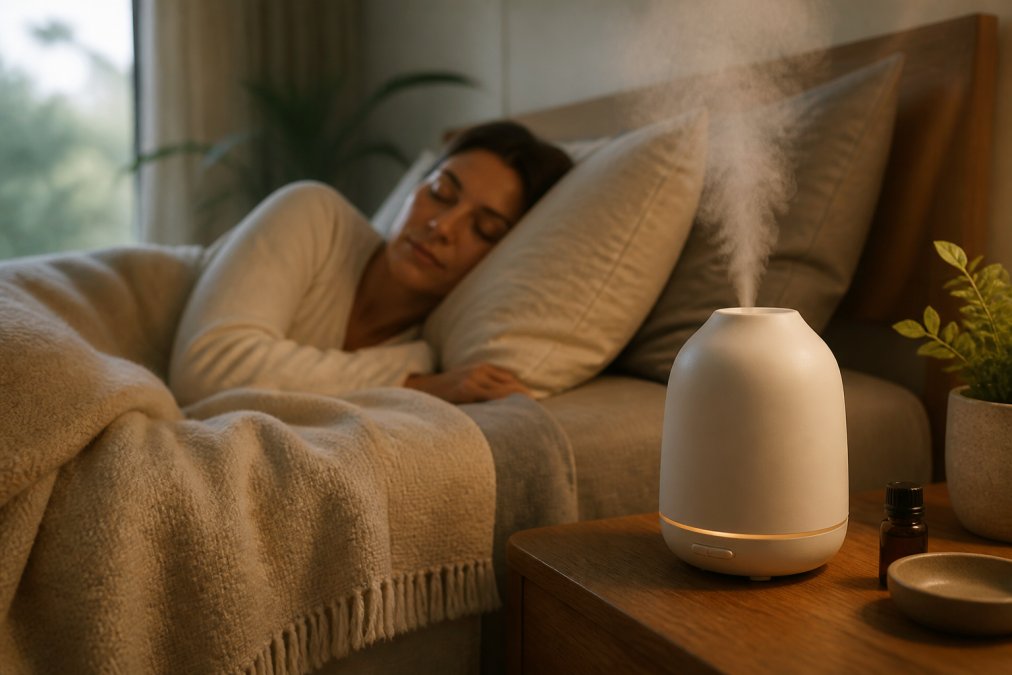
Position your diffuser on a stable, water-resistant surface away from electronics and direct sunlight. A bedroom nightstand, living room shelf, or office desk corner works well. Running a diffuser for 15-30 minutes at a time provides noticeable scent distribution without overwhelming the space.
Frequency varies by preference. Some people diffuse oils daily during morning routines or before bed; others use them intermittently during high-stress periods. If you become accustomed to a scent, taking a break for a few days often restores the effect.
Clean your diffuser weekly by emptying the water reservoir, rinsing with distilled water, and wiping the interior with a soft cloth. Never use harsh chemicals. Allow the device to dry completely before refilling.
Castellanos Housing offers several diffuser options designed for different spaces. The Portable Ultrasonic Oil Diffuser and Air Humidifier combines aromatherapy with humidification for dry environments. For smaller spaces or travel, the New USB Portable Mini Air Humidifier offers portability with built-in LED lighting.


Aromatherapy Safety Guidelines: What You Need to Know
Essential oils are potent plant extracts. Never ingest essential oils unless under direct supervision from a qualified healthcare provider, as ingestion can cause serious toxicity, particularly in children.
For inhalation via diffuser, the main concerns are respiratory sensitivity and headaches in susceptible individuals. If you experience dizziness, throat irritation, or worsening asthma symptoms, stop immediately and ventilate the space. People with asthma should consult their healthcare provider before regular diffuser use.
Topical application requires dilution with a carrier oil like coconut or jojoba oil. Never apply undiluted essential oils to skin. Perform a patch test first if considering topical use.
Pregnant people should check with their healthcare provider, as some oils may not be appropriate during pregnancy. Young children and pets have different sensitivities than adults. Research whether specific oils are safe for them, as some essential oils are toxic to cats and dogs.
Purchase oils from reputable sources that provide third-party testing or transparency about sourcing and purity. Synthetic fragrances labeled as "essential oil" are not the same as pure essential oils and carry different safety profiles.
What Clinical Research Actually Shows About Aromatherapy
Several small studies have found that certain essential oils, particularly lavender, correlate with reduced self-reported anxiety in controlled settings (nccih.nih.gov). However, these studies typically involve small sample sizes and don't always account for the expectancy effect, the possibility that belief in a treatment's effectiveness contributes significantly to the reported benefit.
Some studies report modest reductions in cortisol levels or heart rate when participants inhale specific oils. Other research finds minimal or no physiological change. The inconsistency reflects that aromatherapy's effects are subtle and highly individual.
What research does support is that aromatherapy can be a useful complementary tool within a broader stress management approach. When combined with other evidence-based practices like exercise, adequate sleep, mindfulness, or therapy, aromatherapy may contribute to overall well-being. The evidence doesn't support aromatherapy as a standalone treatment for clinical anxiety or stress disorders, but it does support its use as part of a holistic wellness routine.
If you're interested in the current state of evidence, the National Center for Complementary and Integrative Health provides summaries of research on aromatherapy and essential oils, updated regularly.
The Expectancy Effect: Why Your Mind Matters as Much as the Oil
The expectancy effect, also called the placebo effect, is not a weakness in aromatherapy's effectiveness. It's a real neurological phenomenon that explains a significant portion of why aromatherapy works for many people. When you expect a treatment to help, your brain produces measurable changes in stress hormones, pain perception, and emotional regulation.
This doesn't mean the effect is "fake." Your mind's expectations trigger genuine physiological responses. If you use lavender oil expecting relaxation and feel calmer, that's a real change happening in your nervous system. The expectancy effect is powerful enough that it's one of the hardest variables to control for in clinical research.
You're not choosing between "the oil works" or "it's all in your head." The oil, your expectations, the ritual of using it, and your intentional focus on relaxation all work together. This is an advantage: aromatherapy's effectiveness depends partly on factors you can control through mindfulness and intention.
When you approach aromatherapy expecting calm, your nervous system shifts toward parasympathetic activation, the "rest and digest" state, characterized by lower heart rate, deeper breathing, and reduced cortisol. The scent itself may amplify this effect, but the expectation initiates it.
Using the same oil at the same time each day strengthens the psychological association. Your brain learns to expect relaxation when you engage in this ritual, and that expectation becomes self-reinforcing. After a few weeks of consistent use, the effect often becomes stronger, not because the oil has changed, but because the neurological association has deepened.
Aromatherapy vs. Traditional Stress Management: How They Compare
Aromatherapy occupies a specific niche in the broader landscape of stress management approaches. Unlike meditation or cognitive behavioral therapy, which require active mental engagement, aromatherapy works passively through your sensory system. Unlike exercise, which provides cardiovascular benefits alongside stress reduction, aromatherapy's primary mechanism is psychological and neurological.
| Approach | Time Required | Skill Level | Evidence Strength | Best For |
|---|---|---|---|---|
| Aromatherapy | 15-30 min sessions | Beginner | Modest | Complementary support, daily rituals |
| Meditation | 10-30 min daily | Beginner to intermediate | Strong | Long-term emotional regulation |
| Exercise | 30+ min, 3-5x weekly | Beginner | Strong | Physical and mental health |
| Therapy/Counseling | 50 min weekly | Passive | Strong | Clinical anxiety, depression |
| Medication | Daily | Passive | Strong | Moderate to severe conditions |
These approaches work through different mechanisms. Meditation trains attention and emotional awareness. Exercise produces endorphins and improves cardiovascular function. Therapy addresses underlying thought patterns and behavioral habits. Aromatherapy influences your nervous system through scent and expectancy.
For mild, situational stress, aromatherapy can provide quick relief. For chronic stress or clinical anxiety, aromatherapy alone is insufficient. The most effective approach combines aromatherapy with one or more evidence-based stress management techniques.
Many people find that aromatherapy enhances other practices. Using a diffuser while meditating creates a multisensory experience that deepens practice for some. Diffusing oils during your morning routine or before bed establishes a consistent ritual that signals to your nervous system it's time to transition into a calmer state.
At Castellanos Housing, we understand that stress management is personal. Our curated selection of essential oils and diffusers supports whatever approach resonates with you. Our 10ml Pure Plant Essential Oil collection includes the most commonly recommended oils for relaxation, sourced for purity and consistency.
Is aromatherapy actually effective for stress? The honest answer is nuanced. Aromatherapy shows modest effects supported by research, particularly when combined with intentional relaxation practices and realistic expectations. It's not a replacement for professional mental health care, but it can be a meaningful part of your daily stress management routine.
Start with a quality diffuser and a pure essential oil that appeals to you. Use it consistently during moments when you've intentionally set aside time for relaxation. Notice what shifts in how you feel. That attentiveness, that willingness to pause and create space for calm, is often as valuable as the oil itself.
Frequently Asked Questions
Q: Do essential oils actually help with stress, or is it just placebo?
A: Aromatherapy shows measurable physiological effects beyond pure placebo. Studies demonstrate that inhalation of certain essential oils triggers activity in the limbic system and olfactory bulb, which regulate emotional responses and cortisol levels. However, the expectancy effect, your belief that something will work, amplifies these results. The most honest answer: aromatherapy is effective, but your mindset about it matters. Clinical trials show lavender and bergamot produce anxiety reduction in many users, though results vary by individual.
Q: What are the best essential oils for immediate stress reduction?
A: Lavender, bergamot, and chamomile consistently rank highest in clinical studies for anxiety reduction. Lavender works through interaction with neurotransmitters like serotonin and dopamine. Bergamot activates the autonomic nervous system to promote relaxation. For immediate relief, inhale directly from the bottle or use a diffuser for 15-30 minutes. Dosage matters: 2-4 drops in a diffuser is typically sufficient; more doesn't mean faster results. Quality varies significantly between therapeutic-grade oils and synthetic fragrances, so source carefully.
Q: How do I use a diffuser safely without overdoing it?
A: Run your diffuser for 15-30 minutes at a time, 2-3 times daily in a well-ventilated space. Avoid continuous operation, which can cause respiratory irritation or headaches. Never apply undiluted essential oils directly to skin, always use a carrier oil. Keep diffusers away from children and pets, as some oils pose contraindications for specific demographics. Check the safety profile of each oil before use. Ultrasonic diffusers like our Portable Ultrasonic Oil Diffuser ($19.00) are safer than heat-based methods, which can degrade the oil's therapeutic properties.
Q: Is aromatherapy scientifically proven, or is it just marketing?
A: Aromatherapy has genuine scientific support, though it's classified as complementary therapy rather than a primary medical treatment. Peer-reviewed studies show that essential oil inhalation produces measurable changes in cortisol levels, heart rate, and brain activity. However, study quality varies, and results aren't universal. The evidence supports aromatherapy as a legitimate tool for stress management when combined with other practices, not as a replacement for medical care. The distinction matters: therapeutic-grade oils have better safety profiles and efficacy than synthetic fragrances marketed as 'essential oils.'
This article was written using GrandRanker
