

Benefits of Intentional Home Living: A 2026 Guide
Table of Contents
- What Intentional Home Living Actually Means
- How Intentional Home Living Reduces Stress and Anxiety
- Creating a Peaceful Home Sanctuary Through Thoughtful Design
- Intentional Living Tips for Busy Adults
- Minimalist Home Environment Benefits and Mental Clarity
- The Financial and Sustainable Impact of Intentional Choices
- Building Better Relationships and Boundaries at Home
- Frequently Asked Questions
Last Updated: September 2, 2026
What Intentional Home Living Actually Means
Intentional home living is the practice of making deliberate, thoughtful choices about how you design, organize, and inhabit your living space to align with your values and support your well-being. It's not about perfection or minimalism for its own sake. Instead, it's about creating an environment where every element, from furniture placement to lighting to the products you surround yourself with, serves a purpose in your daily life.
At Castellanos Housing, we believe intentional home living starts with understanding what matters most to you. Maybe that's calm mornings, meaningful time with family, or a space that feels like a true refuge from the outside world. Once you identify your core values, you can make decisions about your environment that actually support them, rather than defaulting to what's trendy or what you've always done.
The difference between intentional living and simply decorating is intention itself. You're not filling space; you're designing it. You're not buying things because they're on sale; you're selecting items that genuinely improve how your space functions and feels. This mindset shift, from passive consumption to active curation, is where the real benefits begin.
How Intentional Home Living Reduces Stress and Anxiety
Creating an intentional home environment directly impacts your nervous system. When your surroundings are cluttered, chaotic, or misaligned with your values, your brain is constantly processing visual noise and making micro-decisions about items that don't serve you. This creates a low-level stress response that accumulates throughout the day.
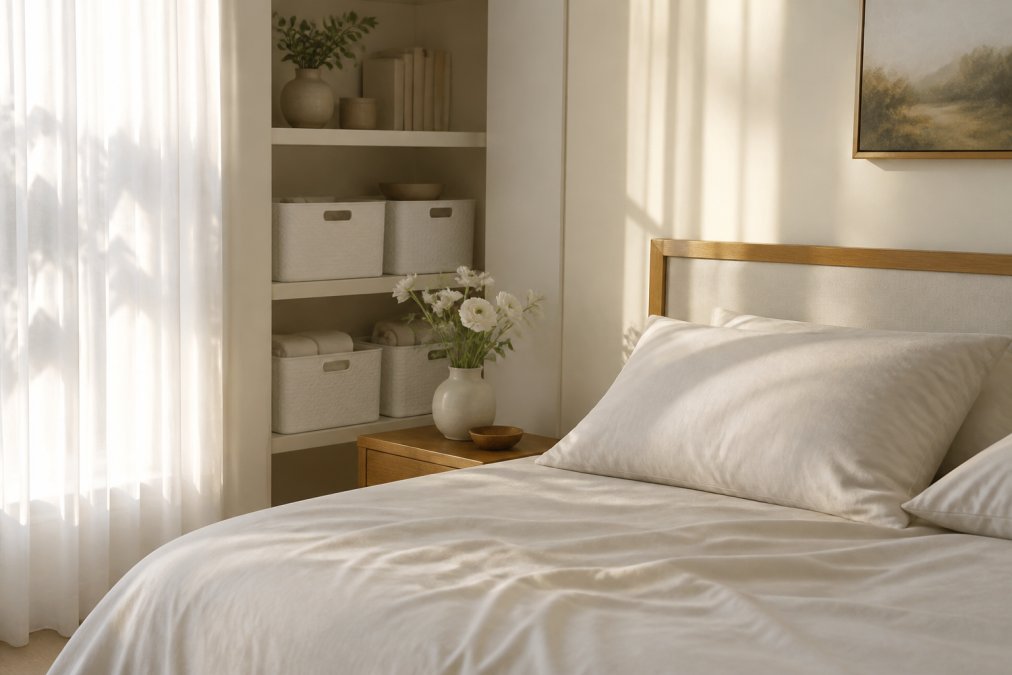
An intentional home does the opposite. When everything in your space has been chosen deliberately and everything has a place, your mind experiences less decision fatigue and visual overwhelm. You walk into your bedroom and see only what supports rest. You enter your living room and feel the intentional calm you've created. This sense of control over your environment is one of the most underrated stress-reduction tools available.
The connection between environment and emotional regulation is direct. When you're surrounded by items that align with your values and a layout that supports your daily rhythm, your nervous system doesn't have to work as hard. You experience fewer micro-stressors throughout the day. Over time, this compounds into improvements in anxiety levels and overall sense of well-being.
Creating a Peaceful Home Sanctuary Through Thoughtful Design
A home sanctuary isn't about luxury or expense. It's about purposeful design that supports your specific needs. This means understanding how light, color, texture, and organization affect your mood and behavior, then making choices that serve you.
Lighting sets the tone for how a space feels. Natural light during the day supports your circadian rhythm and mood (peer-reviewed research). Soft, warm lighting in the evening signals your body to wind down. If your bedroom gets harsh overhead lighting, you're fighting against your own biology every time you try to relax there. Intentional design means addressing this, adding dimmer switches, using warm-toned bulbs, or positioning your bed to capture morning light.
Texture and tactile elements matter more than most people realize. When you surround yourself with materials that feel good to touch, like the soft waffle weave of quality towels or the cool comfort of bamboo sheets, you're creating micro-moments of comfort throughout your day. These small sensory experiences add up to a deeper sense of calm and support.

Organization is where many people miss the mark. A cluttered space isn't just visually chaotic; it creates mental friction. When you can't find what you need or when items are piled haphazardly, you're constantly making small decisions and experiencing small frustrations. The solution isn't aggressive minimalism; it's functional organization. Storage solutions like the Sculpted Bin keep your essentials accessible and your space visually clear, supporting both mental clarity and daily functionality.

Consider also the role of natural elements. Fresh flowers in a thoughtfully chosen vase, plants that thrive in your light conditions, or natural materials like wood and stone create a connection to the natural world. This connection has documented effects on stress reduction and sense of well-being (peer-reviewed research).
Intentional Living Tips for Busy Adults
Busy adults often assume intentional living requires time they don't have. The reality is the opposite: intentional living actually saves time and mental energy by eliminating decision fatigue and creating systems that work.
Start with your morning and evening rituals. These are the moments that set the tone for your entire day. If your bedroom supports good sleep, with cooling sheets, minimal visual clutter, and soft lighting, you wake up calmer. If your bathroom is organized so you can find what you need without searching, your morning moves faster. Design your highest-traffic spaces first.
Create zones for different activities. Your brain works better when spaces are dedicated to specific purposes. If you work from home, a designated workspace (even a corner of a room) helps you mentally transition into work mode. If you have family time, a living room arranged for connection rather than scrolling supports that intention. When spaces have clear purposes, you naturally fall into better patterns.
Use storage strategically. The Sculpted Bin works because it solves a real problem: you need to store things, but you don't want them visible and creating visual noise. Strategic storage keeps your intentional choices visible while hiding the rest. This takes perhaps five minutes to set up but saves you countless small decisions every single day.
Build one habit at a time. Don't try to overhaul your entire home at once. Pick one small change, perhaps adding quality towels to your bathroom, or organizing one closet, and let that success motivate the next step. Intentional living is a practice, not a destination.
Align your environment with how you actually live. This is critical. If you work long hours and rarely cook, an elaborate kitchen setup won't serve you. If you have young children, an all-white minimalist aesthetic will create constant stress. Design for your actual life, not the life you think you should have.
| Strategy | Time Investment | Impact | Best For |
|---|---|---|---|
| Organize one high-traffic space | 1-2 hours | Immediate stress reduction | Busy professionals |
| Upgrade sleep environment (sheets, pillow) | 30 minutes | Better rest, clearer mornings | Anyone struggling with sleep |
| Create a dedicated work zone | 1 hour | Improved focus and productivity | Remote workers |
| Implement one storage solution | 30 minutes | Reduced visual clutter | Families with multiple people |
| Establish a bedtime routine | Ongoing | Better sleep quality and calm | Everyone |
Minimalist Home Environment Benefits and Mental Clarity
Minimalism gets misunderstood as deprivation. True minimalism is about removing what doesn't serve you so the things that do can have more impact. A minimalist home environment creates mental clarity because your brain isn't processing unnecessary visual information.
When you walk into a minimalist space, you notice what's actually there. A single piece of art has more impact. A carefully chosen plant becomes a focal point rather than one of fifty decorative items. This clarity extends to your thinking. With fewer visual distractions, your mind has more space for actual thoughts rather than unconsciously processing clutter.

The connection between a clear physical space and mental clarity is well-documented in how people describe their environments (apa.org). Those who deliberately removed items they didn't need report feeling lighter, more focused, and less anxious. This isn't magic; it's neuroscience. Your brain uses energy to process every visual stimulus in your environment. Reduce the stimuli, and you free up mental resources.
A minimalist approach to your home also makes maintenance easier. Fewer items means less cleaning, less organizing, less decision-making about what to do with things. For busy adults, this is significant. The time you save on managing physical clutter can be redirected toward activities that actually matter to you.
This doesn't mean your home should feel empty or cold. It means being intentional about what you keep. A home with ten meaningful items that you love creates more joy than a home with a hundred items you tolerate. The Sculpted Bin embodies this principle, it's a single, well-designed storage solution that serves multiple purposes rather than a collection of mismatched containers.
The Financial and Sustainable Impact of Intentional Choices
Intentional living has direct financial implications that many people overlook. When you buy deliberately rather than impulsively, you spend less overall. When you choose quality items that last rather than cheap items you replace constantly, you save money long-term. When you organize your space well, you stop buying duplicates of things you already own but can't find.
The average household wastes significant money on items that are purchased but never used, items that break quickly and need replacement, or duplicates of things already owned but lost in clutter. Intentional living eliminates these waste patterns. You buy less, but what you buy is higher quality and actually serves you.
There's also a sustainability angle that matters increasingly to conscious consumers. Fast, cheap home goods create environmental waste. They end up in landfills after a season or two. Intentional living naturally leads to choosing better-made items that last years rather than months. This is better for the environment and, ultimately, better for your wallet.
When you're intentional about your purchases, you're also more likely to choose products aligned with your values. Perhaps that means choosing items made from sustainable materials, or supporting brands that prioritize ethical production. These choices might cost more upfront, but they align with your values and reduce the cognitive dissonance of living against your principles.
Consider the long-term cost of quality. A set of cooling bamboo sheets at $159 might seem expensive compared to cheap sheets at $20, but they last years, feel better, and support better sleep. Over five years, that's a better value and a better environmental choice than replacing cheap sheets multiple times.
Building Better Relationships and Boundaries at Home
Your home environment directly influences how you relate to the people in it. A space designed with intention creates natural opportunities for connection and makes it easier to maintain healthy boundaries.
When your home is organized and calm, you're more present with family members. You're not distracted by mental clutter or stressed by your surroundings. You have more patience and emotional capacity for the people you care about. Conversely, a chaotic home environment creates tension and makes it harder to be your best self with others.
Intentional design also supports boundary-setting. If you have a dedicated workspace, you can actually leave work at the end of the day rather than having work materials visible in your living space. If your bedroom is designed as a sanctuary, you protect that space as a place for rest and connection with a partner, not a dumping ground for the day's tasks. Clear physical boundaries support clear emotional boundaries.
The practice of intentional living also models important values for children and guests. When people see that you've thoughtfully chosen your surroundings and organized your space to support your well-being, they understand that these practices matter. You're demonstrating that your environment reflects your values and that creating spaces that support you is worth the effort.
A home designed with intention also becomes a place where people want to spend time. Guests feel the calm and thoughtfulness. Family members experience the care you've put into creating a supportive environment. This deepens relationships because your home becomes a true gathering place rather than just a place to sleep and store things.
The benefits of intentional home living extend far beyond aesthetics. When you design your space to align with your values and support your actual life, you reduce stress, improve sleep, enhance mental clarity, and create an environment that strengthens your relationships. The practice doesn't require perfection or significant expense, it requires intention.
At Castellanos Housing, we understand that your home should feel as good as it looks. Our curated collection of home goods and lifestyle products, from the Copper Infused Bamboo Sheet Set that supports better sleep to the Sculpted Bin that creates functional beauty in your space, is designed to support intentional living. Each product has been selected for how it actually improves daily life, not just how it looks on a shelf. Start with one intentional choice and build from there. Your calmer, clearer home is waiting.
Frequently Asked Questions
What are practical examples of intentional living in the home?
Practical intentional home living includes choosing quality storage solutions like the Sculpted Bin ($38) to organize spaces intentionally, selecting bedding that supports better sleep with cooling bamboo sheets ($159), displaying fresh flowers in a handmade vase to create visual calm, and using diffusers to set an aromatic environment. It means making conscious choices about what enters your space and why it belongs there, every item should serve a purpose or bring genuine joy.
How does intentional living improve mental health?
Intentional home living reduces decision fatigue by removing clutter and creating clear routines. When your environment is organized and purposeful, your brain experiences less stress processing visual chaos. A calm home environment supports emotional regulation, and creates mental clarity. Mindfulness practices paired with a thoughtfully designed space amplify these benefits, helping you feel more grounded and present in daily life.
Does intentional living lead to a more minimalist lifestyle?
Intentional living and minimalism overlap but aren't identical. Minimalism focuses on owning less; intentional living focuses on conscious choices. You can practice intentional living with a full home if every item aligns with your core values. The key difference: minimalism asks 'do I need this?', while intentional living asks 'does this support my life and values?' Both reduce clutter and decision fatigue, but intentional living emphasizes purpose over quantity.
What are the first steps to creating an intentional home environment?
Start by defining your core values and what 'home' means to you. Next, audit your current space, remove items that don't align with those values. Invest in one quality piece that supports your well-being, like the Adjustable Bamboo Cooling Pillow ($109) for better sleep or a diffuser ($19-$46) for aromatherapy. Create a daily rhythm by designating spaces for specific activities. Finally, establish a maintenance routine so your intentional choices stick.
This article was written using GrandRanker
