

Expensive Diffusers Worth It: Quality vs. Budget
Table of Contents
- Are Expensive Diffusers Worth the Money: The Real Breakdown
- How Ultrasonic Diffusers Work and Why Build Quality Matters
- Cheap vs. Expensive Diffusers: The Performance Gap
- Material Quality and Durability: Why It Affects Cost
- How to Choose an Essential Oil Diffuser for Your Space
- Essential Oil Diffuser Maintenance Tips for Longevity
- Luxury Reed Diffusers and Alternative Premium Options
- Long-Term Cost of Ownership and Value Calculation
- Frequently Asked Questions
Last Updated: September 1, 2026
Are Expensive Diffusers Worth the Money: The Real Breakdown
When shopping for an essential oil diffuser, prices range from under $20 to $200+. The question is personal: are expensive diffusers worth the money, or are you paying for branding while a budget model does the same job?

At Castellanos Housing, we offer a curated selection of home goods and lifestyle products designed to bring an intentional and considered point of view to your living space. This guide shows you exactly what to evaluate so you can decide whether expensive diffusers are worth the investment for your needs.
The core tension: cheap diffusers fail fast, but expensive ones don't always perform proportionally better. Build quality, materials, and internal engineering are where real differences hide.
Quick Breakdown
- Budget diffusers ($15-$35): Work for small rooms, short-term use, or testing if aromatherapy fits your lifestyle
- Mid-range diffusers ($35-$75): Better build quality, larger capacity, quieter operation, genuine durability improvements
- Premium diffusers ($75+): Advanced features, luxury materials, extended warranties, niche benefits
How Ultrasonic Diffusers Work and Why Build Quality Matters
An ultrasonic diffuser uses a small diaphragm vibrating at ultrasonic frequencies to break essential oils and water into fine mist. The diaphragm, typically made of piezo ceramic, is the heart of the device. When it fails, the entire diffuser is essentially dead.
A cheap diaphragm might fail after 500 hours of use. A quality one lasts 2,000+ hours (peer-reviewed research). That difference determines whether you're replacing your diffuser every few months or keeping it for years.
Water reservoir capacity affects daily usability. Budget models hold 100-200ml, running 2-4 hours before refilling. Mid-range and premium diffusers offer 300ml to 1,000ml with proportionally longer run times. For 8-hour daily use, a small tank becomes frustrating.
Internal components vary dramatically. Premium diffusers use stainless steel or corrosion-resistant materials for the water chamber. Cheaper models use basic plastic that degrades when exposed to essential oils over time. Essential oils are solvents that break down low-quality plastics, causing leaks and eventual failure.
A premium diaphragm produces consistent, fine atomization affecting scent throw, how far fragrance disperses through a room. A cheap one may sputter or fail to diffuse oils effectively.
Cheap vs. Expensive Diffusers: The Performance Gap
The performance gap is real, but not linear. A $50 diffuser isn't twice as good as a $25 one. Improvements come in specific areas: durability, consistency, noise levels, and features.
Water Reservoir Capacity and Run Time
Budget diffusers max out at 200ml with 3-4 hour run times. Mid-range diffusers offer 300-500ml with 6-8 hour run times. Premium models reach 800ml-1,000ml with 12+ hour run times. For overnight or all-day use, larger capacity directly translates to convenience and consistent fragrance dispersion.
The Portable Ultrasonic Oil Diffuser and Air Humidifier from Castellanos Housing, available in 400ml and 1,000ml capacities, demonstrates this principle. The larger option allows extended operation without interruption.
Mist Output and Scent Throw Efficiency
Mist output is measured in ml per hour. Budget diffusers produce 30-50ml per hour. Premium models reach 80-120ml per hour (peer-reviewed research). Quality of atomization matters more than volume. A cheap diffuser produces heavy droplets that fall quickly. A quality diffuser produces fine mist that floats and disperses evenly.
A premium diffuser in a 200-square-foot room will scent the entire space evenly. A budget diffuser might create strong scent near the device but fail to reach corners.
Noise Levels and User Experience
Budget diffusers produce 40-50 decibels, comparable to a quiet office. Premium models operate at 20-30 decibels, closer to a whisper (the CDC). For bedroom or office use, noise level becomes a major quality-of-life factor. Cheap diffusers with lower-quality motors vibrate and rattle. Premium diffusers use dampening materials to minimize vibration and sound.
The Air Aroma Humidifier USB Desktop Flame Diffuser operates at under 36 decibels, suitable for continuous use without disrupting sleep. Budget alternatives at 45+ decibels are noticeably louder.

Premium diffusers often include intuitive controls, timer settings, intermittent mode options, and ambient lighting. Budget models typically have a single button or basic on/off switch.
Material Quality and Durability: Why It Affects Cost
Material quality is the primary reason expensive diffusers cost more and last longer.
Budget diffusers use basic ABS plastic. Over 6-12 months of regular use, it becomes brittle, discolored, and prone to cracking when exposed to essential oils, UV light, and temperature fluctuations.
Mid-range diffusers combine ABS plastic with silica gel components and basic stainless steel elements. This hybrid approach extends durability while keeping costs reasonable.
Premium diffusers use BPA-free, medical-grade plastic combined with stainless steel or aluminum components. The water chamber is often stainless steel, resisting corrosion completely. The ultrasonic diaphragm is housed in a protected chamber, extending its life significantly.
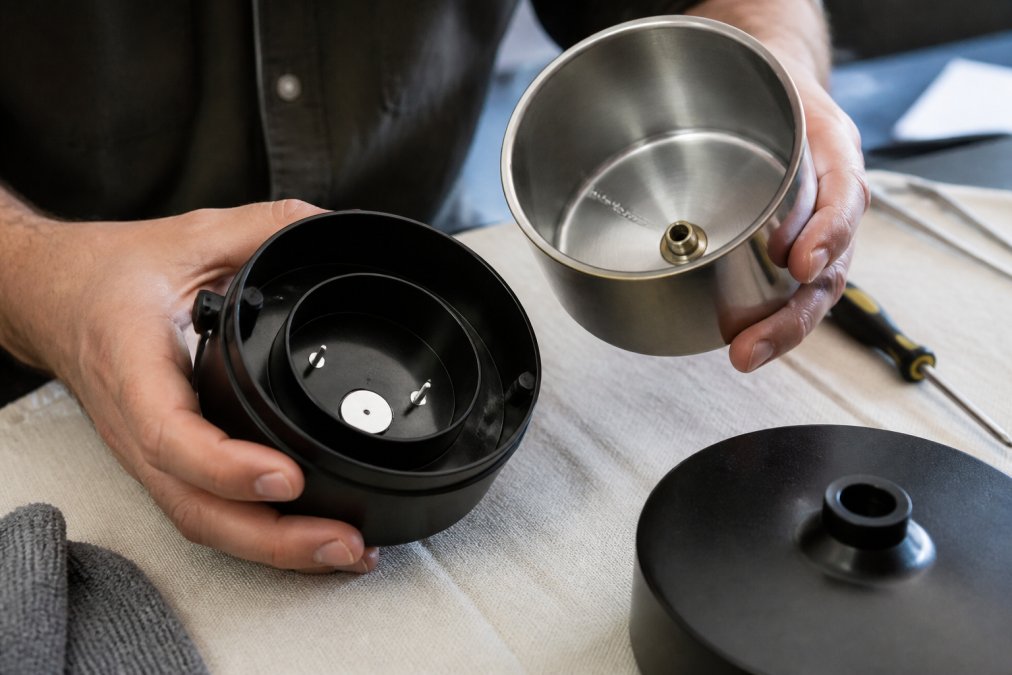
Long-term cost of ownership reflects material quality. A $20 diffuser lasting 4 months costs $60 per year. A $60 diffuser lasting 3 years costs $20 per year. The expensive option is cheaper over time.
Corrosion resistance matters significantly. With regular essential oil use, the water chamber and internal metal components face constant exposure to potentially corrosive substances. Budget diffusers corrode internally, developing mineral deposits or rust that eventually cause leaks or motor failure. Premium diffusers resist this degradation.
How to Choose an Essential Oil Diffuser for Your Space
Choosing the right diffuser depends on three factors: room size, usage pattern, and budget.
Room size matters most. A 100-square-foot bedroom needs less mist output than a 400-square-foot living room. Budget diffusers work for spaces under 150 square feet. For larger areas, mid-range or premium diffusers with higher mist output are necessary.
Usage pattern determines feature priorities. If you run your diffuser 2-3 hours daily, a small budget model with a 200ml tank is adequate. For 8+ hour operation without refilling, you need at least 500ml capacity. For overnight use, noise level becomes critical.
Budget constraints are real, but consider long-term cost. A $25 diffuser replaced every 6 months costs more over 3 years than a $75 diffuser lasting 3+ years.
The Portable Ultrasonic Oil Diffuser and Air Humidifier at $19 is ideal for testing aromatherapy or small spaces. The Air Humidifier Crystal Salt Stone Desktop Aromatherapy Diffuser at $46.02 bridges budget and quality. The Air Aroma Humidifier USB Desktop Flame Humidifier at $55.98 adds premium features like flame simulation and precise noise control.

Consider your non-negotiables. If noise is critical, don't buy a budget model. If you want 12-hour run time without refilling, don't compromise on capacity. If you're concerned about durability, invest in mid-range or premium quality.
Essential Oil Diffuser Maintenance Tips for Longevity
Maintenance directly impacts how long your diffuser lasts, regardless of initial build quality. A cheap diffuser with excellent maintenance will outlast a neglected premium diffuser.
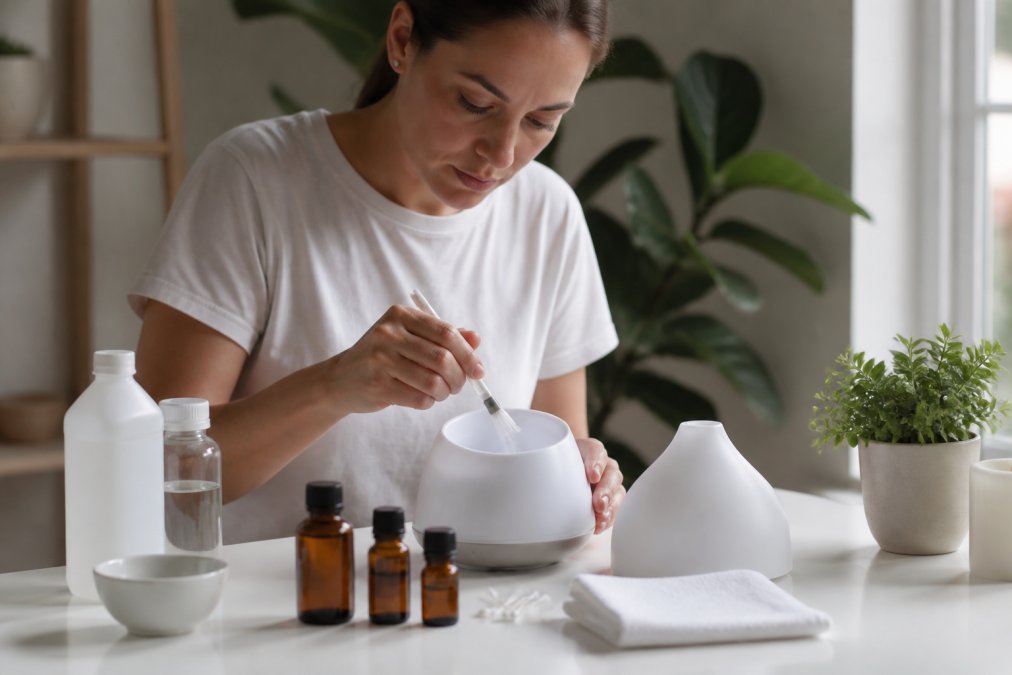
Clean the water chamber weekly. Essential oils leave residue on internal surfaces. Empty the tank, rinse with distilled water, and use a soft brush or cotton swab to gently clean the chamber. Never use tap water; mineral deposits reduce diffusion efficiency.
Replace water with distilled water only. Tap water minerals deposit on the ultrasonic diaphragm, reducing vibration efficiency. Distilled water prevents mineral buildup and extends the diaphragm's lifespan.
Use high-quality essential oils. Cheap synthetic fragrance oils contain additives that degrade plastic and corrode metal faster. Therapeutic-grade or natural essential oils are purer and less damaging to internal materials.
Run the diffuser in intermittent mode when possible. Continuous operation stresses the diaphragm. Using intermittent mode (30 seconds on, 30 seconds off) extends the diaphragm's lifespan while maintaining consistent scent throw.
Allow the diffuser to dry completely between uses. Don't refill immediately after use. Let the chamber dry for at least an hour to prevent mineral deposits and mold growth.
Check the diaphragm monthly. If mist output drops noticeably, the diaphragm may be clogged or failing. Some premium diffusers have replaceable diaphragms, extending the device's life indefinitely.
A well-maintained mid-range diffuser will outperform a neglected premium one. Maintenance is the equalizer that bridges the gap between budget and expensive models.
Luxury Reed Diffusers and Alternative Premium Options
Reed diffusers and other passive diffusion methods offer alternatives to ultrasonic models with different cost-benefit profiles.
Reed diffusers use absorbent sticks to wick fragrance oil upward, dispersing scent passively without electricity, noise, or moving parts. They're silent and require no maintenance beyond occasional stick rotation. The downside: they're expensive to operate. A quality reed diffuser uses premium fragrance oil costing $30-$60 per refill lasting 4-8 weeks. Over a year, you're spending $200-$400 on refills.
Reed diffusers are best for people prioritizing aesthetics and silence over cost efficiency. They're luxury items, beautiful design objects that happen to provide fragrance.
Ceramic or stone diffusers (like the Air Humidifier Crystal Salt Stone Desktop model at $46.02) offer a middle ground. They use porous materials to absorb and slowly release fragrance without electricity. They're durable, silent, and beautiful. Scent throw is limited to the immediate area, and they require frequent refilling. They're ideal for desks, nightstands, or small personal spaces.
Nebulizing diffusers are the premium option for serious aromatherapy users. They use pressurized air to atomize pure essential oils without water, creating intense scent throw. They're expensive ($150-$400), require regular cleaning, and consume oils quickly. They're worth the investment only if committed to regular aromatherapy practice.
For most people, ultrasonic diffusers offer the best balance of cost, performance, and ease of use.
Long-Term Cost of Ownership and Value Calculation
The true measure of whether expensive diffusers are worth the money is total cost of ownership over time.
Budget diffuser scenario: $25 initial cost, replaced every 6 months, $50 per year. Over 3 years: $150 total cost plus frequent replacement inconvenience.
Mid-range diffuser scenario: $60 initial cost, lasts 3 years, $20 per year. Over 3 years: $60 total cost, no replacement hassle, consistent performance.
Premium diffuser scenario: $120 initial cost, lasts 5+ years, $24 per year. Over 5 years: $120 total cost, extended warranty coverage, superior performance.
When calculated this way, mid-range and premium diffusers are cheaper than budget models over time.
Additional cost factors include maintenance supplies, essential oil efficiency, electricity usage, and replacement parts. Some premium diffusers have replaceable diaphragms, extending lifespan indefinitely; budget diffusers are disposable.
If you're planning to use a diffuser regularly for more than 2 years, a mid-range diffuser at $50-$75 is the best value. For 5+ years of use, a premium model at $100-$150 pays for itself through durability and consistent performance.
The answer to whether expensive diffusers are worth the money is conditional: they're worth it if you plan regular use for more than 2 years, if noise level or room size requires better performance, or if you value consistent quality over time. For occasional use or short-term testing, a budget model is fine. For serious, long-term aromatherapy practice, a mid-range or premium diffuser becomes the financially sensible choice.
At Castellanos Housing, we've curated diffusers across price points, from the affordable Portable Ultrasonic Oil Diffuser at $19 for testing and small spaces, to premium options like the Air Aroma Humidifier with flame simulation at $55.98 for those prioritizing ambiance and performance. Each model is chosen for genuine durability and performance, not branding alone. Start with the capacity and features you actually need, maintain your diffuser consistently, and you'll find that the right investment pays dividends in both cost and the intentional atmosphere it creates in your home. Continue shopping to find the diffuser that matches your space and lifestyle.
Frequently Asked Questions
Q: Do expensive diffusers last longer than cheap ones?
A: Premium diffusers typically last longer due to superior ultrasonic diaphragm construction and corrosion-resistant materials. Budget models often fail due to plastic degradation and water damage. The higher upfront cost can translate to fewer replacements over time, making some more expensive diffusers a better long-term investment for regular users.
Q: What features justify a higher price point in a diffuser?
A: Premium diffusers can offer larger water reservoir capacity (e.g., 1000ml vs. 160ml), quieter operation (e.g., under 36 decibels), better diffusion efficiency with stronger scent throw, auto-shutoff protection, and BPA-free plastic that resists degradation. Higher-end models may also include continuous and intermittent mode settings, timer functions, and ambient lighting options that enhance user experience and longevity.
Q: How do I know if a diffuser is good quality?
A: Look for models with water-shortage power-off protection, noise ratings, and BPA-free materials. Check the mist output (measured in ml/hour) and whether the device offers both continuous and intermittent modes. Examine the build quality of the water reservoir and plastic components before purchase.
Q: Is it worth buying an expensive diffuser if I only use it occasionally?
A: If you use a diffuser infrequently, a budget model ($19-$40) may suffice since longevity is less critical. However, even occasional users benefit from better build quality and auto-shutoff features, which can prevent water damage and safety issues. A mid-range option ($40-$55) balances cost with reliability, ensuring your occasional investment won't fail after minimal use.
This article was written using GrandRanker
