

Essential Oil Diffuser Safety Tips for Pets
Table of Contents
- Why Pets Are More Sensitive to Essential Oils
- Essential Oils Toxic to Cats and Dogs
- Signs of Essential Oil Toxicity in Pets
- How to Diffuse Essential Oils Safely With Pets
- What to Do If Your Pet Is Exposed to Essential Oils
- Pet-Safe Alternatives to Essential Oil Diffusers
- Maintaining Your Diffuser to Prevent Pet Exposure
- Frequently Asked Questions
Last Updated: October 1, 2026
Essential oils can transform a room. They create calm, reduce stress, and make a space feel intentional. But here's what many people miss: what's soothing for you can be dangerous for your pets. Essential oil diffuser safety tips for pets aren't optional, they're critical. At Castellanos Housing, we believe creating a beautiful home means keeping every member of your household safe, including your furry companions. This guide walks you through everything you need to know about using essential oil diffusers responsibly around cats and dogs.

Why Pets Are More Sensitive to Essential Oils
Your pet's body processes scents differently than yours does. Cats and dogs have far more sensitive olfactory systems than humans. Their sense of smell is exponentially stronger. A scent you barely notice can overwhelm their senses.
Beyond smell, the real issue is metabolism. When pets inhale or ingest essential oils, their bodies struggle to break down the compounds. Cats lack glucuronyl transferase, an enzyme humans have (pubmed.ncbi.nlm.nih.gov). This means their livers can't metabolize certain oils effectively. Dogs have better metabolic capacity than cats, but they're still far more vulnerable than people.
The airborne particles from ultrasonic diffusers create another problem. These particles linger in the air longer than you'd expect. Pets breathe them continuously throughout the day. Over time, this inhalation exposure accumulates in their system. Volatile organic compounds from oils can irritate mucous membranes and airways.
| Factor | Impact on Pets |
|---|---|
| Scent sensitivity | 10-100x stronger than humans |
| Liver metabolism | Limited enzyme capacity, especially cats |
| Inhalation exposure | Continuous airborne particle exposure |
| Body size | Smaller body = higher concentration in system |
Essential Oils Toxic to Cats and Dogs
Not all essential oils are equally dangerous. Some are mildly irritating. Others can cause severe organ damage or neurological symptoms.
The most toxic oils for pets include:
- Tea tree oil - Causes neurological symptoms, tremors, and loss of coordination
- Eucalyptus oil - Respiratory distress and depression
- Peppermint oil - Tremors, drooling, and weakness
- Citrus oils (lemon, lime, orange) - Liver damage with repeated exposure
- Pine oil - Respiratory irritation and kidney damage
- Ylang ylang - Heart rate changes and lethargy
- Cinnamon oil - Mouth and throat irritation, respiratory issues
- Lavender oil - Despite its calming reputation, can cause depression and weakness in pets
- Thyme oil - Gastrointestinal upset and neurological effects
- Wintergreen oil - Salicylate toxicity, similar to aspirin poisoning
Cats are particularly sensitive to lavender, tea tree, and eucalyptus. Dogs show more tolerance to some oils but remain vulnerable to concentrated compounds.
The issue isn't always the oil itself, it's the concentration. A heavily scented room with continuous diffusion creates dangerous levels of volatile organic compounds. Even "pet-safe" oils can cause problems at high concentrations.
Signs of Essential Oil Toxicity in Pets
Recognizing toxicity early can save your pet's life. Symptoms vary based on the oil, exposure level, and your pet's size. Some signs appear within minutes. Others develop over hours or days.
Watch for these warning signs:
- Respiratory distress - Coughing, sneezing, wheezing, or rapid breathing
- Drooling - Excessive salivation or difficulty swallowing
- Watery eyes - Tearing or eye irritation
- Tremors or shaking - Muscle trembling or loss of coordination
- Lethargy - Unusual tiredness or lack of interest in activity
- Vomiting or diarrhea - Gastrointestinal upset
- Loss of appetite - Refusing food or treats
- Ataxia - Stumbling, wobbling, or inability to walk normally
- Seizures - In severe cases with high exposure
- Liver dysfunction - Yellowing of gums or eyes (jaundice)
Cats often hide symptoms until they're severe. If your cat seems withdrawn or is hiding more than usual after diffuser use, contact your veterinarian immediately.
Dogs may show obvious distress faster. Panting, pacing, or seeking escape from the room are clear signs your dog is uncomfortable.
How to Diffuse Essential Oils Safely With Pets
If you want to use essential oils in your home, safety requires specific precautions. This isn't about avoiding oils entirely, it's about using them responsibly.
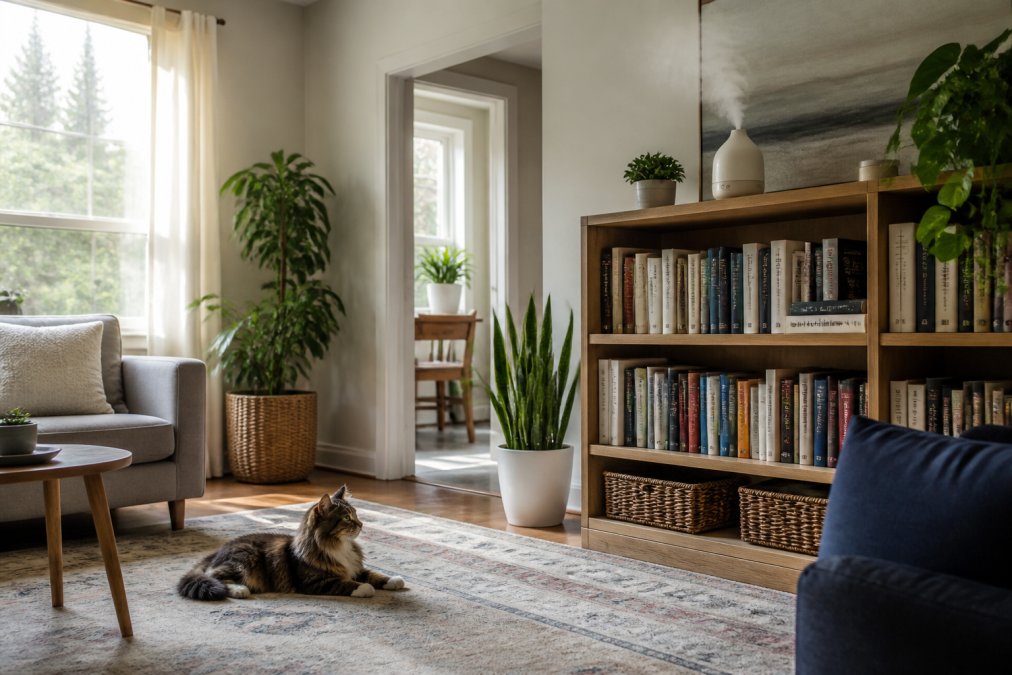
1. Choose pet-safe oils only. Some oils are safer than others. Frankincense, cedarwood (in dilution), and chamomile have lower toxicity profiles. Even these require careful use. Never assume an oil is safe without research.
2. Dilute heavily with water. Water-based dilution is critical. Most ultrasonic diffusers already mix oils with water, but concentration matters. Use the minimum amount of oil recommended. When in doubt, use less. A few drops in a large reservoir is safer than filling the oil compartment.
3. Place diffusers out of reach. Elevate your diffuser on a high shelf or table. Pets shouldn't be able to knock it over or drink from it. Position it away from where your pet sleeps or spends most time. A diffuser in a bedroom where your pet sleeps all night creates continuous inhalation exposure.
4. Ensure proper ventilation. Run diffusers only in well-ventilated spaces. Open windows or doors to allow fresh air circulation. Never seal a room and run a diffuser continuously. Airborne particles need an exit path. Your pet needs access to unscented air.
5. Limit diffuser runtime. Don't run diffusers continuously. Use them for 15-30 minutes at a time, then turn them off. This prevents accumulation of volatile organic compounds. Many diffusers have timer functions, use them.
6. Provide pet-accessible exits. Your pet must be able to leave the room if the scent bothers them.
What to Do If Your Pet Is Exposed to Essential Oils
Accidental exposure happens. A diffuser tip-over. A pet getting into a bottle. Knowing how to respond can prevent serious complications.
Immediate steps:
-
Move your pet to fresh air immediately. Get them out of the room with the diffuser or spilled oil. Open windows and doors. Fresh air is your first intervention.
-
Do not induce vomiting. If your pet ingested oil, don't try to make them vomit. Some oils can cause more damage coming back up. Let a veterinarian decide.
-
Rinse affected areas. If oil got on their skin or fur, rinse gently with cool water and mild soap. Avoid harsh scrubbing. Pat dry.
-
Remove contaminated materials. If your pet got oil on their bedding or collar, remove and wash those items.
-
Call your veterinarian or poison control. Contact the ASPCA Animal Poison Control Center at (888) 426-4435. They have oil-specific guidance. Your vet needs to know the specific oil, amount, and your pet's symptoms.
What to tell your veterinarian:
-
The exact oil (if you know it)
-
How much exposure occurred
-
How long ago exposure happened
-
Your pet's current symptoms
-
Your pet's weight and age
-
Any medications your pet takes
-
Activated charcoal to absorb ingested oil
-
IV fluids to support liver and kidney function
-
Oxygen therapy if respiratory distress is severe
-
Monitoring for neurological symptoms
-
Blood work to check liver and kidney function
Pet-Safe Alternatives to Essential Oil Diffusers
You don't need essential oils to create a pleasant-smelling home. Safer alternatives exist that won't put your pets at risk.
Natural options:
- Beeswax candles - Burn cleanly and produce a subtle, natural scent. Keep them away from pet tails and ensure proper ventilation.
- Fresh flowers and plants - Many flowers add fragrance naturally. Avoid lilies, sago palms, and other toxic plants.
- Open windows - Fresh air is free and completely safe.
- Activated charcoal - Absorbs odors without adding scent. Place in bowls around your home.
- Baking soda - Sprinkle on carpets, let sit, then vacuum. Neutralizes odors naturally.
- Coffee beans or citrus peels - Place in bowls for subtle, natural scent without diffusion.
Pet-safe diffuser alternatives:
- Unscented humidifiers - Add moisture to air without oils or fragrance.
- Air purifiers - Remove odors and improve air quality without adding scent.
- Fragrance-free reed diffusers - Decorative without the toxicity risk.
Maintaining Your Diffuser to Prevent Pet Exposure
Diffuser maintenance directly impacts safety. A poorly maintained diffuser can leak, concentrate oils, or malfunction in ways that increase pet exposure.
Weekly maintenance:
- Empty and rinse the water tank completely
- Wipe the ultrasonic plate with a soft cloth
- Check for any visible cracks or damage
- Inspect the power cord for damage
Monthly deep clean:
- Soak the tank in warm water for 15 minutes
- Use a soft brush to remove mineral buildup
- Rinse thoroughly with distilled water
- Dry completely before refilling
Frequently Asked Questions
Which essential oils are most toxic to cats and dogs?
Tea tree, eucalyptus, peppermint, lavender, and citrus oils are among the most dangerous for pets. Cats are particularly sensitive because they lack certain liver enzymes that break down these compounds. Even diluted or diffused oils can cause respiratory distress, lethargy, and neurological symptoms in cats and dogs. Always check with your veterinarian before using any essential oil around pets.
What are the signs my pet has been exposed to essential oils?
Watch for coughing, sneezing, watery eyes, drooling, vomiting, tremors, or difficulty breathing. Some pets show lethargy or loss of appetite. Respiratory distress and mucous membrane irritation are common early signs. If you notice any of these symptoms after using a diffuser, move your pet to fresh air and contact your veterinarian immediately, especially if symptoms persist or worsen.
How can I diffuse essential oils safely if I have pets at home?
Place the diffuser in a room your pet cannot access, or use it only when pets are outside. Ensure proper ventilation by opening windows and doors. Run the diffuser for short periods, no more than 15-30 minutes at a time. Never use oils your pet is exposed to regularly. Choose pet-safe oils if diffusing in shared spaces, and always dilute oils in water-based diffusers rather than using concentrated formulas.
Are ultrasonic diffusers safer for pets than other types?
Whether you use an ultrasonic, heat-based, or reed diffuser, the key is choosing pet-safe oils, limiting duration, ensuring ventilation, and keeping the diffuser out of your pet's reach.
