

Ultrasonic Diffusers for Large Rooms: Benefits & Setup
Table of Contents
- How Ultrasonic Diffusers Work in Large Spaces
- Key Benefits of Ultrasonic Diffusers for Large Rooms
- Sizing Your Diffuser: Square Footage vs. Mist Output
- Best Essential Oil Diffuser for Large Room Setup
- How Long Should You Run an Ultrasonic Diffuser
- Essential Oil Diffuser Maintenance Tips for Longevity
- Ultrasonic vs. Nebulizing Diffusers: What Works Best
- Frequently Asked Questions
Last Updated: September 30, 2026
How Ultrasonic Diffusers Work in Large Spaces
Ultrasonic diffusers large rooms operate through a simple but elegant mechanism: ultrasonic vibration breaks water and essential oils into microscopic particles, dispersing them as cool mist throughout your space. Unlike heat-based diffusers that can degrade essential oil integrity, ultrasonic technology preserves the therapeutic properties of your oils while adding moisture to the air simultaneously.

An ultrasonic transducer vibrates at frequencies above human hearing, atomizing the water-oil mixture into cool mist. This cold-air diffusion preserves oil chemistry and releases full aromatic properties. For ultrasonic diffusers large rooms, mist output determines how effectively scent reaches every corner.
Most quality ultrasonic diffusers produce less than 36 decibels, comparable to a whisper, making them ideal for bedrooms, living rooms, and offices where continuous operation supports consistent aromatherapy without distraction.
Key Benefits of Ultrasonic Diffusers for Large Rooms
Cool Mist Humidification Without Heat
Ultrasonic diffusers deliver dual functionality: aromatherapy and humidification in a single device. The cool mist they produce adds moisture to dry air without the risk of overheating your space or damaging your essential oils. This matters in large rooms where traditional heating methods can create hot spots or uneven humidity distribution.

The water-to-oil ratio you maintain affects both humidification and scent throw. A common approach is adding 1-2 drops of essential oil per reservoir fill, which prevents overwhelming fragrance while ensuring adequate moisture dispersal.
Quiet Operation and Ambient Lighting
Quiet operation means ultrasonic diffusers won't compete with conversations or music, especially valuable in open-concept spaces. Many units include gentle LED lighting, bright enough to notice at night without disrupting sleep, subtle during the day.
Energy Efficiency and Auto-Shutoff
Ultrasonic diffusers consume only 2-5 watts, making continuous operation negligible on your electricity bill while maintaining consistent scent and humidity.
Auto-shutoff prevents the transducer from running dry and burning out, extending lifespan significantly.
Sizing Your Diffuser: Square Footage vs. Mist Output
Room size and diffuser capacity determine effective scent throw and humidification. A diffuser designed for small rooms won't saturate a 400-square-foot space evenly.
Mist Output and Coverage Formula
Mist output, measured in milliliters per hour (ml/hr), is the primary technical specification that determines coverage. Most ultrasonic diffusers fall into three output categories:
- Low output (15-25 ml/hr): Suitable for bedrooms, home offices, or small sections of an open-plan space. Examples include compact 130 ml reservoir units.
- Medium output (30-50 ml/hr): Ideal for standard living rooms, master bedrooms, or medium home offices. Most 300-500 ml capacity diffusers operate in this range.
- High output (60-100+ ml/hr): Required for large living rooms, lofts, or open-concept spaces. Typically found in units with 800 ml or larger reservoirs.
Water Reservoir Capacity and Run Time
- 130-260 ml capacity: Best for intermittent use or small rooms.
- 300-500 ml capacity: Suitable for large rooms with evening-to-morning operation or daytime use without midday refilling.
- 800-1000 ml capacity: Ideal for large rooms where you want 24-hour coverage or multi-day operation without refilling. The trade-off is slightly larger footprint and weight.
Placement Strategy for Maximum Scent Throw
In large rooms, placement strategy is critical to amplify effective coverage.
Elevation: Position your diffuser 2-4 feet above floor level on a shelf or stand. Mist rises and disperses outward, reaching upper corners more effectively than floor-level placement. Avoid corners where mist hits walls immediately.
Central positioning: Place the diffuser near the center of your room or zone to allow mist to disperse in all directions. In open-concept spaces, position near zone boundaries rather than edges.
Airflow consideration: Avoid air vents, ceiling fans, and windows where drafts push mist away. Position where gentle HVAC airflow aids distribution without overwhelming it.
Multi-unit strategy for very large spaces: For rooms exceeding 500 square feet, two medium-output units at opposite ends provide more even coverage and allow independent zone adjustment.
Intermittent vs. Continuous Operation
Intermittent mode, 30 minutes on, 30 minutes off, extends oil and water supply while maintaining scent presence. Scent saturation plateaus after 20-30 minutes, and olfactory adaptation means intermittent operation keeps fragrance noticeable.
Best Essential Oil Diffuser for Large Room Setup
The Portable Ultrasonic Oil Diffuser and Air Humidifier from Castellanos Housing offers the capacity and performance large rooms require. Available in 400ml and 1000ml options, it delivers efficient dual functionality without compromising on design.

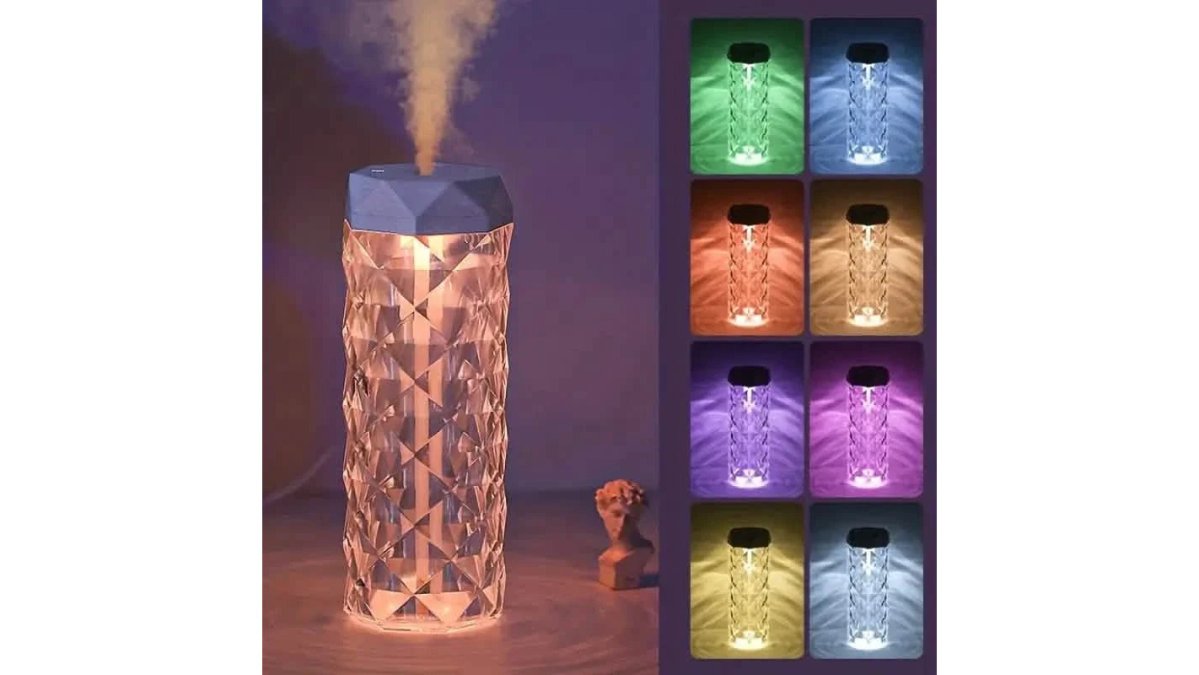
The 1000ml reservoir provides approximately 30 hours of continuous operation.
The Air Humidifier Crystal Salt Stone Desktop Aromatherapy Essential Oil Ultrasonic Diffuser suits medium-to-large rooms with intermittent use. Its crystal construction, colorful LED lighting, and low-noise operation make it ideal for bedrooms.
How Long Should You Run an Ultrasonic Diffuser
Running a diffuser for 30-60 minutes every few hours maintains scent presence while extending essential oil supply.
Essential Oil Diffuser Maintenance Tips for Longevity
Proper maintenance extends lifespan and ensures consistent performance.
Understanding Mineral Buildup in Large-Capacity Units
Mineral deposits from tap water accumulate on the transducer plate and water chamber.
Modern NEW TREND Handmade Print →
Signs of mineral accumulation include:
- Reduced mist output
- Mist that becomes weaker or stops appearing entirely
- Visible white or chalky residue on the transducer or inside the reservoir
- Unusual vibration sounds or humming changes
Water Type and Its Impact on Maintenance Frequency
The water you use determines your maintenance schedule:
Distilled water: Contains no minerals, so buildup is minimal. Maintenance reduces to monthly deep cleaning even with daily use. Cost is approximately $1-2 per gallon.
Filtered water: Reduces minerals and extends descaling intervals to 2-3 weeks with daily use, depending on filter quality.
Tap water: Hard water areas require descaling every 7-10 days with daily use; soft water areas may extend to 2-3 weeks.
For continuous or 12+ hour daily use, distilled water prevents transducer damage and maintains consistent mist output.
Maintenance Schedule for High-Capacity Units
Weekly maintenance (for daily use):
- Empty the reservoir completely after each use or at least once weekly.
- Wipe the interior with a soft, dry cloth to remove oil residue or moisture.
- Inspect the transducer plate for white deposits; if present, descale immediately.
Bi-weekly descaling (for tap water use):
- Fill the reservoir halfway with equal parts white vinegar and distilled water.
- Run for 10-15 minutes, then empty and rinse with distilled water for 5 minutes.
- Air dry for at least 30 minutes before refilling.
Monthly deep cleaning (for all users):
- Disassemble removable parts and soak in 1:1 white vinegar and distilled water for 30 minutes.
- Gently scrub interior surfaces and transducer area with a soft brush.
- Rinse thoroughly with distilled water and air dry completely.
Oil Residue Management
Essential oils leave residue on the transducer and chamber walls, reducing mist output over time. Use minimal oil (1-2 drops per fill). Alternate water-only cycles weekly to clear residue. After thicker oils, run a water-only cycle immediately.
Storage and Extended Non-Use
For storage longer than two weeks: empty and dry the reservoir completely, store in a cool dry location away from sunlight, and run a full descaling cycle before resuming use.
Extending Transducer Life
The ultrasonic transducer is the most expensive component to replace. Protect it by:
- Never running the diffuser dry. The auto-shutoff feature prevents this, but don't override it by refilling while the unit is still powered on.
- Using distilled water exclusively if possible, or filtered water at minimum.
- Descaling on schedule rather than waiting for output to drop noticeably.
- Avoiding abrasive cleaning tools on the transducer plate; use only soft cloths or soft brushes.
With proper maintenance, a high-quality ultrasonic diffuser should operate effectively for 2-3 years of daily use. Neglecting maintenance typically reduces lifespan to 6-12 months due to transducer fouling.
Ultrasonic vs. Nebulizing Diffusers: What Works Best
The choice between ultrasonic and nebulizing diffusers hinges on your priorities for large rooms. Ultrasonic diffusers use water as a carrier, creating cool mist that humidifies while diffusing oil. Nebulizing diffusers, by contrast, atomize pure essential oil without water, producing stronger scent throw but no humidification benefit.
For large spaces, ultrasonic diffusers typically offer dual purposes. You get both aromatherapy and humidification from a single device, which is particularly valuable in dry climates or during winter months. The cool mist disperses more gently throughout the room, creating even coverage rather than concentrated scent bursts.
Nebulizing diffusers excel when scent intensity is your primary goal and you don't need humidification. They produce more potent fragrance with less essential oil over time, which appeals to people who want maximum aromatic impact.
Energy efficiency favors ultrasonic technology. Nebulizers require more power to operate effectively, while ultrasonic units run on minimal wattage.
The quiet operation advantage goes to ultrasonic diffusers. Nebulizers produce a subtle but noticeable humming sound during operation. In a large room where you're close to the device, this becomes apparent.
The difference between a diffuser that transforms your space and one that disappoints comes down to matching capacity to room size, understanding mist output requirements, and committing to basic maintenance.
Frequently Asked Questions
Are ultrasonic diffusers effective for large open-concept spaces?
Yes, ultrasonic diffusers work well in large spaces when sized appropriately. The key is matching mist output (measured in milliliters per hour) to your square footage. Larger open-concept areas may need higher output or multiple units.
How often should I clean my ultrasonic diffuser to keep it working properly?
Clean your ultrasonic diffuser every 3-7 days, depending on water hardness and usage frequency. Empty the water reservoir, wipe the interior with a soft cloth, and use a cotton swab to gently clean the ultrasonic transducer at the base. Regular maintenance prevents mineral buildup, ensures consistent mist output, and extends the device's lifespan.
How long should you run an ultrasonic diffuser in a large room?
Run your ultrasonic diffuser for 30-60 minutes at a time, with breaks in between. Most units feature intermittent modes that automatically cycle on and off, which conserves water and essential oils. For continuous scent in large spaces, use the intermittent setting rather than running continuously. Check your device's run time specifications, many offer 4-8 hours per full tank depending on capacity and mist output.
What makes a quality ultrasonic diffuser worth the investment?
Quality diffusers use durable materials, reliable ultrasonic transducers, and proper water-to-oil ratios. Look for units with auto-shutoff protection, quiet operation, and adequate water reservoir capacity for your room size. Castellanos Housing offers models like the Portable Ultrasonic Oil Diffuser with 400ml or 1000ml options, designed for consistent performance and longevity, addressing concerns about durability that come from cheaper alternatives.
