

Is a Nebulizing Diffuser Worth It for Small Apartments?
Table of Contents
- Is a Nebulizing Diffuser Worth It for Small Apartments? The Short Answer
- Nebulizing vs Ultrasonic Diffuser: What Actually Changes in a Small Space
- Nebulizing Diffuser Oil Consumption: The Cost Nobody Mentions Upfront
- Noise, Pets, and Sensitivities: Everyday Apartment Realities
- How to Clean a Nebulizing Diffuser Without Damaging It
- The Best Diffuser for Small Spaces: What to Look For
- The Verdict: When a Nebulizing Diffuser Earns Its Place
- Frequently Asked Questions
Last Updated: October 9, 2026
Is a Nebulizing Diffuser Worth It for Small Apartments? The Short Answer
For most small apartments, a nebulizing diffuser is worth it only if you want strong scent with no water and you accept the running costs.
At Castellanos Housing, we think about scent the way we think about lighting: it should support the room, not take it over. Below, we compare nebulizing against ultrasonic and reed options, break down what oil consumption really costs, and show where a compact water-based diffuser is the smarter buy.
Nebulizing vs Ultrasonic Diffuser: What Actually Changes in a Small Space
The core difference is water. An ultrasonic diffuser mixes oil with water in a reservoir and vibrates it into mist. A nebulizer skips the water entirely and atomizes pure oil with a small air pump and a glass or metal nozzle.
That single change reshapes everything in a tight room:
- Scent strength: Nebulizers release undiluted oil, so the same number of drops produces a far denser aroma than an ultrasonic unit.
- Coverage: A small nebulizer can scent an open-plan living area in minutes; an ultrasonic unit spreads more slowly and evenly.
- Humidity: Ultrasonic units add moisture to the air; nebulizers do not, which matters in already-humid apartments or during summer.
- Run time: Nebulizers typically run in short cycles (often 5-15 minutes on, then off) because continuous output overwhelms a small room. Ultrasonic units can run for hours on a full tank.
- Oil dilution: Ultrasonic units dilute oil in water, so a tank might use 5-10 drops; a nebulizer uses pure oil and can consume a comparable volume in a single short cycle.
How Room Size Changes the Math
Air volume is the whole story. A 100-square-foot bedroom holds roughly 800 cubic feet of air; a 300-square-foot studio holds about 2,400 cubic feet. The same oil output that feels balanced in the studio becomes three times as concentrated in the bedroom.
A practical rule most users land on: in a studio or one-bedroom under about 500 square feet, run a nebulizer in 5-10 minute bursts, two or three times a day, rather than continuously.
If you want a subtle background scent that runs all day, an ultrasonic unit is the better fit.
Why Water-Free Diffusion Hits Harder in Tight Rooms
Water-free diffusion releases oil at full strength, which means a little goes a long way. That cuts both ways. A cycle that feels perfect in a 300-square-foot living room can feel overwhelming in a 100-square-foot bedroom.
A common pattern is to start with the shortest timer setting, leave the room for a few minutes, and then judge the intensity when you return.
The American Lung Association guidance on indoor air quality is a useful reminder that adding anything to indoor air deserves a moment of thought, especially in small, closed rooms.
Nebulizing Diffuser Oil Consumption: The Cost Nobody Mentions Upfront
The purchase price is the cheap part. Nebulizers consume pure essential oil at a much higher rate than ultrasonic units, because there is no water diluting the output. That difference shows up every month, not just at checkout.
Here is how the two approaches compare on the numbers that matter:
| Factor | Nebulizing Diffuser | Ultrasonic Diffuser |
|---|---|---|
| What goes in the tank | Pure essential oil | Oil plus water |
| Typical oil per session | 10-20 drops for a 10-15 minute cycle | 5-10 drops for a 4-8 hour tank |
| Scent strength | Strong | Subtle to moderate |
| Adds humidity | No | Yes |
| Power draw | Small air pump, often 3-8 watts | Ultrasonic plate plus light, often 5-15 watts |
| Replacement parts | Nozzle, glass reservoir, sometimes the pump | Usually none until the unit fails |
| Best for | Larger-feeling rooms, short bursts | Bedrooms, all-day background scent |
| Ongoing cost | Higher oil spend, occasional parts | Lower oil spend, minimal parts |
What the Oil Bill Actually Looks Like
A 10 mL bottle of essential oil holds roughly 200 drops. If a nebulizer uses 15 drops per cycle and you run two cycles a day, that is about 30 drops daily, a bottle every week to ten days.
That gap is the real cost story. The device price is a one-time number; the oil is a subscription you pay whether or not you remember to budget for it. If you plan to run scent daily, treat oil as a recurring line item, not a one-time purchase.
Electricity and Parts
Electricity is the smaller factor. A nebulizer drawing 5 watts for 30 minutes a day uses about 0.0025 kWh daily, a few cents a month at typical residential rates. An ultrasonic unit running 6 hours at 10 watts uses about 0.06 kWh daily, still under a dollar a month in most markets.
Replacement parts are where nebulizers can surprise you. The nozzle and glass reservoir are the parts most likely to clog or crack, and replacements are not always cheap or easy to find for every model. Ultrasonic units typically have no user-serviceable parts; when they fail, they are replaced.
The Honest Total-Cost Picture
Add it up over a year: device price, oil at your actual usage rate, occasional parts, and electricity. For a daily user in a small apartment, the oil usually outweighs every other cost combined. That does not make a nebulizer a bad buy, it makes it a buy you should only make if you genuinely want strong, intermittent scent. If you want all-day background fragrance, the ultrasonic path is cheaper to run and easier to live with.
Noise, Pets, and Sensitivities: Everyday Apartment Realities
Noise is the quiet dealbreaker. Ultrasonic diffusers run near-silent, which is why they suit bedrooms and shared walls. Nebulizers use a small air pump, so they produce a steady hum that some people notice more at night than during the day.
Portable Ultrasonic Oil Diffuser and Air Humidifier →
Then there is the household. Strong, concentrated scent is not for everyone:
- Pets: Cats and dogs have a far more sensitive sense of smell than we do. Some essential oils are a concern for pets, so check with your veterinarian before running anything near them.
- Sensitivities: Asthma, allergies, and fragrance sensitivity all argue for a gentler, water-based approach.
- Shared walls: A subtle scent is a courtesy to neighbors in close quarters.
If anyone in the home is sensitive, start with the mildest option and a short run time. You can always add more scent. You cannot take it back out of the air.
How to Clean a Nebulizing Diffuser Without Damaging It
Cleaning is where nebulizers earn their reputation for fussiness. Oil residue builds up in the nozzle and glass, and a clogged nebulizer stops producing mist.
A simple routine keeps it working:
- Unplug the unit and let it cool completely.
- Empty any remaining oil back into its bottle or dispose of it.
- Add a small amount of isopropyl alcohol to the reservoir.
- Run a short cycle to flush the internal nozzle.
- Pour out the alcohol and let all parts air dry fully.
- Wipe the exterior with a soft, dry cloth only.
Do this every week or two with regular use. Skip it, and you will notice weaker mist and a stale smell long before the device actually fails.
The Best Diffuser for Small Spaces: What to Look For
The best diffuser for small spaces is one you will actually run daily: compact, quiet, easy to clean, and gentle enough for a closed room. For most apartments, that points to a water-based ultrasonic unit rather than a nebulizer.
Here is what to weigh before buying:
- Footprint: It should fit a nightstand without crowding it.
- Noise level: Under 36dB keeps it unobtrusive at night.
- Run time and auto shut-off: Safety and convenience in one feature.
- Power source: USB power means you can move it between rooms or take it along.
- Ease of cleaning: A wide opening and simple parts save you real effort.
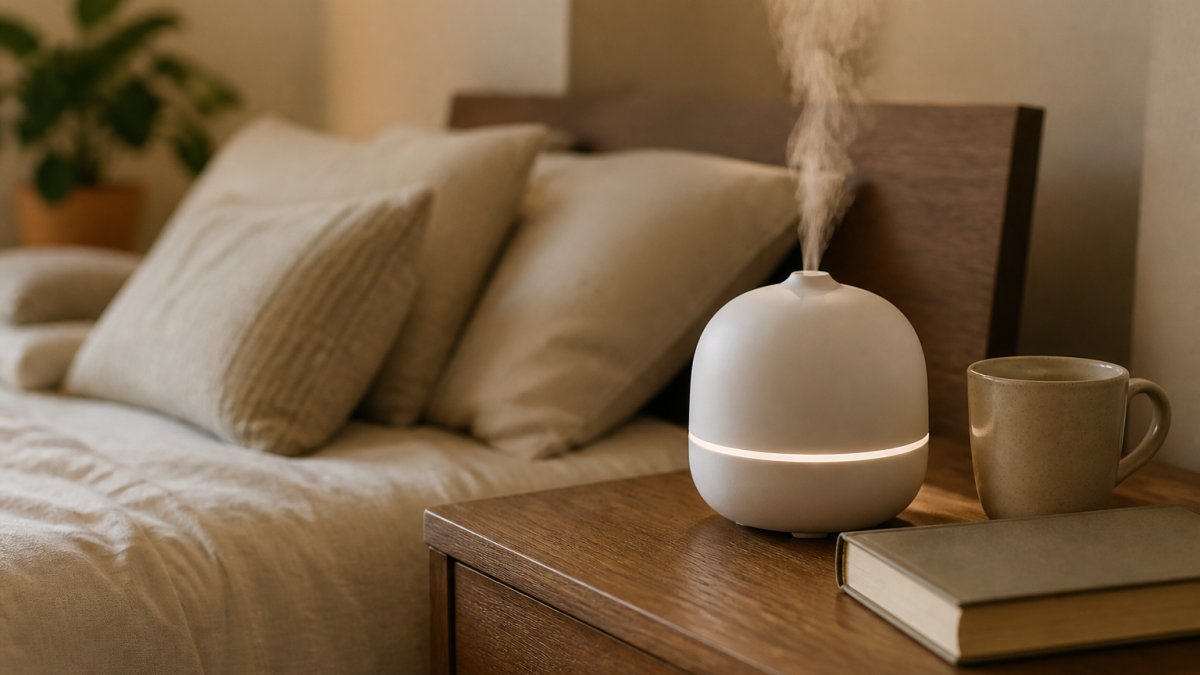
Our own collection leans toward that quieter approach. The Portable Ultrasonic Oil Diffuser and Air Humidifier at $19.00 doubles as a humidifier, comes in 400ml or 1000ml capacities, and moves easily between rooms. For a tighter footprint, the Mini Air Humidifier with wood grain finish at $35.00 runs on USB and uses two spray modes with auto shut-off.

Compact Options That Fit a Nightstand or Desk
If space is the constraint, a few of our smaller pieces do the job well. The 160ML Cactus USB Diffuser at $33.00 is quiet, USB-powered, and small enough for a desk or car. The 200 ML Mini Diffuser with 7 color lights at $36.00 offers continuous and intermittent modes with automatic shut-off.


Each one is designed for the kind of small, closed space where a gentle, steady scent works better than a blast of oil. That is the honest answer to whether a nebulizing diffuser is worth it for small apartments: sometimes, but usually not as your only unit.
The Verdict: When a Nebulizing Diffuser Earns Its Place
A nebulizing diffuser is worth it for small apartments when you want maximum scent from pure oil and you will run it in short, controlled cycles. It is not worth it if you want all-day background fragrance, quiet operation, or low running costs. For most small households, a compact ultrasonic diffuser covers more of what daily life actually needs.
If you want scent that supports a room instead of dominating it, start with a water-based unit and add oil a few drops at a time. Browse our diffusers and see which one fits your space at Castellanos Housing.
Frequently Asked Questions
Are nebulizing diffusers too strong for small rooms?
They can be, which is why most models include adjustable output or interval timers. In a small apartment, running a nebulizing diffuser on its lowest setting for 10 to 15 minutes is often enough to scent a bedroom or living area. If you want gentler, continuous output, an ultrasonic diffuser with a 400ml or 1000ml tank gives you a subtler scent that runs for hours without overwhelming the space.
How much essential oil does a nebulizing diffuser use?
Nebulizing diffusers use pure oil with no water, so consumption runs higher than water-based units. A typical session can use several milliliters per hour depending on the output setting. That matters for budgeting: running one daily can empty a 10ml bottle within a week or two. Ultrasonic models dilute oil in water, so a few drops last much longer per session.
Is an ultrasonic diffuser better than a nebulizing diffuser for a small apartment?
For most small apartments, an ultrasonic diffuser is the easier fit. It runs quietly, doubles as a humidifier, uses less oil, and needs only occasional rinsing. A nebulizing diffuser wins on scent strength and delivers pure oil with no water, but it costs more to run and requires more cleaning. If you want a lighter, longer-lasting scent in a compact space, ultrasonic is usually the better match.
How do you clean a nebulizing diffuser?
Unplug the unit, then fill the glass reservoir about halfway with isopropyl alcohol and run it for 5 to 10 minutes to flush the internal tube and nozzle. Pour out the alcohol and let the parts air dry completely before adding oil again. Clean every one to two weeks with regular use, and more often if you switch between heavier oils, since residue clogs the atomizer and weakens output.
Do essential oil diffusers act as humidifiers?
Ultrasonic diffusers do, because they add water vapor to the air alongside the scent. Nebulizing diffusers do not, since they use pure oil with no water reservoir. If dry air is part of the problem in your apartment, a dual-purpose ultrasonic model is the more practical pick. A compact unit with a 200ml or 400ml tank can humidify a small bedroom while releasing a light fragrance.
