

Long Lasting Home Fragrance Solutions That Actually Work
Table of Contents
- What Makes a Home Fragrance Last?
- Best Home Fragrance Products: Diffusers vs. Candles vs. Sprays
- Essential Oil Diffuser Benefits for Whole-Home Scenting
- How to Make Home Smell Like a Spa: Layering Techniques
- Room-by-Room Guide to Long-Lasting Fragrance
- Common Mistakes That Shorten Scent Longevity
- What to Ignore: Myths About Home Fragrance
- Conclusion: Building Your Signature Scent
- Frequently Asked Questions
Last Updated: September 7, 2026
Most home fragrance setups fail within a week, not because the product is cheap, but because the method is wrong. The secret to long lasting home fragrance solutions isn't finding a stronger candle; it's understanding how scent behaves in your space and choosing tools that match your routine.
The core tension is between convenience and control: a spray gives instant gratification but disappears in minutes, while a diffuser builds a consistent atmosphere over hours. Below, we break down the product categories that deliver longevity, how to layer them for a signature scent, and the room-by-room strategy that prevents olfactory fatigue.
What Makes a Home Fragrance Last?
Fragrance longevity isn't just about the product, it's about how scent molecules interact with your space and your nose. Two people can buy the same diffuser and get wildly different results, usually due to airflow, scent chemistry, and olfactory adaptation.
The Science of Scent Throw
When you release fragrance into a room, volatile organic compounds (VOCs) evaporate and disperse. Heavier molecules, like those in sandalwood, vanilla, and patchouli, tend to linger on fabrics and surfaces, while lighter citrus and mint notes evaporate quickly. This is why a woodsy or gourmand scent often feels like it lasts longer than a bright, zesty one. The 'throw', how far and how evenly a scent spreads, depends on the delivery method and the air currents in the room.
Heat-based methods (candles, oil burners) warm the oil, accelerating evaporation and creating a strong but short-lived burst. Ultrasonic diffusers use water and vibration to create a cool mist that disperses slowly, offering a more consistent, low-level presence. Passive methods like reed diffusers rely on capillary action and have the gentlest throw, but they last for weeks.
Why Your Nose Stops Smelling It: Olfactory Adaptation
The hidden culprit behind most 'my fragrance doesn't last' complaints is olfactory adaptation, or 'nose blindness': your brain gets used to a constant smell within about 15 minutes and stops flagging it, so you stop perceiving it even though the fragrance is still in the air (PubMed).
To combat this, build in scent breaks: run your diffuser for 30 minutes, then pause for 30, alternate between two complementary scents every few hours, or open a window briefly to reset the air.
The Role of Airflow and Room Size
Scent molecules need air movement to travel. In a large, open-plan living area, a single diffuser in a corner will only scent that corner, place it near an air vent, ceiling fan, or open doorway. In a small, closed room, too much airflow can dissipate the scent too quickly. For rooms over 300 square feet, use a larger-capacity diffuser or multiple units at opposite ends (ashrae.org).
Matching the Method to the Space
- Small rooms (under 150 sq ft): A 200ml ultrasonic diffuser or a reed diffuser works well.
- Medium rooms (150-300 sq ft): A 300-500ml diffuser or a heat-based burner with a consistent tea light.
- Large rooms (over 300 sq ft): Consider a whole-home HVAC system or multiple diffusers. A single candle or spray won't cut it.
Best Home Fragrance Products: Diffusers vs. Candles vs. Sprays
Choosing between these categories comes down to how you want the scent to behave: a diffuser for constant, low-level ambiance; a candle for a visual centerpiece; a spray for neutralizing a cooking smell fast.
| Method | Longevity | Best For | Maintenance |
|---|---|---|---|
| Ultrasonic Diffuser | Hours of continuous mist | Whole-room scenting, daily use | Refill water, clean weekly |
| Candle / Oil Burner | 1-3 hours per burn | Ambiance, focused rooms | Trim wick, manage heat |
| Room Spray / Mist | 15-30 minutes | Quick fixes, linens | None |
Ultrasonic Diffusers: Consistent Scent Throw
Ultrasonic diffusers use water and high-frequency vibrations to release a fine mist of essential oils, offering the most consistent scent throw because they run for hours without relighting or respraying. Models with larger water tanks, like the Portable Ultrasonic Oil Diffuser and Air Humidifier at $19.00, double as humidifiers, a bonus in dry climates.

Candles and Burners: Warm Ambiance
Candles provide a hot throw that fills a room quickly, but scent longevity is tied to burn time. For reusable heat-based diffusion without waste, an oil burner is smarter. The Hanging Cauldron Oil Burner ($16.00) uses a tea light to warm diluted fragrance oil, releasing scent for the entire life of the candle, and doubles as functional decor.
Sprays and Mists: Quick Fixes
Room sprays are best for targeted bursts, like freshening a bathroom or linen closet, but lack the persistence for a whole-home strategy. If you prefer sprays, look for a higher fragrance oil concentration, which clings to soft furnishings longer than water-based alternatives.
Essential Oil Diffuser Benefits for Whole-Home Scenting
For consistent, all-day ambiance, an essential oil diffuser is the most effective tool, providing continuous dispersion without a candle's fire risk or a spray's manual effort. The fine mist also adds humidity, helping with dry skin and static electricity in winter.

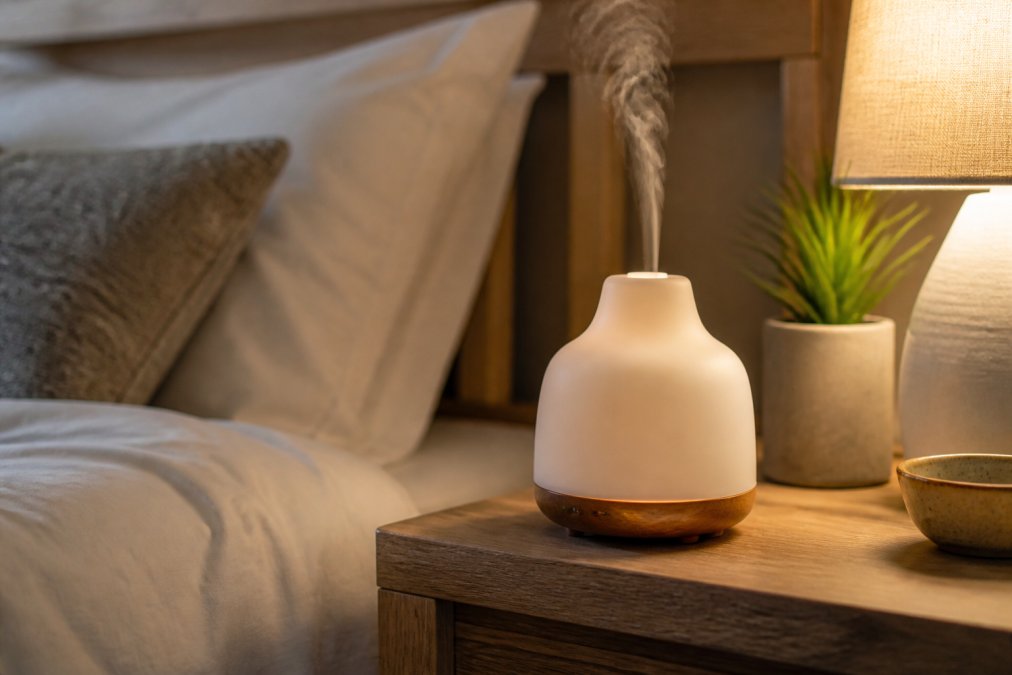
When selecting a diffuser, consider water tank capacity and runtime. A smaller 200ml unit, like the New USB Portable Mini Air Humidifier ($36.00), is ideal for a bedroom or office desk, with intermittent modes extending operation up to 9 hours. For larger spaces, a higher-capacity model avoids constant refilling.
Oil quality matters as much as hardware. Pure essential oils, free of synthetic fillers, evaporate cleanly without leaving sticky residue. Our 10ml Pure Plant Essential Oil collection ($16.22) includes single notes like lavender and sandalwood, perfect for blending your own signature scent.
How to Make Home Smell Like a Spa: Layering Techniques
A spa smell isn't a single scent; it's a composition. To make your home smell like a high-end retreat, layer a base scent with a secondary accent.
- Start with a neutral base: Use an unscented candle or diffuser to establish a clean air baseline.
- Add a primary scent: Choose a calming base note like lavender or sandalwood. Diffuse this continuously in your main living area.
- Layer a secondary scent: Introduce a complementary note for a short period. For example, run a eucalyptus or mint diffuser in the bathroom for 20 minutes before a shower.
- Use textiles as anchors: Lightly mist curtains or throw pillows with a fabric-safe spray. Fabrics hold scent molecules much longer than air.
This approach creates depth: the continuous base note provides the "spa" feeling, while periodic top notes prevent your nose from going numb to the primary aroma.
Room-by-Room Guide to Long-Lasting Fragrance
Different rooms have different airflow, humidity, and purposes. Here's a practical breakdown for where to place your home fragrance tools for maximum effect, and how to keep your pets safe.
Living Room: The High-Traffic Hub
Use an ultrasonic diffuser with a woodsy or gourmand scent for consistent throw, placed near an air vent or ceiling fan. For large open-plan areas, consider a 500ml diffuser or two smaller units at opposite ends. If you have pets, avoid toxic essential oils, see the pet-safe note below.
Bedroom: The Sanctuary
Opt for calming scents like lavender or vanilla. A small, quiet diffuser like the Air Humidifier Crystal Salt Stone ($46.02) doubles as a nightlight and runs low-noise for sleep. Keep it at least 3 feet from your bed to avoid over-humidifying your breathing zone. Lavender is generally safe for dogs in small amounts, but cats are more sensitive, check with your vet.
Bathroom: Humidity and Odor Control
This space is prone to humidity and odors. A spray works for quick fixes, but a heat-based burner is better for continuous masking. The White Sage 'Happiness' Spell Candle Jar ($10.00) offers a clean burn and cleansing aroma that counteracts mustiness. If you have birds or small pets, avoid burning candles in enclosed bathrooms, smoke and VOCs can be harmful.

Entryway: The First Impression
Use a reed diffuser or passive method that requires no power, ensuring a welcoming scent is always present. Place it on a console table near the door, out of reach of curious pets, many reed diffuser oils are toxic if ingested, so opt for pet-safe blends or keep them elevated.
Pet-Safe Fragrance Guidelines
Many popular home fragrance solutions are toxic to pets, especially cats and birds. Here's what you need to know:
- Cats: They lack a specific liver enzyme (glucuronyl transferase) needed to metabolize many essential oils. Phenols and ketones, found in oils like peppermint, wintergreen, tea tree, and clove, can cause liver failure. Even diffused oils can settle on their fur and be ingested during grooming.
- Dogs: They are more tolerant than cats, but oils like tea tree, cinnamon, and citrus can still cause skin irritation or respiratory distress. Puppies and senior dogs are more vulnerable.
- Birds: Their respiratory systems are extremely sensitive. Any aerosol spray, candle smoke, or strong diffuser mist can be fatal. Avoid all fragrance products in rooms where birds are kept.
- Safe alternatives: For pet households, consider unscented candles (or those made with soy wax and no essential oils), baking soda-based odor absorbers, or pet-safe fragrance blends specifically labeled as such. Always consult your veterinarian before introducing any new fragrance product.
Common Mistakes That Shorten Scent Longevity
The fastest way to waste money on fragrance is to misuse the delivery system, most people don't realize their habits are why the scent fades.
- Neglecting airflow: Stagnant air traps scent molecules near the source. Without a fan or open window, the fragrance never travels, and you end up using more product to smell it across the room.
- Overloading the diffuser: Adding too much oil to a water diffuser doesn't make the scent stronger; it makes it cloying and can damage the ultrasonic plate. Stick to the recommended drops per 100ml of water.
- Burning candles too briefly: Candles have a "memory." If you don't let the wax melt to the edge of the container on the first burn, it will tunnel, and you'll lose a significant portion of the candle's scent throw.
- Ignoring heat sources: Placing a burner or diffuser near an air conditioner or heater vent will either blow the scent away or evaporate the oil too quickly.
What to Ignore: Myths About Home Fragrance
Not all advice about scenting your home is accurate, some popular tips are ineffective or counterproductive.
- Myth: More oil equals a stronger smell. In an ultrasonic diffuser, this is false. Oversaturation leads to a wet, heavy scent that doesn't disperse well. The mist particles clump together and fall to the floor.
- Myth: You need a separate scent for every room. This creates a chaotic environment and forces your brain to work harder to process the transitions. Stick to a single "scent family" (e.g., all woodsy or all floral) and vary the intensity.
- Myth: Spraying air freshener cleans the air. Most sprays simply mask odors with a stronger synthetic smell. They do not neutralize the volatile organic compounds causing the odor. Proper ventilation and odor absorbers like baking soda are more effective for actual air purification.
The goal of long lasting home fragrance solutions is not to shout louder but to play longer. An intentional approach, focusing on consistent diffusion and quality oils, will always outperform a cabinet full of mismatched sprays and candles.
Conclusion: Building Your Signature Scent
Creating a lasting home scent is less about buying the strongest product and more about building a system: the right delivery method for each room, a quality oil with strong base notes, and the discipline to maintain it without overloading your senses.
At Castellanos Housing, our selection of ultrasonic diffusers, burners, and pure essential oils supports this layered approach. Whether scenting a single bedroom or the whole house, building your routine around consistent heat or mist diffusion rather than quick sprays will give you the enduring atmosphere you're looking for.
Frequently Asked Questions
How to make home fragrance last longer?
To extend scent longevity, place diffusers away from open windows and air vents, as airflow disperses fragrance too quickly. Use the intermittent setting on ultrasonic diffusers to avoid olfactory fatigue. For candles, trim the wick to 1/4 inch before each burn and let the wax melt to the edges on the first burn to prevent tunneling. Layering complementary products, like a candle with a reed diffuser, also helps maintain a consistent scent profile throughout the day.
What is the longest lasting home fragrance?
Ultrasonic essential oil diffusers generally provide the most consistent, long-lasting scent because they release a fine mist continuously or intermittently without heat degradation. Reed diffusers offer passive scent for weeks with zero maintenance. Among our best home fragrance products, the Portable Ultrasonic Oil Diffuser and Air Humidifier ($19.00) provides hours of steady fragrance, while the Hanging Cauldron Oil Burner ($16.00) works well for targeted scenting with fragrance oil diluted in water.
Are essential oil diffusers better than candles for long-lasting scent?
Yes, for continuous fragrance, essential oil diffusers outperform candles. Candles only release scent while lit and have a limited burn time, whereas an ultrasonic diffuser can run for 4 to 9 hours per fill depending on the mode. Diffusers also disperse essential oils as a fine mist without producing soot, preserving air quality. The essential oil diffuser benefits include adjustable intensity and automatic shut-off, making them a safer option for unattended use compared to an open flame.
How do I make my house smell luxury?
A luxury scent profile relies on complex, layered notes rather than a single sweet fragrance. Choose essential oils with base notes like sandalwood, vanilla, or patchouli, which linger longer than citrus top notes. Use the 20 Type Gourmet Essential Oils collection ($14.64) to blend warm scents like vanilla and sandalwood for a sophisticated atmosphere. Pair a diffuser in entryways with a candle in living areas to create depth, and refresh fabrics with a light mist to complete the experience.
How can I keep my house smelling good all the time?
Consistency comes from addressing odor sources first, then maintaining fragrance. Clean trash bins, fabrics, and drains regularly, as fragrance masks rather than eliminates odors. Then, run an ultrasonic diffuser on an intermittent cycle in high-traffic areas. Our 10ml Pure Plant Essential Oil ($16.22) offers versatile scents like lavender and tea tree that work for daily use. For passive scenting, place a reed diffuser in bathrooms and hallways so fragrance is always present without electricity.
A home that smells good should feel effortless, not like a science project. Start by choosing one high-quality diffuser and a pure oil you love, place it in your main living area, and build your routine from there. Explore our collection of essential oil diffusers and burners to find the piece that fits your space, and continue shopping for the details that make your home feel truly supported.
