

How to Choose Non-Toxic Home Fragrance Solutions
Table of Contents
- Understanding Non-Toxic Home Fragrance
- How to Read and Evaluate Fragrance Ingredient Labels
- Least Toxic Home Fragrance Options by Format
- Natural Air Freshener Alternatives to Aerosol Sprays
- Non-Toxic Essential Oil Diffusers and Safe Use Practices
- Scented Candle Ingredients to Avoid
- Addressing Fragrance Sensitivity and Health Concerns
- Conclusion
- Frequently Asked Questions
Last Updated: October 7, 2026
Understanding Non-Toxic Home Fragrance
Non-toxic home fragrance refers to scent products made without synthetic chemicals, heavy metals, or harmful additives that can affect indoor air quality or your health. They prioritize natural ingredients and transparent labeling so you know what you're breathing in.
Many conventional air fresheners, scented candles, and plug-in diffusers contain volatile organic compounds (VOCs), phthalates, and synthetic musks that accumulate in your home over time. At Castellanos Housing, we believe your living space should support your wellbeing, not compromise it, and choosing non-toxic options is one of the most direct ways to align your home with your health priorities.
The growing interest in non-toxic home fragrance reflects a shift toward intentional living. This guide walks you through how to evaluate products, understand ingredient labels, and select solutions that deliver pleasant scents without the health trade-offs.
How to Read and Evaluate Fragrance Ingredient Labels
Reading a fragrance label correctly is your first defense against toxic exposure, since many companies hide harmful ingredients behind legal loopholes.
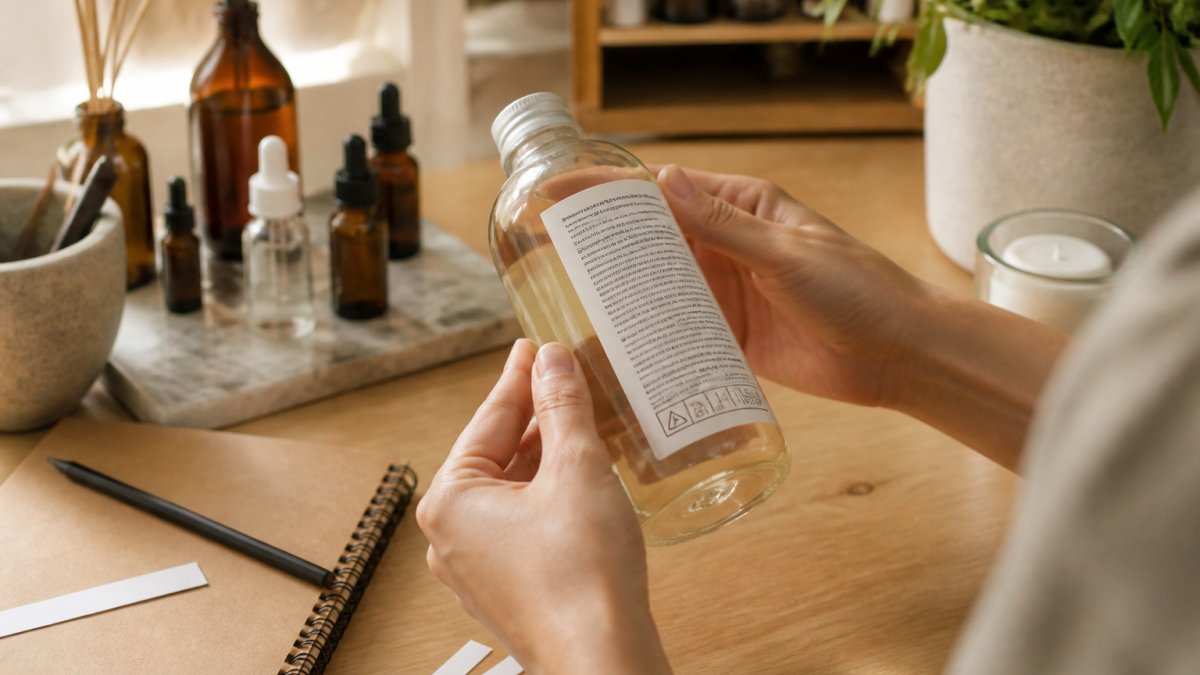
Start with the ingredient list. Legitimate non-toxic products list every component; if you see "fragrance," "parfum," or "aroma compound" without specifics, those catch-all terms can mask dozens of undisclosed synthetic chemicals.
Look for these red flags on any label:
- Phthalates or "fragrance" (often contains phthalates to make scent last longer)
- Parabens (preservatives linked to hormone disruption)
- Synthetic musks (accumulate in body tissue over time)
- Formaldehyde or formaldehyde releasers (common in plug-in air fresheners)
- Benzene or toluene (solvents that damage air quality)
Conversely, look for these markers of transparency:
- Full ingredient breakdown with plant names or essential oil types
- Statements like "no synthetic fragrances" or "phthalate-free"
- Certification from third-party testing (like EWG Verified or similar standards)
- Warning labels about proper use and storage
Many companies use marketing language like "natural" or "clean" without backing it up, these words have no legal definition for fragrances, and a product can say "natural fragrance" while containing synthetic compounds. Always verify by reading the actual ingredient list, not the front-label copy.
Least Toxic Home Fragrance Options by Format
Different fragrance formats carry different health and exposure trade-offs, so understanding them helps you pick what works for your household.
Essential oil diffusers offer one of the cleanest approaches if used properly, because you control exactly what goes into them. Pure essential oils like lavender, peppermint, or tea tree deliver genuine scent without synthetic additives, and the 10ml Pure Plant Essential Oil bottles from Castellanos Housing contain pure extracts with no fillers.

Soy candles made with natural waxes and essential oils rank high for safety, since soy wax burns cleaner than paraffin, which releases more particulates into the air. Handmade Decorative Scented Soy Candles use soy wax and real fragrances. Ensure the wick is cotton or wood, not lead-core metal.
Plug-in diffusers and aerosol sprays are the riskiest category. Most contain VOCs and synthetic fragrances designed to be absorbed into your lungs. If you must use these formats, choose ones labeled phthalate-free and use them sparingly with good ventilation.
Ultrasonic diffusers use vibrations to disperse essential oils as a fine mist without heat, preserving oil quality. The Portable Ultrasonic Oil Diffuser and Air Humidifier from Castellanos Housing doubles as a humidifier, improving air moisture while dispersing scent. They work best with pure essential oils and need regular cleaning to prevent mold.
Compare these options side by side:
| Format | Toxicity Risk | Control | Best For |
|---|---|---|---|
| Essential oil diffuser | Low | High | Customized scent, full ingredient control |
| Soy candle | Low | Medium | Ambiance, ritual, longer-lasting scent |
| Plug-in diffuser | High | Low | Quick scent, but with health trade-offs |
| Aerosol spray | High | Low | Temporary freshening, most chemical exposure |
| Ultrasonic diffuser | Low | High | Consistent scent, air quality improvement |
Natural Air Freshener Alternatives to Aerosol Sprays
Aerosol sprays are among the worst offenders for indoor air quality, releasing fine particles and VOCs that linger in your lungs and home. Natural alternatives work just as well, often better.
Baking soda is your first line of defense. Sprinkle it on carpets, furniture, or in a bowl in problem areas; it absorbs odors rather than masking them. Leave it 15 minutes, then vacuum or dispose of it.
Vinegar neutralizes odors through chemistry, not masking. Mix equal parts white vinegar and water in a spray bottle; the smell dissipates as it dries, taking odors with it. Use it on upholstery, curtains, and carpets.
Essential oil sprays give you control over scent without synthetic chemicals.
Simmer pots are an old method that works: fill a small pot with water, add cinnamon sticks, citrus peels, vanilla, or fresh herbs, and heat gently on the stove.
Open windows remain the most underrated solution: even 10 minutes of ventilation per day significantly improves indoor air quality and reduces the need for heavy fragrance.
Non-Toxic Essential Oil Diffusers and Safe Use Practices
Essential oil diffusers are effective only when used safely; misuse can cause irritation, allergic reactions, or toxicity in vulnerable people.
Start with dilution: essential oils are highly concentrated, and most ultrasonic diffusers recommend 1-3 drops per tank of water. The Portable Ultrasonic Oil Diffuser from Castellanos Housing holds 400ml or 1000ml, giving you flexibility based on room size.

Storage matters for oil longevity. Keep essential oils in dark glass bottles away from sunlight and heat, the amber bottles that come with pure essential oils protect against light degradation.
Ventilation is non-negotiable: run your diffuser with a window cracked or a door open, since prolonged exposure to concentrated vapor in a sealed room can cause headaches, dizziness, or respiratory irritation. Diffuse for 30-60 minutes, then give the room a break.
Children and pets require extra caution. Keep diffusers out of reach; some essential oils, especially tea tree, eucalyptus, and citrus, are harmful to pets, particularly cats. With young children, use diffusers in rooms they don't frequent and never leave them unattended.
10ml Pure Plant Essential Oil For Humidifier Diffusers Mint Lavender Tea Tree →
Common mistakes to avoid:
- Using synthetic fragrances in diffusers labeled "essential oil only"
- Refilling water without cleaning the tank (mold grows quickly)
- Running diffusers continuously without breaks
- Using diffusers in sealed rooms with poor ventilation
- Mixing different essential oils without understanding their interactions
Scented Candle Ingredients to Avoid
Not all scented candles are equal: the wax type, wick material, and fragrance source determine whether a candle improves or worsens your indoor air.
Paraffin wax is the cheapest option and the worst for air quality, a petroleum byproduct that releases more soot and particulates as it burns.
Soy wax burns cleaner and supports sustainable agriculture. Handmade Decorative Scented Soy Candles from Castellanos Housing use soy wax as their base.

Gel candles, made from mineral oil and resin, burn hotter and release more fumes. Skip them for non-toxic fragrance.
The wick matters as much as the wax. Lead-core wicks, common in cheap candles, release lead particles as they burn. Cotton or wood wicks are your safest choice.
Fragrance source is critical: look for candles scented with essential oils or natural fragrance compounds, not synthetic perfume.
Check the label for these red flags:
- "Fragrance oil" without specifics
- "Paraffin wax" or "gel wax"
- Metal-core wicks
- Vague scent descriptions like "fresh" or "clean" with no ingredient list
- No burn time or safety warnings
The Crystal Manifestation Scented Candle from Castellanos Housing uses premium soy wax and real crystals, available in eight scents like Lavender, Rose & Oud, and Rosemary.
Addressing Fragrance Sensitivity and Health Concerns
Some people react strongly to fragrances, natural or synthetic. If you or a household member gets headaches, respiratory irritation, or skin reactions from scents, fragrance sensitivity is likely at play.
Fragrance sensitivity exists on a spectrum, from temporary discomfort to asthma attacks or anaphylaxis. Non-toxic fragrances reduce reactions because they lack the synthetic compounds that trigger most sensitivities.
If someone in your home has fragrance sensitivity, remove odors before adding fragrance: open windows daily, use baking soda to absorb existing odors, and address the source, poor ventilation, mold, stale fabrics. Once the baseline is cleaner, introduce gentle natural scents sparingly.
Asthma and fragrance sensitivity often overlap, since reactive airways mean airborne particles and chemical vapors trigger inflammation. Essential oil diffusers can help or harm depending on the oil and dilution: lavender and chamomile are generally gentler, while tea tree and eucalyptus are more likely to provoke reactions.
Test new fragrances in small doses: diffuse for 15 minutes in an adjacent room, not the bedroom, and observe for 24 hours. If no reaction occurs, increase exposure gradually.
Some people find natural fragrances less irritating even when chemically similar to synthetic ones, partly psychological, but also because pure products lack additional irritants. The 10ml Pure Plant Essential Oil from Castellanos Housing contains no additives or fillers.
Pregnant people should approach fragrances cautiously. While essential oils are natural, some are not safe during pregnancy. Consult your doctor before using essential oils if you're pregnant or nursing.
Conclusion
Choosing non-toxic home fragrance means prioritizing what you breathe every day. Shifting from synthetic sprays and paraffin candles to pure essential oils and soy-based products reduces your exposure to harmful chemicals.
The key is reading labels carefully, understanding the trade-offs between formats, and testing new products cautiously if you have sensitivities. Natural alternatives like baking soda, vinegar, and pure essential oils work as well as commercial products without the health cost.
At Castellanos Housing, we've curated a selection of fragrance products designed with this philosophy in mind. Our Handmade Decorative Scented Soy Candles use clean-burning soy wax and real fragrances. Our Pure Plant Essential Oils contain no additives or fillers, giving you full control over what you diffuse.
Start small: choose one non-toxic fragrance solution that fits your lifestyle and test it for a week. Once you experience the difference clean, intentional fragrance makes, you'll understand why this choice matters. Your home should feel as good as it smells.
Frequently Asked Questions
What is the least toxic way to fragrance your home?
The least toxic approaches prioritize pure essential oils used in well-ventilated spaces, soy-based scented candles with natural fragrance, or solid diffusers that release scent passively. Avoid aerosol sprays and products listing "fragrance" or "parfum" without ingredient transparency. Essential oils like lavender, mint, and tea tree offer natural scent without synthetic chemicals. Always dilute essential oils properly and use diffusers according to manufacturer instructions to minimize inhalation exposure.
Are essential oils safer than synthetic fragrances for home use?
Pure essential oils are generally considered safer than synthetic fragrances because they come from plant sources. However, essential oils are concentrated and can trigger reactions in people with sensitivities or asthma. They require proper dilution, ventilation, and storage away from children and pets. Synthetic fragrances often hide multiple undisclosed chemicals under the term "fragrance," making ingredient evaluation difficult. Both types require careful use; pure essential oils simply offer more transparency about what you're inhaling.
How can I reduce fragrance exposure if I have asthma or allergies?
Remove scented products from your home and replace them with fragrance-free alternatives. If you use any fragrance, choose unscented or naturally scented options and use them only in well-ventilated areas. Avoid aerosol sprays entirely, as they disperse particles deeply into airways. Consider solid or passive diffusers over active ones. Test new products in small quantities first. If you use essential oil diffusers, limit exposure to 15-30 minutes per session. Consult your doctor about specific triggers, as individual sensitivities vary widely.
What should I look for on a home fragrance product label?
Look for specific ingredient names like "essential oils" or individual plant extracts (lavender, orange, cinnamon) rather than vague terms like "fragrance" or "parfum." Check for warnings about dilution, ventilation, and storage. Avoid products listing synthetic chemicals such as phthalates, formaldehyde releasers, or volatile organic compounds. Verify the product is labeled non-toxic and safe for indoor use. If ingredients are not fully disclosed, the product likely contains hidden synthetics; choose transparent brands instead.
