

Ultrasonic vs Nebulizing Diffusers: Which Suits Your Home
Table of Contents
- How Ultrasonic Diffusers Work: Cold-Air Mist Technology
- How Nebulizing Diffusers Work: Waterless Aromatherapy
- Ultrasonic vs Nebulizing Diffusers: Key Differences
- How to Clean an Essential Oil Diffuser: Maintenance for Both Types
- Waterless Diffuser Pros and Cons: Why Type Matters
- Health and Safety Considerations: Pets, Children, and Daily Use
- Which Diffuser Type Should You Choose?
- Frequently Asked Questions
Last Updated: October 6, 2026
How Ultrasonic Diffusers Work: Cold-Air Mist Technology
Ultrasonic diffusers use high-frequency vibrations to break essential oils and water into fine particles, creating a cool mist without heat. The ceramic disc inside vibrates at ultrasonic frequencies, typically around 108 MHz, sending microscopic droplets upward through the mist outlet. This cold-air method preserves the chemical composition of your oils, protecting therapeutic integrity.
The water-to-oil ratio is crucial: most ultrasonic units work best with 3-5 drops of essential oil per 100ml of water. Too much oil clogs the ceramic disc; too little and you barely notice the scent. Mist output ranges from 30-50ml per hour, so a 160ml tank runs 3-5 hours before a refill.

One practical advantage: ultrasonic diffusers are nearly silent, making them ideal for bedrooms, nurseries, or offices. Many models include intermittent mode, which alternates spraying and resting, extending runtime and reducing oil consumption.
How Nebulizing Diffusers Work: Waterless Aromatherapy
Nebulizing diffusers atomize pure essential oil without water or heat, using compressed air to force oil through a small glass nebulizer. The oil breaks into an ultra-fine aromatic mist that disperses directly into the air, giving you full potency with no dilution.
Air pressure builds inside the device, then forces oil through an internal glass tube where it atomizes into a visible vapor. With no water involved, scent intensity is noticeably stronger than ultrasonic diffusion, some users find nebulizing diffusers overwhelming in small rooms.
Oil consumption is higher with nebulizing diffusers. A typical session uses 0.5-1ml, so a 10ml bottle lasts only 10-20 cycles. Run continuously, you'll replace oils more frequently than with ultrasonic models, a real long-term cost consideration.
Nebulizing diffusers also require more maintenance. The glass nebulizer can clog or develop residue from thicker, resinous oils. Weekly cleaning keeps the device functioning properly.
Ultrasonic vs Nebulizing Diffusers: Key Differences
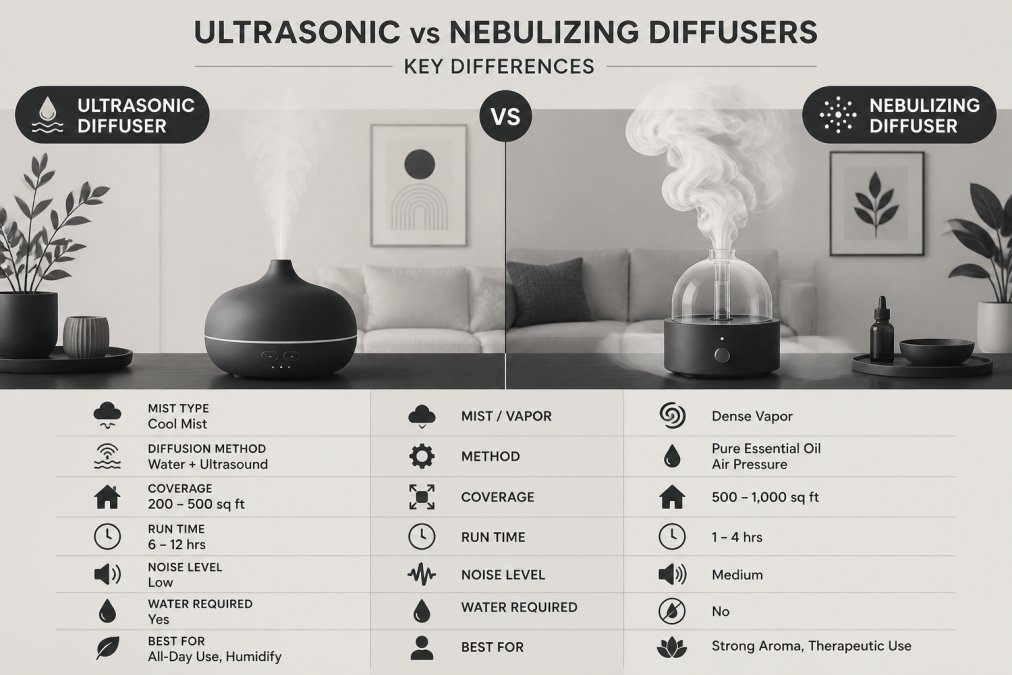
The choice between ultrasonic and nebulizing diffusers comes down to three factors: how much scent you want, how often you'll refill oils, and what role humidity plays. Below, we break down the mechanics, consumption rates, and long-term ownership costs most comparisons skip.
Mist Output and Scent Intensity
Ultrasonic diffusers produce a visible, gentle mist that fills a room gradually. Scent throw typically covers 200-400 square feet depending on layout and air circulation. The cool mist is visually calming, appealing to those who want aesthetic and aromatic benefits.
Nebulizing diffusers create a denser, more concentrated mist that disperses quickly and intensely, filling smaller spaces (100-200 square feet) with remarkable potency. For therapeutic-grade intensity, nebulizing wins; for subtle, ambient scenting, ultrasonic is the better match.
Essential Oil Consumption and Long-Term Costs
Ultrasonic diffusers are oil-efficient. A 10ml bottle lasts 60-100+ sessions because you use only 3-5 drops per tank. Over a year of regular use, you might spend $40-80 on oils.
Nebulizing diffusers consume oil much faster, the same 10ml bottle lasts 10-20 sessions. Annual oil costs climb to $150-300 or more. If you're budget-conscious or run your diffuser daily, ultrasonic makes more financial sense long-term.
If you diffuse only a few times per week, the consumption difference matters less. Upfront costs are similar; the recurring oil expense is the real consideration.
Long-Term Maintenance Costs: The Hidden Ownership Expense
Replacement parts and cleaning supplies add up over years. Ultrasonic diffusers typically need a new ceramic disc every 6-12 months if you use tap water or skip cleaning; discs run $5-15. Distilled water (about $1-2 per gallon) prevents mineral buildup and extends disc life.
Nebulizing diffusers have fewer wear parts but higher replacement costs. The glass nebulizer can crack or etch, especially with thick oils; replacements cost $15-30. The air pump lasts 1-3 years and replacements run $20-40. Rubbing alcohol for weekly cleaning adds a small steady expense.
A realistic annual maintenance estimate: $20-40 for a daily ultrasonic user (discs, distilled water, vinegar) versus $40-80 for a daily nebulizing user (glass parts, pump wear, alcohol). Neither is prohibitive, but neglect shortens component life for both.
Noise Level and Energy Use
Ultrasonic diffusers are genuinely quiet, most operate under 36 decibels, barely louder than a whisper, ideal for sleep environments. Energy use is minimal at 1-5 watts; running a 3-watt unit 8 hours daily costs roughly $0.09 per month at average rates.
Nebulizing diffusers are also quiet, but the air compressor creates a subtle hum some find noticeable. Energy use is higher at 5-15 watts; running a 10-watt unit 8 hours daily costs roughly $0.29 per month. They're often run on intermittent cycles (5 minutes on, 5 off) to conserve oil, reducing energy use and scent output.
Water Usage vs. Waterless Operation
Ultrasonic diffusers require water. A 160ml tank runs 3-5 hours; larger 400-1000ml tanks run 8-12 hours. That water adds humidity, a benefit in dry climates but a drawback in humid or poorly ventilated rooms where excess moisture encourages mold.
Nebulizing diffusers are waterless, atomizing pure oil directly with no added humidity, better for bathrooms, basements, or any space where you don't want moisture. No water tank to clean, no mold risk, no mineral dust. The trade-off: you lose the dual diffuser-humidifier function that makes ultrasonic models appealing in dry winter months.
How to Clean an Essential Oil Diffuser: Maintenance for Both Types
Regular cleaning extends the life of any diffuser and prevents oil residue buildup that degrades performance. The maintenance approach differs slightly between types, but both require attention to detail.
Ultrasonic Diffuser Maintenance
Empty the water tank after each use, residual water invites mold or bacterial growth. Rinse with fresh water and air dry completely before refilling.
The ceramic disc is critical. Never submerge or scrub it harshly. Dampen a cotton swab with distilled water and gently wipe the surface; for stubborn buildup, use equal parts white vinegar and water. Air dry 10 minutes before reassembling.
Clean the mist outlet tube weekly with a small pipe cleaner or thin brush. For mineral deposits, soak the tube in distilled water for 15 minutes, then rinse.
160ML Ultrasonic Air Humidifier Clear Cactus Color Light USB Essential Oil →
Nebulizing Diffuser Maintenance
The glass nebulizer requires the most attention. After each use, run the device 30 seconds with just air to clear residual oil, preventing clogs and extending glass life.
Weekly, remove the glass nebulizer and soak it in rubbing alcohol for 10 minutes to dissolve oil residue water alone won't remove. Rinse with distilled water, air dry completely, and never reassemble while wet.
Inspect the air pump and tubing occasionally. If mist output weakens, the tubing may be cracked or the pump may need cleaning. Check for loose fittings and ensure the air tube isn't kinked.
Waterless Diffuser Pros and Cons: Why Type Matters
Understanding the strengths and limitations of each approach helps you match the right diffuser to your actual needs and lifestyle.
Ultrasonic Diffusers: Pros include quiet operation, low oil consumption, dual functionality as both diffuser and humidifier, affordable initial cost, and ease of maintenance. The cool mist is gentle and visually appealing. They're ideal for continuous use or all-night operation without excessive oil waste.
Cons include lower scent intensity compared to nebulizing models, potential for water pooling if overfilled, and the need to replace water regularly. Some people find the visible mist less sophisticated than waterless diffusion.
Nebulizing Diffusers: Pros include intense, pure aromatic output without water dilution, no humidity concerns, and therapeutic-grade scent delivery. The absence of water means no mold risk and no mineral buildup from hard water.
Cons include higher essential oil consumption and cost, slightly more complex maintenance, and limited use in very small spaces where the scent intensity can feel overwhelming. The air compressor adds a subtle mechanical presence some users notice.
Health and Safety Considerations: Pets, Children, and Daily Use
Essential oil diffusion is generally safe, but context matters. Ultrasonic diffusers that add humidity are less likely to cause respiratory irritation than nebulizing models, which deliver oils at higher concentrations. The key variable is airborne concentration, not just the oil itself. Nebulizing diffusers can produce airborne oil concentrations several times higher than ultrasonic models in the same room, which is why safety guidance differs by diffuser type.
Pets: Why Diffuser Type Matters
Cats and dogs have more sensitive respiratory systems than humans, and their livers process many essential oil compounds differently. Cats in particular lack a key liver enzyme (glucuronyl transferase) that helps clear certain terpenes and phenols, making them more vulnerable to toxicity from oils like tea tree, eucalyptus, citrus, peppermint, and wintergreen.
For households with pets, ultrasonic diffusers are typically the safer choice. The diluted mist output and lower airborne concentration make accidental overexposure less likely. Nebulizing diffusers can be used around pets, but keep them in well-ventilated spaces, run them in rooms pets can leave freely, and avoid continuous operation. A common pattern is to diffuse for 15-30 minutes in a room the pet isn't confined to, then ventilate before letting the pet back in.
Signs of essential oil sensitivity in pets include drooling, lethargy, wobbliness, vomiting, and difficulty breathing. If you notice any of these, stop diffusion immediately, ventilate the space, and contact your veterinarian or a pet poison control hotline.
Children: Lower Concentrations, Shorter Sessions
For young children, the same principle applies: lower concentration is safer. Ultrasonic diffusion with proper ventilation poses minimal risk when used briefly. Always keep any diffuser out of reach of children and never allow them to ingest essential oils or diffuser water. Even small amounts of undiluted oil can be harmful if swallowed.
Nebulizing diffusers deliver oils at full strength, which is generally too intense for nurseries or small children's rooms. If you choose to use one in a home with young children, run it in a well-ventilated common area rather than a bedroom, and keep sessions short. Some oils, including camphor, eucalyptus, and peppermint, are not recommended for infants and toddlers regardless of diffuser type because they can trigger breathing problems.
Asthma and Respiratory Sensitivity
If anyone in your household has asthma or respiratory sensitivity, test with very low oil concentrations first. Start with just 1-2 drops in an ultrasonic diffuser and observe for any irritation. Nebulizing diffusers may be too intense for sensitive individuals because they deliver a higher concentration of airborne oil particles. If you want to try a nebulizing diffuser, run it on an intermittent cycle in a large, well-ventilated room and keep the door open so the scent doesn't concentrate.
Ventilation and Room Size
Room size and airflow matter as much as diffuser type. A nebulizing diffuser in a 100-square-foot closed bedroom produces a much higher concentration than the same device in a 400-square-foot open living area. As a rule of thumb, match the diffuser's output to the room: ultrasonic models are forgiving in small spaces, while nebulizing models are better suited to larger rooms or open-plan areas where the scent can disperse. Running any diffuser in a closed, unventilated room for hours at a time increases exposure for everyone, including pets and children.
Which Diffuser Type Should You Choose?
The answer depends on your priorities. Choose ultrasonic diffusion if you want a quiet, budget-friendly option that doubles as a humidifier, prefer ambient scenting over intense aromatic output, or plan to run your diffuser frequently without worrying about oil costs. Ultrasonic diffusers are the practical choice for most households.
Choose nebulizing diffusion if you want the purest, most concentrated aromatic experience, prefer the aesthetics of waterless diffusion, or only use your diffuser occasionally. The higher oil consumption matters less if you're not running it daily.
At Castellanos Housing, we understand that the right diffuser enhances your home's intentionality. The Portable Ultrasonic Oil Diffuser and Air Humidifier offers dual functionality with 400ml and 1000ml capacity options, making it ideal for rooms where you want both scent and moisture control. For those seeking portability and versatility, the 160ML Ultrasonic Air Humidifier brings a thoughtful design to desks, cars, and travel with its distinctive cactus shape.

| Feature | Ultrasonic | Nebulizing |
|---|---|---|
| Scent Intensity | Gentle, ambient | Strong, concentrated |
| Oil Consumption | Low (60-100+ sessions per 10ml) | High (10-20 sessions per 10ml) |
| Humidity Output | Yes, adds moisture | No, waterless only |
| Noise Level | Near-silent (<36db) | Quiet with subtle compressor hum |
| Maintenance | Weekly disc cleaning | Weekly nebulizer soaking |
| Best For | Daily use, budget-conscious | Occasional use, scent intensity |
| Initial Cost | $19-55 | Similar range |
Choosing between ultrasonic and nebulizing diffusers is really about matching the device to how you live. If your home is your sanctuary and you want to create an intentional atmosphere that supports your daily life, ultrasonic diffusion offers quiet, efficient aromatherapy that works with your schedule rather than demanding constant attention.
Frequently Asked Questions
Which is better, a diffuser or a nebulizer?
It depends on your priorities. Ultrasonic diffusers offer dual functionality as humidifiers, operate quietly, and cost less upfront, typically $19-$36. Nebulizing diffusers deliver more potent scent intensity and don't require water, but they consume essential oils faster and cost more. For everyday home use with budget in mind, ultrasonic works well. For pure aromatherapy potency, nebulizing wins. Consider your room size, how often you use it, and whether you value humidity benefits alongside scent.
Do nebulizing diffusers require water?
No, this is a key distinction. Nebulizing diffusers are waterless; they atomize pure essential oil directly without dilution. Ultrasonic diffusers, by contrast, require water mixed with a few drops of oil. The waterless design of nebulizers means no risk of water damage, no mineral buildup from hard water, and more concentrated aromatic output. However, waterless operation also means faster oil consumption and higher ongoing costs.
How does the scent throw compare between ultrasonic and nebulizing models?
Nebulizing diffusers produce significantly stronger scent throw, the distance and intensity at which you notice the aroma. They atomize pure oil, delivering a more potent aroma profile across larger spaces. Ultrasonic diffusers offer gentler, more subtle scent dispersal because the oil is diluted in water. For small rooms or subtle ambient scenting, ultrasonic is sufficient. For therapeutic-grade intensity or larger coverage areas, nebulizing delivers noticeably more aromatic potency.
Are ultrasonic diffusers easier to clean than nebulizers?
Generally yes. Ultrasonic diffusers require regular rinsing to prevent mineral buildup and occasional deep cleaning with vinegar, but the process is straightforward. Nebulizing diffusers need careful cleaning of the glass tube and internal components to prevent oil residue clogging, a more involved task. If maintenance simplicity matters to you, ultrasonic models are more forgiving. Both types benefit from regular cleaning to maintain performance and prevent mold or bacterial growth.
